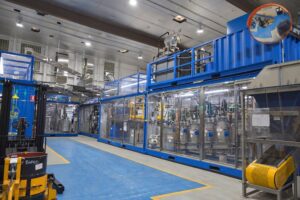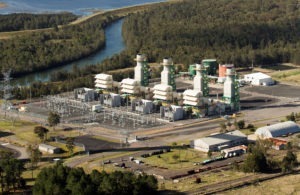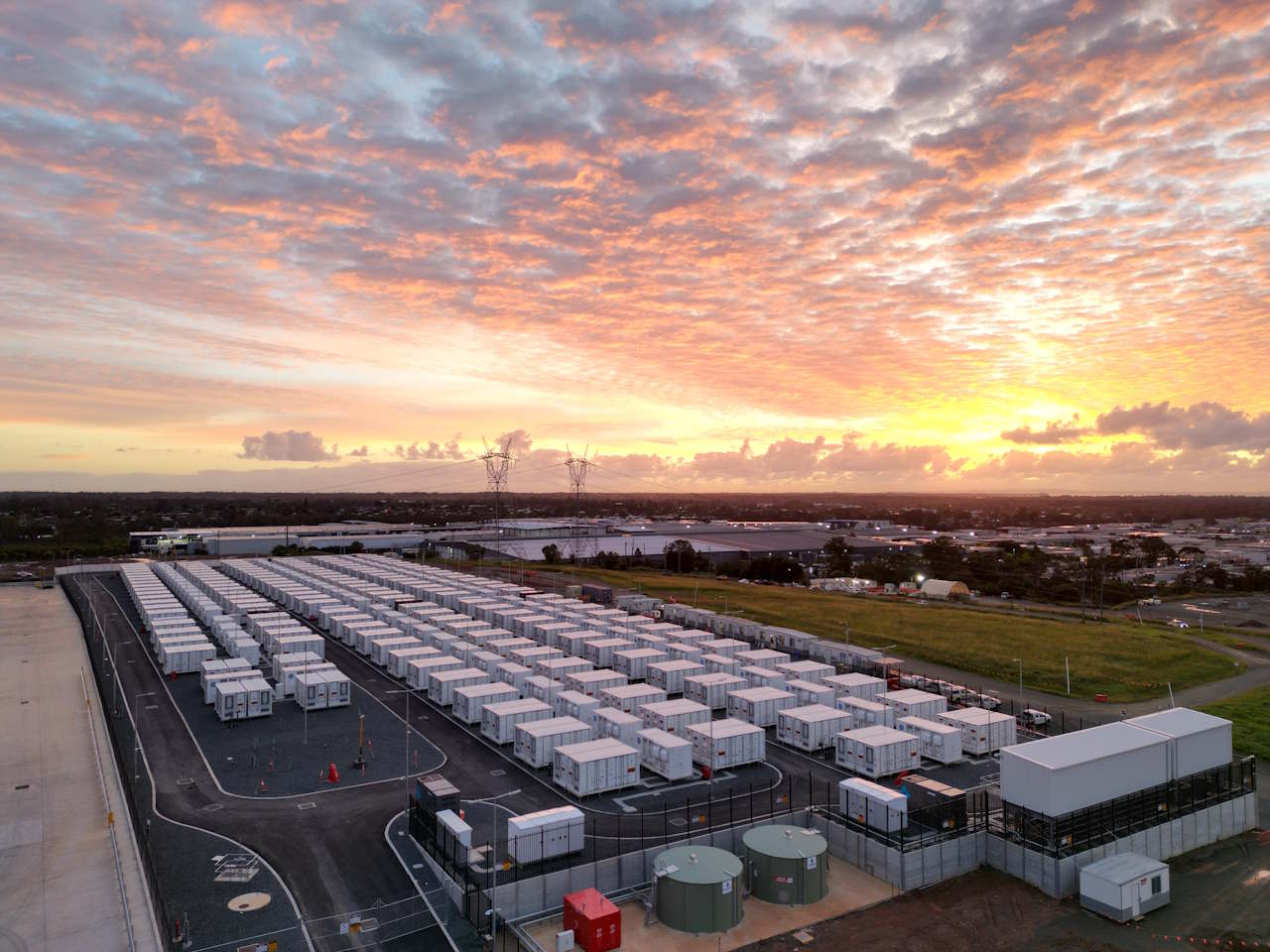
The owners and suppliers of Australia’s biggest battery project say they have slashed the footprint of the facility by 20 per cent, and confirmed they are now mulling a multi-gigawatt hour extension that would make it the first in Australia to provide more than 5 gigawatt hours of storage.
The Supernode battery on the outskirts of Brisbane, as previously announced, has completed stage 2 of its construction and commissioning, and reached financial close on $469 million of financing for stage 3, which will take its total storage capacity to more than 3 GWh.
The Supernode battery is owned by Quinbrook and the first two stages are contacted to Origin Energy, which is also building its own 3 GWh plus battery at Eraring, next to the country’s biggest coal fired generator that is now due to close in 2029. That battery should be finished in the first half of next year.
The Supernode battery, however, is likely to expand by adding another 250 MW of capacity and eight hours of storage in the next stage, although it could end up being twice that amount.
Chinese battery giant CATL, the supplier to the Supernode project, notes that the facility is located next to the South Pine substation, a key hub in the Queensland power system with about 4,000MW of available connection capacity.
CATL says that for stage 3 of the project it has used optimised designs and higher density battery cells that reduces the required site footprint by approximately 20 per cent compared with the earlier design.
They are now working on further developments, including EnerQB, an eight-hour battery storage solution being considered for future stages of the Supernode development.
“Energy storage is evolving from a standalone technology deployment into a strategic energy asset,” Tan Libin, the CCO and co-president of sales and marketing at CATL, said in a statement.
“The next stage of industry development will depend not only on technological advancement, but also on the ability to create long-term value through collaboration, innovation and scalable deployment.
“We are committed to working with partners to unlock the full potential of energy storage assets and support the transition toward a more flexible and resilient energy system.”
The Supernode and the Eraring batter projects highlight some of the rapid changes in the battery technology, both starting off as two battery components before pushing into four-hours of storage for their second stages and then between six and eight hours of storage for later stages.
This is partly due to improved battery densities and storage capabilities, and reduced costs, but also the rapidly changing market signals which are increasingly favouring batteries with longer duration storage, and are having a greater impact on the economics of legacy thermal generation as they eat into their evening demand peaks.
See also: AGL commits to new giant 2,000 MWh battery after big fall in battery prices
You can find The Driven’s detailed EV sales data here: Australian electric vehicle sales by month in 2026; by model and by brand.
And you can sign up for The Driven’s free daily newsletter and get the latest EV news and analysis delivered straight to your inbox.