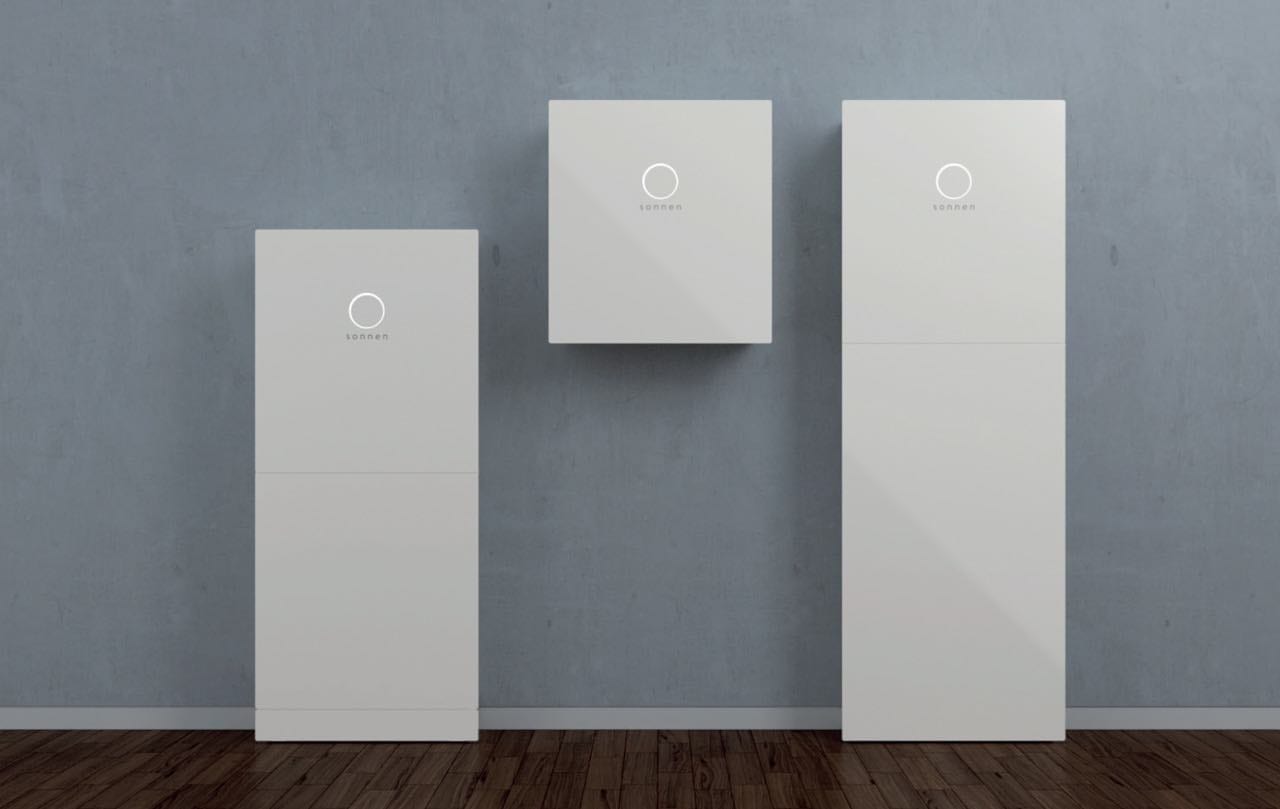

German battery storage company sonnen says it is now starting to use the combined capacity of the 2,500 residential batteries it has installed in Australia to play in the wholesale markets.
Sonnen says the combined capacity of the solar and battery storage systems it has installed to date in NSW, Queensland and South Australia gives it up to 20MW of capacity that it can play with in the market, and it says it is now “actively trading” by arbitrating the 30-minute spot price.
“This is simply buying low and selling high and doing so on a continuous basis,” says Chris Parratt, the company’s managing director for Australia and New Zealand.
“This activity helps to stabilise the grid because low and high prices tend to reflect low and high demand. Stabilisation leads to lower energy prices ultimately for everyone.”
Parratt says sonnen has been playing in the wholesale market in the last two weeks, including during the price peaks experienced in NSW last week when nearly 5GW of coal capacity was lost to the grid and the prices went to the market cap.
“We’re experimenting a little, learning about the market and what the customers want and how they use the battery.” That usage, of course, influences how much capacity the company has to play with.
Sonnen, of course, is not the only battery maker playing in that space, with Neoen Australia also doing the same through the Horsndale Power Reserve, also known as the Tesla big battery.
But that’s a utility scale installation, and while there are many different trials happening across the country, sonnen has the most capacity from aggregated household installations.
That may soon be about to change as more “virtual power plants (VPPs) ” come into the grid. VPPs effectively aggregate the capacity of household solar and battery storage systems, and are able to arbitrage the market or provide system services such as frequency control.
Tesla is still hopeful of putting together a 250MW VPP in South Australia, where the new South Australian Liberal government is now looking at linking the 40,000 subsidised battery storage installations it had promised before its election.
Sonnen plans to install up to 25,000 of its batteries in Australia over the next four years, which would bring together deployable capacity of around 200MW, the equivalent of a gas-fired power station.
“Ultimately, if the household battery sector can achieve the same penetration as solar with 2 million households having panels on their roof, this sector is capable of supplying as much power to the grid as the six remaining coal-fired power stations,” Parratt says.
Sonnen has already been operating a “virtual power plant” for the last three years in its biggest market Germany, where it says it is a strategic energy supplier balancing the varying needs of the north and south of the country.
The company recently raised $95 million in a fund-raising, partly to fund its Australian expansion, that was led by Shell Ventures in another sign that the world’s Big Oil companies are turning their attention to solar and storage.
Sonnen managing director Philipp Schroder says the company still hopes to build an advanced manufacturing facility for its batteries.
It had planned to build that plant in Adelaide after striking an agreement with the previous South Australian government, and is waiting to hear back from the new government – and the fine details of its battery storage policy – following meetings last month.
sonnen customers under the sonnenFlat program pay a fixed monthly fee (of between $30 and $50 depending on the size and energy usage of the household, or a saving of about $1,500 to $2,000 a year for a three-bed home).
As part of the contract, the customers allow sonnen to use their battery over short periods of the day to help balance the grid, from which they can earn income. Sonnen says its batteries are capable of 10,000 cycles, and have a 10-year warranty.