Snowy Hydro’s latest blowout in costs to its giant 2.0 pumped hydro project – reset to as much as $25 billion, and maybe even more – leaves lots of unanswered questions.
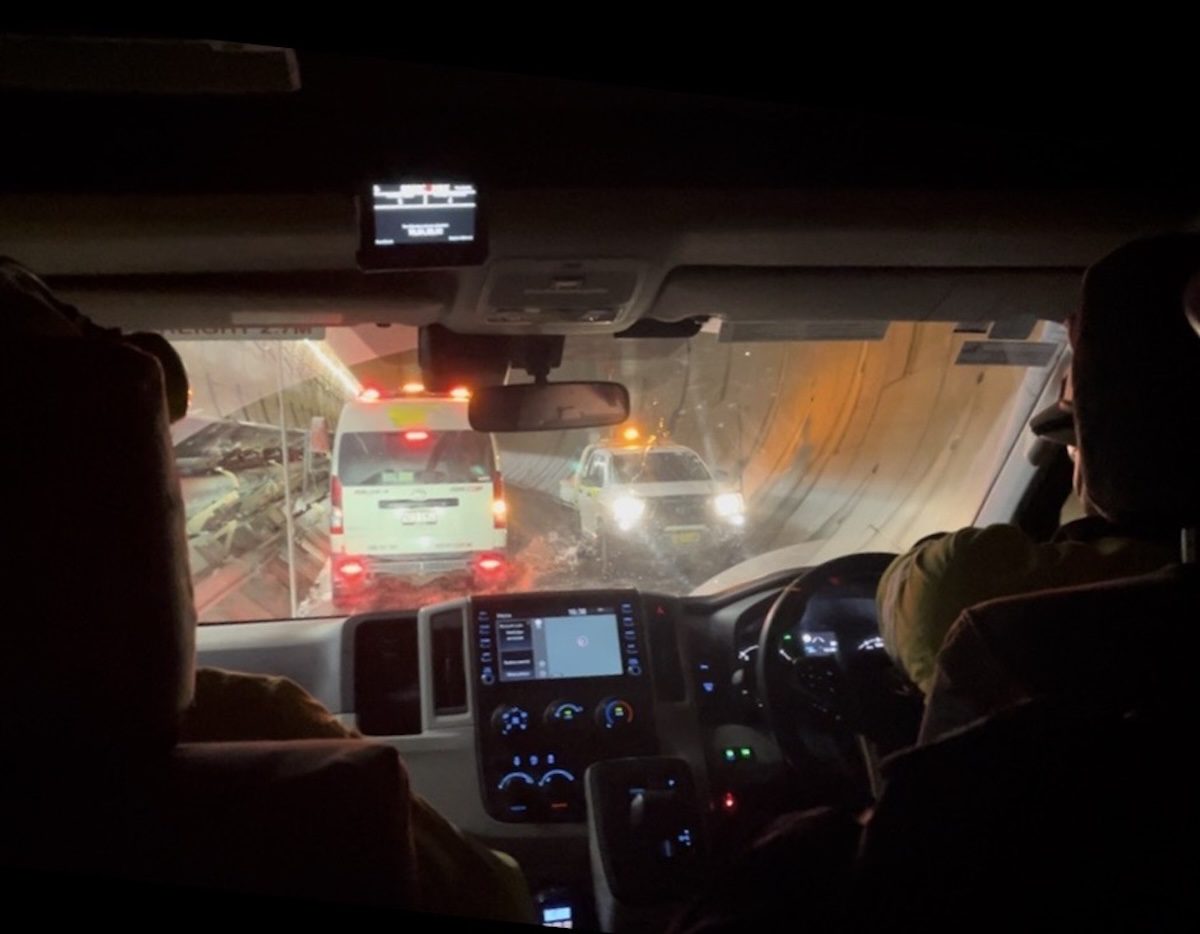
Engineering textbooks will no doubt present the 2.2 gigawatt scheme to connect two reservoirs through 27 kilometres of tunnels (plus another 6 kilometres of supplementary tunnels), and build a power station of the scale of the Sydney Opera House about a kilometre underground as a marvel – or a folly – depending on its completion.
Complementary financial tomes that analyse the project’s viability and how Snowy 2.0 will be integrated in the national electricity market,may turn out to be just as thrilling, but not necessarily in a good way.
Missing from Thursday’s “Project Benefits Analysis” by GHD was, well, any analysis of the net present value of Snowy 2.0.
That’s odd, not least because the updated business case in 2024 had the NPV of the project increasing from $2.8 billion to $3 billion.
That cheery outcome followed the project’s 2023 second “reset” that lifted the project’s overall cost from $4 billion to $12 billion. (“Reset 1.0”, as you might call it, came once the project’s expected bill doubled from $2 billion in March 2017 – when Prime Minister Malcolm Turnbull announced it – to between $3.8 billion-$4.5 billion in December 2017.)
Snowy’s chief executive Dennis Barnes chose – instead of an NPV – to highlight GHD’s view that the project would bring $18.3 billion in economic activity (mostly through salaries for 5000-plus staff). There’s also a predicted reduction of more than $7 billion in wholesale prices out to 2075.
There’s no clear reason why 2075 might be the date used for calculation other than perhaps 18 + 7 = 25, and hence appears to match the higher $25 billion “cost scenario” that adds a safety buffer to 2.0’s revised $22.2 billion bill.

Barnes told Renew Economy Snowy’s annual report, tabled on Friday, would show there was no impairment or writedown in the value of the project. That was indeed the case, but there was no sign of a revised NPV for Snowy 2.
Ted Woodley, a former senior energy executive and long-time Snowy critic, is among those wondering if financial engineers are making some heroic assumptions even to support the numbers that Snowy has so far released.
For instance, among the “key limitations” of GHD’s estimates are that it “relied on information as supplied by Snowy Hydro Ltd, Future Generation Joint Venture (FGJV), Voith and third-party modellers (including Baringa and Marsden Jacob Associates)”.
It said it had “not independently verified or validated the accuracy, completeness or reliability of the underlying data”.
That’s not reassuring, and underscores Woodley’s point there should have been an independent expert review of the project when the Albanese government inherited the project from the Coalition when it took office in 2022. This reassessment, a full year in the making, was another missed opportunity for such an arm’s length review.
Woodley said the $18.3 billion economic figure touted by GHD and Snowy as “meaningless”. “It’s really just a so-called benefit of building a pyramid,” he told Renew Economy on Friday. “It’s just activity.”
If not buried pharoahs, perhaps Snowy 2.0 might bring vast treasures to the NEM, at least, through lowered wholesale prices?
Out to 2075, $7 billion isn’t much more than $100 million a year. “So that’s not a big figure in terms of wholesale prices paid for through the NEM for a year, and there’s no indication of how that was calculated,” Woodley notes.
Earlier assessments, such as from the August 2023 Reset (2.0), had assumed Snowy 2.0 would be “running flat out just about every hour of every day of every year for the next 100 years,” he said. “So it was all unrealistic.”
Arguably, the rise of batteries – large and small – is already playing a major role in setting wholesale power prices, the Australian Energy Market Operators notes in its latest quarterly market update. Snowy 2.0 would have to compete with that.
Yes, Snowy’s promised 350,000 gigawatt-hours of storage is huge – and may well be 26 million home batteries’ worth.
But as Woodley notes, Snowy 2.0 won’t operate like a battery that discharges and recharges regularly if it is called on to keep the lights (and EV charging) on for days at a time during some future gloomy, still winter spell when there is little wind or solar energy being supplied to the grid.
“[It’s] just the physics of getting the water up, and the fact that it takes a third longer to pump than it does to generate,” he said.
“So this is not like people think a battery where you can run flat out for seven days and then a few days later it can run for another seven days,” Woodley said. “It’s a one-shot-per-season event, and it will occur every couple of years.”
“So it’s just not worth spending $50 billion to have this battery lined up to run occasionally, when you can spend far less money on some gas turbines, or hopefully in the future, hydrogen turbines to provide that backup,” he said.
That $50 billion figure is not Woodley’s prediction of a Reset 4.0 (though another “reassessment” is not out of the question before this project sends power down the line.
Rather, it’s his calculation of a series of costs that haven’t been loaded on Snowy’s tab but should have been. The $5 billion-odd HumeLink, for instance, connecting Wagga Wagga in NSW to Bannaby, just south of Sydney, takes a dogleg to link up with Snowy 2.0. That added about a third of the cost to that transmission project, Woodley said.
Similarly, the cost of getting Snowy 2.0’s power to Victoria – via VNI-West and the Western Renewables Link – should have been included too. (A Liberal-led Victorian government has vowed to cancel VNI-West if elected next month.)
Financial costs are also not being tallied to Snowy 2.0 account, with interest probably costing about $1 billion a year – with another billion or so added to the bill.
The project’s latest delay to commissioning – now set at October 2029 from the end of 2028, means about another billion dollars may get added to the pile before the project is fully operating, Woodley said.
As things stand, it’s also unclear how the extra $10 billion-$12 billion needed to finish the job – on present estimates – will be arranged. The Albanese government tipped in another $4 billion in equity, after the 2023 reset, and supported loans to Snowy.
In a statement on Friday, credit ratings agency S&P Global, said “ongoing and robust government financial support” would remain crucial for Snowy Hydro to complete the project.
For now, Snowy Hydro’s liquidity “remains adequate,” S&P said, noting Snowy is now funding construction through a $4.5billion shareholder loan facility,of which $1.5 billion remains undrawn.
“We expect most of the project’s increased cost will ultimately be funded by the government, and supplemented by bank debt, bond issuances, or a combination of these,” the agency said.

AEMO, meanwhile, will decide as soon as Friday whether an update to its Electricity Statement of Opportunities (ESOO) is required to identify potential supply or reliability issues needing action, given Snowy 2.0’s delay.
According to the National Electricity Rules, if “new information becomes available [that] materially changes the statement of opportunities, AEMO must publish this notice “as soon as practicable”.
The environmental costs of excavating large areas of the Kosciuszko National Park, NSW’s largest, haven’t ended up of the tab, either.
Park watchers say the original drilling – itself surprisingly scant – was “totally rushed”, with test boring machines stuck in swamps or tiny and delicate ecosystems that could have avoided unnecessarily damaged.
The rush – at least to get going – meant that Snowy 2.0 planned for just three expensive tunnel boring machines, Snowy and its contractors, Future Generation Joint Venture, said in submissions to a parliamentary inquiry.

The Long Plain Fault Zone, which apparently is yet to be tackled, crosses 1.394 kilometres of the main head race tunnel, at a depth of about 400 metres beyond the surface. The complexity forced Snowy and FGJV to design and purchase a fourth tunnel boring machine, dubbed Monica, that – fingers crossed – won’t get stuck.
Woodley said the fault zone posed “a major risk”. Another one is the inclined pressure shaft, which the borers have been working on now for a year or two.
“It’s only a kilometre or so long, but it’s at an incline” of as much as 45 degrees, he said. “It’s a ‘world first’ in having a tunnel boring machine go up at that sort of angle.”
That combination of financial and geological challenges leaves one large question hovering over policymakers: with $12 billion spent already, is it worth ploughing on?
Snowy’s boss, Dennis Barnes, thinks so.
“The scale of Snowy 2.0’s energy storage is world-leading,” he said in a statement accompanying the update. “More than half of the total energy storage the grid needs by 2050 will come from Snowy 2.0 alone.”
“Like the original Snowy Scheme, which still underpins energy reliability more than 70 years on, Snowy 2.0 is a generational investment in our energy sovereignty and a national asset owned by all Australians,” Barnes said.
Woodley, too, thinks the political momentum remains, and even the Coalition’s shadow energy spokesperson, Dan Tehan is not – yet – calling for Snowy 2.0’s cancellation. Energy minister Chris Bowen should resign, or be sacked.
Since the Coalition launched the project, with current leader Angus Taylor then a big backer, including declaring that Snowy 2.0 was “building on the proud legacy of the first Snowy scheme”. (Taylor’s grandfather, Sir William Hudson, was project’s first commissioner and chief engineer of the Snowy 1.0 scheme.)
Bowen also appointed Taylor’s predecessor as opposition leader, Sussan Ley, as a non-executive board member at Snowy just last month.
For Woodley, the galling thing is that exactly the same issues related to Snowy’s viability were raised at the 2023 reset, when the amount spent on the project was $4 billion.
“Bowen said, ‘We’ve spent $4 billion. We can’t waste that. We’ll just continue and build this for $12 billion.”
“So we’re in exactly the same situation today,” Woodley said. “And there’s no reason to suggest that we won’t be in the same situation in another couple of years.”
To join more than 29,000 others and get the latest clean energy news delivered straight to your inbox, for free, click here to subscribe to our free daily newsletter.