Squadron Energy has refinanced its operating wind portfolio with $2.7 billion that could fund more batteries and hybrid projects, according to one advisor.
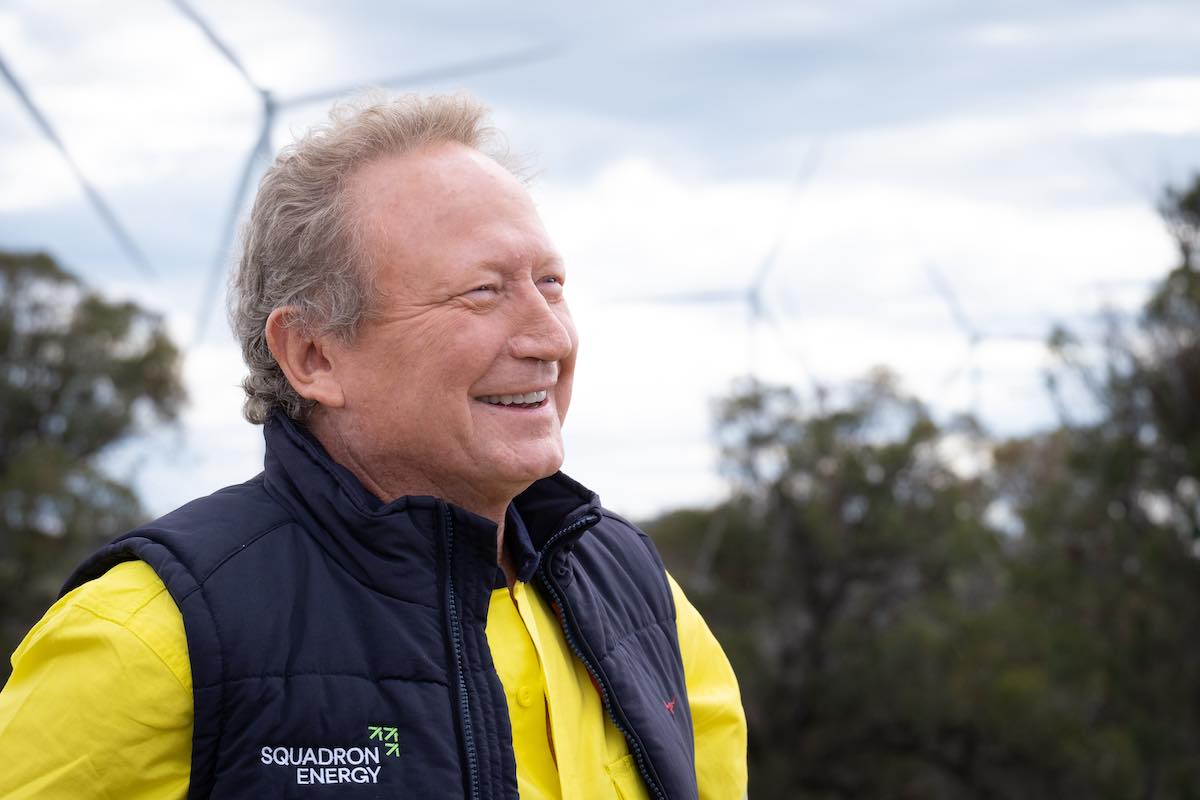
The company, owned by iron ore mining billionaire Andrew Forrest, has 1.5 gigawatts (GW) of operating wind projects.
The deal also included the under-construction Uungula wind project, but didn’t include the first stage of Clark Creek which started exporting to the grid last year.
Some 15 banks backed the deal, according to media reports.
“The portfolio financing arrangements have flexibility to enable future expansion of Squadron Energy’s portfolio into BESS and hybrid projects,” a statement from Herbert Smith Freehills Kramer says, which was an adviser to the deal.
The law firm’s project lead, Gerard Pike, said the deal was for “flexible non-recourse financing” to “facilitate bringing these new projects into construction as efficiently as possible.”
Squadron also has nearly 15 GW of projects in various stages of development, according to project tracker Renewmap, in addition to two gas power stations and a hydrogen project.
Batteries and wind each make up the majority of Squadron’s full pipeline of renewable energy projects.
And while big batteries are still having their moment in the sun – literally, in the case of solar projects which are rarely being proposed without one now – hybrid wind projects are on the cusp of a similar trend.
Squadron is already experimenting with the trend at its Uungula wind project, with plans to install a co-located battery alongside the 414 megawatt (MW) wind project.
Allens partner Tim Stewart, who worked on the deal, says developers are beginning to refinance as their portfolios move out of planning and into more mature stages.
“This transaction is a good example of sponsors refinancing and optimising existing portfolio financing arrangements,” he said in a statement.
“As portfolios mature, sponsors are increasingly seeking opportunities to further streamline and build flexibility into their debt platforms to allow for future growth and diversification.”
- * This article has been updated to reflect that Squadron may not in fact use the funds for new batteries.
To join more than 29,000 others and get the latest clean energy news delivered straight to your inbox, for free, click here to subscribe to our free daily newsletter.