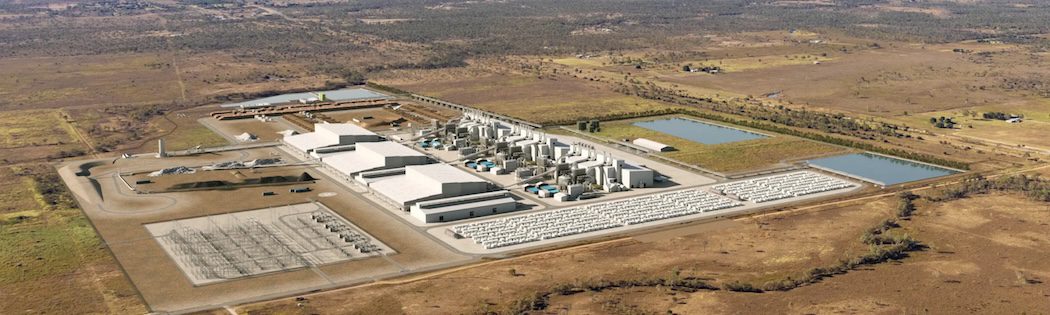
Global investment giant Quinbrook is referring another huge Queensland battery proposal to the federal environment queue as it builds on confidence created by the milestone launch of its first battery in the state.
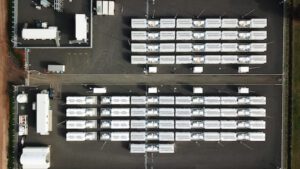
The developer wants to know if its 780 megawatt (MW), 2,200 megawatt hour (MWh) Supernode North battery and substation project just south of Townsville will need federal oversight.
Unlike Quinbrook’s first battery in the state, the Supernode South Pine edition in Brisbane which is geared towards supporting an on-site data centre, the northern version will be the backbone of an $8 billion polysilicon factory – Australia’s first.
Just yesterday Quinbrook confirmed the first 260 MW, 619 MWg stage of the Supernode South Pine project is fully functional.
It’s now working on finishing stage two and three in 2026 and 2027, respectively, to bring the battery up to its full strength of 780 MW and 3,074 MWh.
The planning mire
The new Supernode project will encounter a few more hurdles than the Brisbane edition, however.
Quinbrook, via its development arm Private Energy Partners, lodged a development application with the Townsville council in September.
It was knocked back on December 23 for no longer fitting the state’s new planning rules for batteries which say these must now have community agreements locked in before heading to planning authorities – a change made five days earlier.
A project update this month highlights one of the consequences of the state’s new planing rules: the Supernode North planning application had just finished the public consultation period when the changes came in. Now that Quinbrook will need to resubmit, anyone who provided feedback will need to do it all again.
Quinbrook says it is working to resubmit the proposal “as soon as possible”.
Furthermore, the site, secured by Solquartz which is planning to build the polysilicon plant, is a former agricultural research station in rural northern Queensland.
While it’s zoned for “high impact” industry, according to the EPBC referral, the site is surrounded by farmland which raises the question of whether the EPBC might take an interest in how Quinbrook goes about managing the environmental impact of building a big battery there – unlike the industrial site in Brisbane where it didn’t approach the EPBC at all.
The EPBC referral says that as a result of being a CSIRO research station, the site is “cleared and is being heavily infested with non-native plant species”.
Surveys so far haven’t found any threatened tree communities, plants, or animals on the site, but between 2023 and 2025 bird and bat watchers did spot bare-rumped sheath-tailed bats in the area and squatter pigeons outside the area.
And while no black-throated finches, koalas, fork-tailed swifts or white-throated needtails were detected during the surveys, the project will get rid of 41 hectares of possible habitat and foraging vegetation that these birds and mammals could use.
All in service of solar
Quinbrook is backing the next-door polysilicon plant which will provide feedstock for Australia-made solar panels.
Project Green Poly, as it was known then, was referred to the EPBC in 2024 and is still under assessment after several changes which saw the different components of the site split into different ownership models.
In January, the EPBC greenlit a move to include only the 100,000 tonne per year polysilicon plant at the “Northern Quartz Campus” under this particular assessment, and split off the Supernode North battery and substation, and a biochar processing plant into other EPBC referrals.
The conceit behind the polysilicon project is that the final product will be made using only renewable energy.
Today, that goal is looking more viable.
The Northern Quartz Campus sits north of where the 330 kilovolt (kV) CopperStrong transmission line will hook into an existing 275 kV line heading up to Townsville.
Already there are three big solar projects within 30km of the new Supernode site being planned, and one already operational.
The question will be whether the Queensland government lets them be built.
If you would like to join more than 28,000 others and get the latest clean energy news delivered straight to your inbox, for free, please click here to subscribe to our free daily newsletter.