The battle over who should lead the increasingly urgent roll-out of kerbside electric vehicle charging in Australia has intensified as electricity networks seek a rule change that they say offers a simple fix to the nation’s “chicken-and-egg” EV problem.
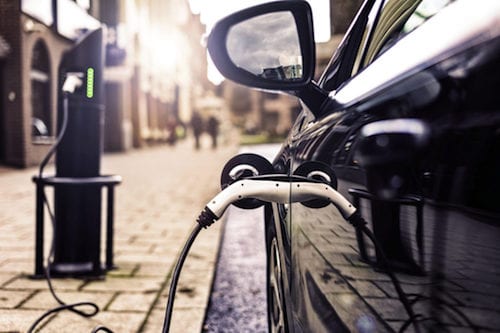
Industry group Energy Networks Australia (ENA) has lodged a formal request with the Australian Energy Market Commission (AEMC) for changes to ring-fencing rules that would allow poles and wires companies to install, own and maintain on-street chargers on existing network assets.
“The reason is simple,” says ENA chief executive Dominique van den Berg: “We do not have enough accessible, affordable public charging.
“By enabling distribution networks to install, own and maintain kerbside EV charging using existing infrastructure – such as power poles – we can deliver faster, more affordable, and more widespread access to charging where people need it,” van den Berg says in a cover letter to the AEMC.
“It simply unlocks a faster, lower-cost pathway to deliver the infrastructure Australians need.”
The ENA is seeking the rule change because, under current rules, EV charging is off limits to network companies as a “contestable service.”
Changing it under the NER (National Electricity Rules) to a Direct Control Service (DCS) would remove the “ring fence,” while also allowing networks to recover the cost of installing and maintaining kerbside EV chargers as part of their regulated asset base.
“Importantly, this model maintains clear roles in the market,” says ven den Berg.
“Distributors would not sell electricity or charging services. Instead, they would enable the infrastructure and provide open access, allowing retailers and charging companies to compete for customers. This mirrors the way energy is delivered to homes today.
“The proposed rule change gives effect to this model by allowing distributors to provide EV charging infrastructure as a regulated service. It is not mandatory, and it does not crowd out other approaches.
“This is about fairness, affordability, and making the energy transition work for everyone,” van den Berg says.
The rule change request, which has not yet been initiated by the AEMC, follows a pre-emptive strike from a coalition of consumer and industry bodies, who argue that network companies are the last group that should be allowed to run public EV charging infrastructure if “fairness” and “affordability” are the goals.
In their own rule change request, the group led by Nexa Advisory is asking the AEMC to write stronger ring-fencing safeguards into the rules, to prevent what they see as increasing regulated network creep into what should be competitive markets.
Essentially, they want less holes in the fence; a view supported by renewables and consumer advocacy groups the Smart Energy Council and Solar Citizens, as well as by the Australian Energy Council – the industry body for the big “gentailers” that currently dominate the consumer services side of the market and protect it fiercely.
“Tightening the process is critical to preventing the misuse of monopoly network powers and protecting energy consumers from gold plating and cost blowouts,” said Nexa Advisory chief Stephanie Bashir in March.
The ENA’s official pitch to lead on kerbside EV charging also comes at a flashpoint in mainstream media coverage of Australian EV uptake, as petrol prices soar off the back of the US/Israel invasion of Iran and cars run on home-generated electricity, rather than imported foreign fuel, looks more like a no-brainer than ever.
TV news reports about long queues for EV fast chargers – particularly over the Easter long weekend – align with the ENA’s argument that Australia’s electric vehicle charging infrastructure is nowhere near where it needs to be to support the sort of uptick in demand that is being driven by the latest global oil crisis.
In its submission, published on Tuesday, the ENA points to the AEMC’s own submission to the Productivity Commission, last year, emphasising that charging infrastructure must be conveniently located and equitably distributed to support the necessary acceleration of electric vehicle uptake.
It also shares figures taken from the International Energy Agency’s 2025 Global EV Outlook, which showed that Australia has 45 EVs for every public charging point, compared with a global average of just 11.
“Without action, the benefits of EVs will remain out of reach for many households. With the right regulatory settings, we can unlock those benefits now – delivering lower costs, greater choice, and a cleaner energy future for all Australians,” van den Berg says.
“We urge the Commission to support this rule change in the long-term interests of consumers.”
It sounds convincing – and the ENA also argues that the cost passed through to consumer electricity bills – via the RAB – would be negligible, due to the reduced network charges that would accompany increased EV charging.
But Tristan Edis, an analyst with Green Energy Markets, is not convinced that networks will come up with the technologically best or cheapest way to support public EV charging.
“My view about the problem is you’re dealing with a monopoly and the history we can see very clearly is they are not cost efficient,” he told Renew Economy on Tuesday.
“We know the networks are hopeless at this,” he adds, pointing to the example of network-delivered community batteries, which he has argued have failed to deliver value for energy consumers, or reduce energy bills. “These guys are not cost efficient providers.”
Edis says his preference would be for a state-led tender, designed in close consultation with local governments and EV advocacy groups, where a small number of suppliers compete to deliver economies of scale.
“At the same time, you say to the networks … ‘You have to connect this stuff, and here’s how much I’m allowing you to charge. And I’ve gone and done a survey, and I’ve gone and spoke to a range people, and this is what a reasonable cost is… And you can charge that amount per street pole charger to connect it’.”
Ross de Rango, director of Vehicle Charging Solutions Australia, is similarly skeptical that network companies are motivated by, as van den Berg puts it, by “fairness, affordability, and making the energy transition work for everyone.”
“DNSPs like Ausgrid, and their spokespeople at ENA … [have] been campaigning for years to get the rules of the market changed in their favour, to the detriment of competitive Australian businesses and energy bill payers,” he wrote on LinkedIn last week.
“The old rule of ‘never waste a crisis’ applies… But this does not mean that the DNSPs or ENA have suddenly started telling the truth.
“EV drivers who can’t easily charge their cars at home do (and will) need other options, but we don’t need to restructure the rules of the market in favour of multi-billion dollar monopolies to enable those options to exist.”
The ENA, however, argues its proposed approach to the problem “expands the market, helping charging providers reach more drivers while driving innovation and competition at the customer level.
“It also keeps the door open for other rollout models, ensuring flexibility as the market evolves,” the rule change request says.
The ENA says the proposed rule makes clear that networks would not be involved in the sale or supply of electricity to EVs, nor would they provide retail services or sell electricity directly to electric vehicle charging customers. Electricity sales at the charging point would also remain contestable.
It says DNSPs intend to provide open access to the charging infrastructure on transparent terms, to facilitate competition between retailers and charging service providers on price, service offerings and customer experience at the point of use.
“We are stuck in a ‘chicken-and-egg’ problem,” says van den Berg. “Without enough chargers, people won’t switch to EVs. Without enough EVs, private investment in charging remains slow and still requires support.
“Breaking this cycle requires a practical, scalable solution. That solution exists.”