Coal Australia, a lobby group of Australia’s biggest miners of the fossil fuel, might have chosen a less ambiguous verb for their latest campaign to “keep our coal communities strong”.
After all, the “Forging the Future” push might convey an image of a blacksmith beating metal into shape, or conversely, a counterfeiter generating some dodgy document to deceive.
Perhaps both might apply, at least in the context of the recently released interim report by an expert panel into “enhancing Australia’s fugitive methane emissions estimates.
The panel, led by former Chief Scientist Cathy Foley, was charged with studying whether “new atmospheric measurement approaches could further enhance” estimates of those fugitive methane molecules.
Coal mines, we have assumed, contribute about 5% of Australia’s total greenhouse gas emissions, at least according to the methods used by the federal government to estimate the pollution currently. That level is more than triple the fugitive emissions from oil and gas facilities.

The International Energy Agency is among global bodies that have questioned the accuracy of methane reports compared with what is actually venting in the atmosphere, with the energy sector potentially the most errant.
The non-profit group, the Climate Council, has also raised the issue of whether methane emissions from Australia’s coal mines might be under-estimating how much of the potent greenhouse gas they are releasing.
Mines producing 7% of the country’s coal were emitting about half of the national total of methane pollution, based on estimates that included aircraft and satellite sensors, its 2024 report found.
The federal Climate Change Authority was the original source of the recommendation to the government that it seek to “improve the accuracy of methane measurement, reporting and verification (MRV) and support methane mitigation across the coal and oil and gas subsectors”.
At stake, too, is the relative greenhouse potency of methane versus carbon-dioxide. Over a 20-year period, methane has global warming potential more than 100 times greater than CO2.
The interim report, indeed, notes: “there is growing interest in new ways to detect and quantify methane in the atmosphere”.
“New atmospheric measurement (‘top-down’) approaches may improve how Australia estimates fugitive methane emissions,” it states. “Cutting methane emissions can help slow climate change in the near term.”
These approaches use sensors on satellites, aircraft, drones and on the ground to detect methane in the atmosphere. “The detections are then used to quantify emissions,” it said.
The experts note that top-down efforts should be used to complement so-called bottom-up methods, presently deployed by the miners.
“Satellites are useful for finding large emitters and understanding emissions across regions,” it found. “However, satellites cannot yet be used on their own to report emissions from individual sites.”
“Airborne approaches show promise because they can detect smaller emissions across large areas,” it said.
The expert panel will continue looking at different top-down approaches, source types and use cases, the report said. The aim will be to examine which approaches can be used to update the official methane estimates and support emission reduction.
David Etheridge, a former senior principal research scientist with the CSIRO, said measuring methane emissions accurately can be difficult.
“If you’re nearby a source when the atmosphere is not mixing very much, you [might] get a huge concentration but it may not actually be a very big source,” Etheridge said. “That’s why we put a lot of effort into understanding the dispersion, and backing out from a concentration measurement through the dispersion model.”
Etheridge said his own group at CSIRO had applied emissions measurements to a coal seam gasfield in Queensland’s Surat Basin a decade ago. They “found a bit more than was estimated from the bottom-up”.
He said standard approaches tallied the number of welds and valves on a pipeline, the length of that pipe, amount of water produced, and so on. “Those sorts of things are basically an accounting process – which is semi-scientific – but it involves huge extrapolations.”
Emissions estimates from underground coal were “reasonably well done”, Etheridge said. Mines typically had a big reservoir of methane with few outlets.
“When they’re vented, you can measure the concentration that’s coming out,” he said. “Multiply that by the flow rate of the duct, and away you go. You’ve got it.”
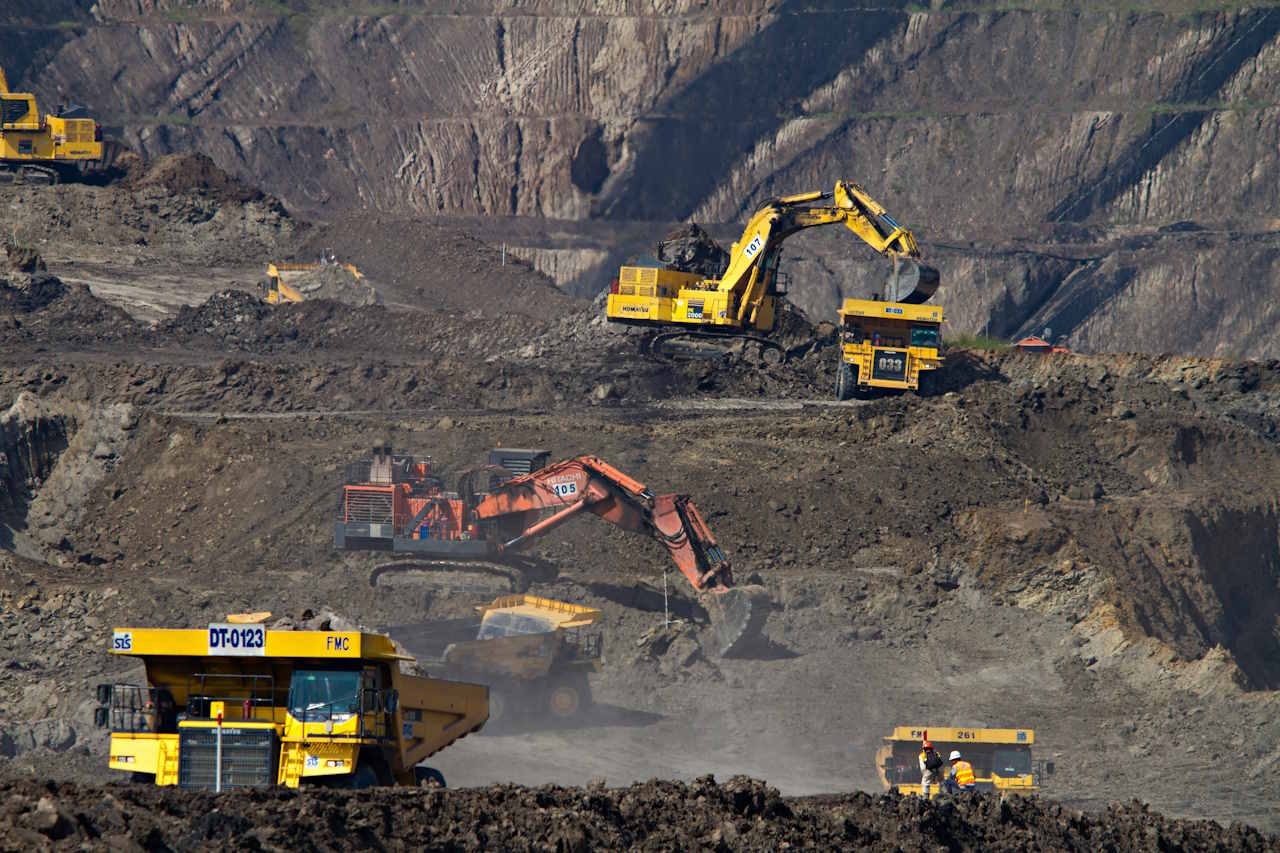
Open-cut coal mines, though, had “methane coming out all sorts of places at different times, so it’s a lot harder”, Etheridge said.
Operators extrapolated from a few small experiments for a huge mine, “which can lead to all sorts of errors, as you can imagine”, he added. “So the top-down [methods] can do better than that.”
Etheridge’s research, including a 2020 paper led by Ben Hmiel, had found anthropogenic fossil emissions were underestimated by about 58 million tonnes of methane a year.
“This underestimation globally of fossil fuel emissions is actually good news because it means there’s a lot of methane there that can actually be mitigated,” he said. “It’s a lost product. So we would like to actually collect that methane and burn it and use it.”
With gas now more expensive, companies also have more incentive to identify and fix methane leakages.
“It might be economically driven, whereas in the past … people were walking away from the reservoir while it vented,” Etheridge said. “Those practices change, and I think we’ll see an improvement.”
The final expert panel report is due in mid-2027.
Renew Economy approached Coal Australia for comment.