Australia’s industrial regions have a significant opportunity ahead of them.
As global demand grows for low-carbon products, regions such as Gladstone, the Pilbara and the Hunter can strengthen their competitiveness through access to affordable renewable energy. At the same time, Australia is seeking to protect biodiversity, restore ecosystems and support thriving regional communities.
New Climateworks analysis shows these objectives can be achieved together. Our modelling finds Australia can build the renewable energy needed for industrial decarbonisation while protecting high-value biodiversity areas, maintaining productive agricultural land and delivering benefits to communities.
The opportunity now is to ensure planning systems help deliver these outcomes at scale.
Renewable energy can help safeguard industrial competitiveness
Australia’s heavy industrial regions contribute around $166 billion to national GDP. They produce many of the materials that underpin the economy and support thousands of jobs.
Many of these industries are expected to rely increasingly on renewable electricity as they reduce emissions and compete in emerging global low-carbon markets.
That creates a new planning challenge.
Businesses can invest in electrification, low-carbon fuels and new production technologies. But they also need confidence that sufficient renewable energy and transmission infrastructure will be available when those investments are made.
The Australian Energy Market Operator’s latest Integrated System Plan outlines a major expansion of renewable generation, storage and transmission. Yet national planning processes are not designed to map the specific energy needs of individual industrial regions or ways to protect nature during that expansion.
As a result, there is an opportunity to better connect industrial development, energy infrastructure and land-use planning.
Good planning can deliver multiple outcomes at once
Using Gladstone as a representative industrial case study, Climateworks modelled how Queensland could meet growing electricity demand while also protecting biodiversity and supporting agricultural production.
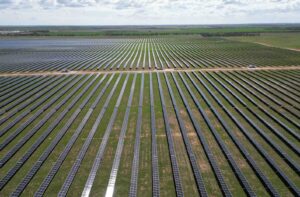
The modelling found there is sufficient land to deploy renewable energy infrastructure at the scale required for industrial decarbonisation while excluding the highest-value biodiversity areas from development.
Achieving these outcomes came at modest additional cost – increasing overall modelled system costs by only about 1 per cent, compared to a pathway without those land-use constraints’
Agricultural impacts remain very small. Farming can continue to grow to meet the needs of the population, with less than 0.2 per cent of agricultural production impacted by renewables.
The benefits also extend to regional economies. Queensland landholders could gain at least $1.2 billion from renewable generation hosting between now and 2050, alongside further benefits from transmission infrastructure and community benefit agreements.
The modelling shows these outcomes are achievable together. The opportunity now is to embed that thinking into how Australia plans future energy infrastructure.
Planning systems need to reflect the future Australia is building
Australia’s current planning arrangements evolved around separate objectives and institutions.
Energy planners focus on energy.
Environmental regulators focus on environmental outcomes.
Land-use decisions often occur through different processes again.
Each of these functions matters. But the transition now requires a more integrated approach.
Climateworks recommends two practical steps.
The first is developing Industrial Precinct Energy Plans (IPEPs) for major industrial regions.
These plans can create a shared understanding of future energy demand, supply requirements, transmission needs and industrial flexibility opportunities. They can provide greater certainty for iindustry, investors and infrastructure planners.
The second is expanding the use of scenario-based spatial modelling.
This allows governments and planners to test different development pathways before major infrastructure decisions are made. It can help identify locations where renewable energy development supports energy, environmental and agricultural objectives together.
Importantly, it also creates opportunities for communities and stakeholders to engage earlier in decision-making.
A stronger industrial future starts with better planning
The most important finding from this analysis is not about renewable energy. It is about choice.
Queensland can protect high-value biodiversity while delivering the renewable energy needed for industrial decarbonisation.
That suggests Australia’s biggest challenge is not whether these objectives are compatible. It is whether planning systems can align them.
Done well, integrated planning can help Australia build the renewable energy needed for industrial decarbonisation while supporting productive agricultural landscapes, stronger regional economies and better outcomes for nature.