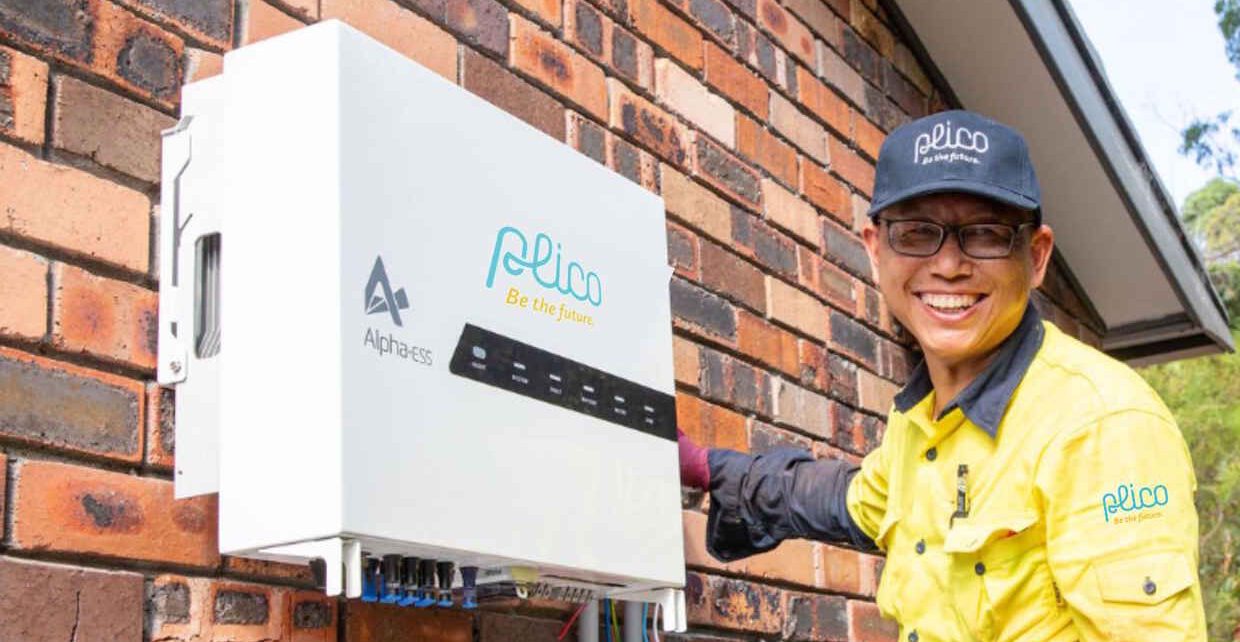
Advocates for advancing consumer energy resources, such as rooftop solar, home batteries and electric vehicles, says they are concerned the Albanese government will reverse course on plans to assign technical regulations to the independent Clean Energy Regulator and instead grant greater oversight to its own energy department.
In March, climate change and energy minister Chris Bowen, announced the government would act on the recommendation of the National Consumer Energy Resources roadmap and establish a National Technical Regulator for consumer energy resources.
The Clean Energy Regulator “will be our preferred agency to take on this role” given its successful regulation of the Cheaper Home Battery Program”, Bowen said at the time.
The CER had regulated that program “successfully”, and had overseen world-leading small-scale renewable schemes, he said.
“They are ready,” Bowen said. “And they will ensure compliance with technical standards to deliver interoperability, so Australians get full value from their investments.”
However, Renew Economy has been told Bowen will instead seek support at Friday’s Energy and Climate Ministerial Council meeting for the Department of Climate Change, Energy, the Environment and Water (DCCEEW) to take responsibility for the Technical Requirements Office.
Renew Economy sought comment from Minister Bowen’s office. It declined to provide comments ahead of the ECMC meeting.
Industry stakeholders have been invited to a “post-ECMC briefing on National CER Technical Regulatory Framework” after Friday’s ministerial meeting. That briefing was “subject to the outcomes of the 11 September ECMC meeting”, according to the invitation.
Stephanie Bashir, chief executive of Nexa Advisory, said government decisions must be transparent, not least in the fast-growing area of consumer energy resources, or CER.
“There was no consultation on the CER technical standards,” Bashir told Renew Economy. “Many in industry had been calling for the [Clean Energy Regulator to take up the role] or to establish a new technical regulator as none of the existing bodies have the expertise and governance structures needed.”
“To then cut corners and establish an ‘office’ within the department is not the right move,” she said. “Especially when this was not consulted on publicly.”
“These consumer assets are critical in the future of the energy system and the transition more broadly,” Bashir added. “Consumers have invested over $20 billion out of their own pockets and we need to protect and ensure they will get the value they were promised.”
A report last year – funded by the RACE for 2030 Cooperative Research Centre (RACE) and prepared by independent expert Gabrielle Kuiper and Dylan McConnell from UNSW Sydney for the Energy Efficiency Council – called for any technical regulator to be legislated.
Such legislation should establish the regulator “with a clear mandate to develop, implement, and enforce robust technical standards for all forms of DER – including rooftop solar, battery storage, electric vehicles, and flexible demand technologies – across the National Electricity Market”.
The well-designed regulator “would also be responsible for aligning [distributed energy resources] technical standards with international best practice, ensuring consumer protections and supporting the rapid scaling of
flexible demand and storage.”