The head of the Australian Energy Market Operator has highlighted again how batteries – both big and small – are fundamentally changing the way that electricity is produced and consumed in Australia’s main grid, and helping cut wholesale prices.
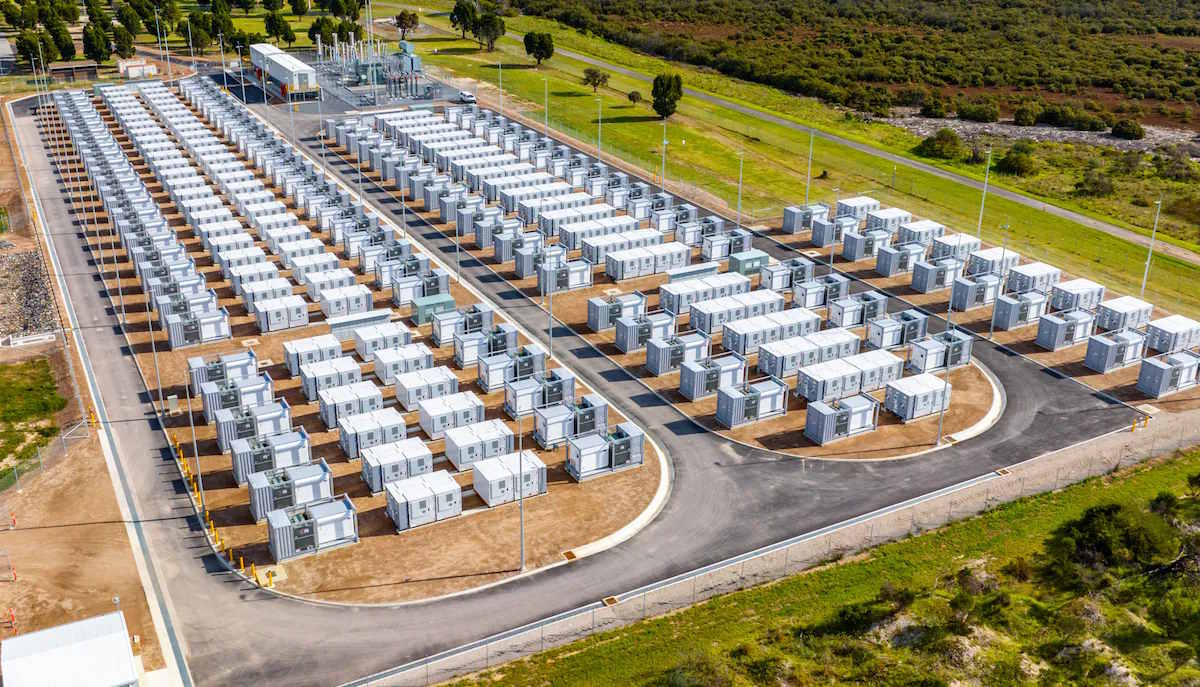
According to AEMO chief executive Daniel Westerman, grid-scale battery set the wholesale price nearly half the time in the September quarter, up from just 18 per cent in the same quarter a year ago, and 36 per cent in the June quarter.
Westerman says grid-scale batteries also tripled the amount of energy they absorbed during the day to 13 gigawatt hours (GWh), and injected most of it – 11 GWh – back into the evening peak between 4 and 9 pm, which on average accounted for 8% of total consumption during the peak.
“That’s a greater contribution to meeting peak demand than gas-fired generation,” Westerman told an energy conference in Sydney on Tuesday,.
“Increasingly, grid-scale batteries are also determining the wholesale price of electricity, both when they charge and when they discharge …. reducing both peak prices in the evening and the occurrence of negative prices during the day.”
“Overall, wholesale prices were lower for the quarter in all NEM regions,” Westerman added, noting that the full report for the September quarter is due to be released next week.
Westerman also noted the impacts of two key federal policy initiatives – the home battery rebate and the “solar sharer” requirement that is also driving significant changes of behaviour from consumers, and reducing the cost of the electricity system.
He said more than 700,000 household batteries have now been installed throughout Australia, with a combined capacity greater than 5 gigawatts and 16 gigawatt hours, and this number would likely triple by 2030.
“What’s really striking is how those household batteries are behaving today, and the difference they’re making to energy systems and markets,” Westerman said.
“For several quarters now – summer or winter – we see that homes with batteries are drawing an average of 70-75% less power from the grid at peak times compared to those with rooftop solar alone.
“That is reducing the need for additional generation and lowering costs for all consumers.”
He also noted the impact of the Solar Share offer, where energy retailers are obliged to offer an option to customer to provide free electricity between 11am and 2pm each day.
“At exactly 11am every day, electricity demand jumps up,” Westerman said. “Right now, that demand jump is around 360 megawatts across the NEM, and it’s been growing over recent months.
“11 am is the start of free power periods under some tariffs, and clearly many households are choosing to automate when they charge their batteries and vehicles and run their appliances.
“While the numbers aren’t precise, we estimate that between 15–25% of home batteries may be responding to market signals in various ways.” Others are choosing to leave their battery in passive mode, soaking up their own solar during the day for use later in the evening.
“I want to make three points very clearly here,” Westerman said.
“The first is that these assets do not belong to the grid – they were paid for by customers and it is each customer’s decision whether and how to use their battery.
“The second is that even in passive mode, these home batteries are reducing that home’s demand from the grid during peak times, and that is bringing meaningful benefit to all consumers already.
“The third is that if the right proposition can be created to help more home batteries respond to market signals, then all consumers will benefit even further – and I know many retailers are working on developing these propositions.”