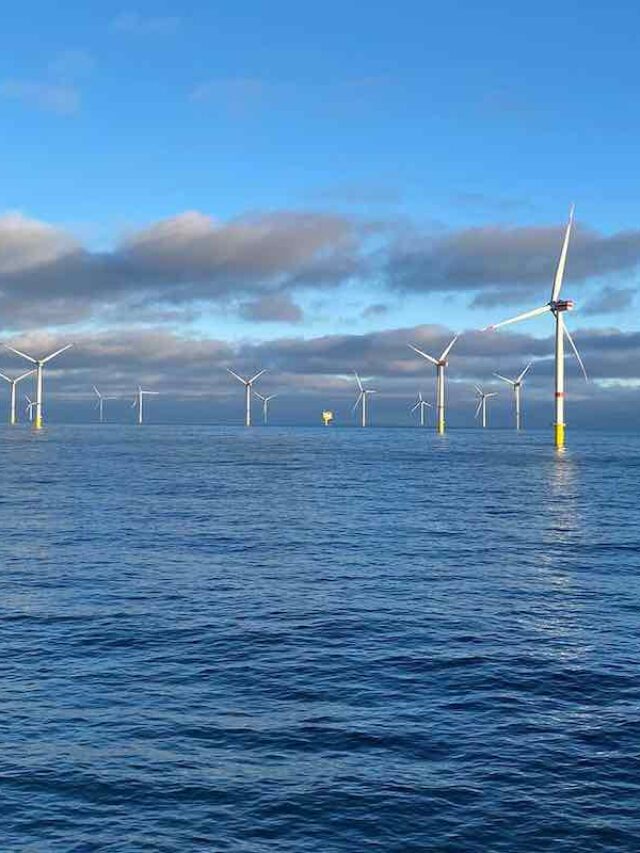
Offshore wind developers in Victoria are quietly hoping the state election in November delivers bipartisan support for the industry, if it winds up resulting a change in government.
The groundwork is in place for Victoria’s offshore wind industry to start ramping up in the second half of this year, providing whoever is in government after the vote in November continues to provide support for the industry.
“For us … strong support and continued commitment for that 9 gigawatt (GW) [offshore wind target] is what we need,” Orsted’s Albert Quan told an industry forum in Melbourne this week.
The Liberals under leader Jess Wilson, however, have vowed to pause major transmission projects and review the newly minted Victorian Transmission Plan.
That proposal that will stop all generation projects in the state including offshore wind, which the Liberals say they support but only in Gippsland as they plan to cancel the Southern Ocean zone near Portland in the west.
A One Nation kingmaker scenario, which is currently not as unlikely as it once was, would be devastating given its stated policy on the sector is “banning offshore wind installations.”
The “complete disaster” of offshore wind in the US shows what happens when all sides of politics fail to come together, says Jera Nex’s David Ghaly.
“A lot of people lost a lot of money in that market, and that’s because it didn’t have bipartisan support at both levels,” he said at AuWE in Melbourne this week.
“When you’re doing projects this big that take this long, I think that there needs to be that full-throated support for the industry from both sides, and that’s probably the one thing that concerns me the most at this point in time, especially given the climate that we’re in right now.”
Better than last year
And yet in contrast to last year, when most developers were beginning environmental studies and the very existence of the auction was looking uncertain, some proponents are confident about what the future will bring.
“I’m quite optimistic, looking at where we are right now, compared with last year,” Ocean Winds head of development Pelayo Rodríguez Alonso said during the forum.
“The two main milestones … [are] the auction design mechanism that we will be seeing soon, and then the elections. Hopefully we can see bipartisan … support for offshore, because it makes sense – there’s no other way.”
This is in contrast to last year, when most developers were beginning environmental studies and the very existence of the auction was looking uncertain.
Rodríguez Alonso says what’s needed to make offshore wind “real” in Australia is finished transmission and port infrastructure, a good auction scheme and detail on what the next ones will look like, and ongoing funding via the Electricity Services Entry Mechanism (ESEM) – all of which will help with locking in supply chains.
“The only way we have seen that [a] supply chain really goes to a country is when they see that it’s not just one project, one auction, but when they see some depth,” he said.
“Worldwide right now, [the] supply chain is quite shallow, so you need market depth… you need [Victoria’s offshore wind target of] 9 MW. But to make [the targets] real you should have to put it on paper and set a clear timeline.
“Those four ingredients are the key, and if those units are in place, we can have a very successful industry in this state in Victoria.”
There are still nine projects with 18.5 gigawatts (GW) of capacity working through feasibility studies in the Gippsland offshore zone alone, the first to be declared in Australia. Victoria’s targets are for at least 2 GW of offshore generation capacity by 2032, rising to 9 GW by 2040.
Southerly Ten is vying to be the first to receive environmental approvals for its 2.2 GW Star of the South project, publishing its Commonwealth and state draft impact statements in May.
Port is still a problem
While the work on transmission linking the offshore wind sector to the mainland is quietly evolving, the port that all projects will depend on is still a work in progress.
The Port of Hastings Corporation (PoHC) revealed new design tweaks this week to try to convince Commonwealth officials it doesn’t pose the “unacceptable risk” to the environment the federal government deemed it in 2024.
It’s aiming to make its full environmental plan available in 2027 for public comment.
The Victorian government is spending $124.5 million helping the PoHC through that process.
But it’s one that RPS offshore wind lead Tamara Al-Hashimi says is more complicated than many people understand.
“We know that the port has had some investment from the government, which is great, but we don’t know the timing of when that port will be developed,” she told the industry forum.
“The port faces its own set of very challenging approvals.
“The Port of Hastings is in Western Port [bay] Ramsar wetlands and the Barry Beach marine terminal, which may be a component for operational supply, is in the Corner Inlet, so really challenging environments, really challenging approvals processes for those projects, so there’s a lot of uncertainty in all of that.”
If you would like to join more than 29,000 others and get the latest clean energy news delivered straight to your inbox, for free, please click here to subscribe to our free daily newsletter.