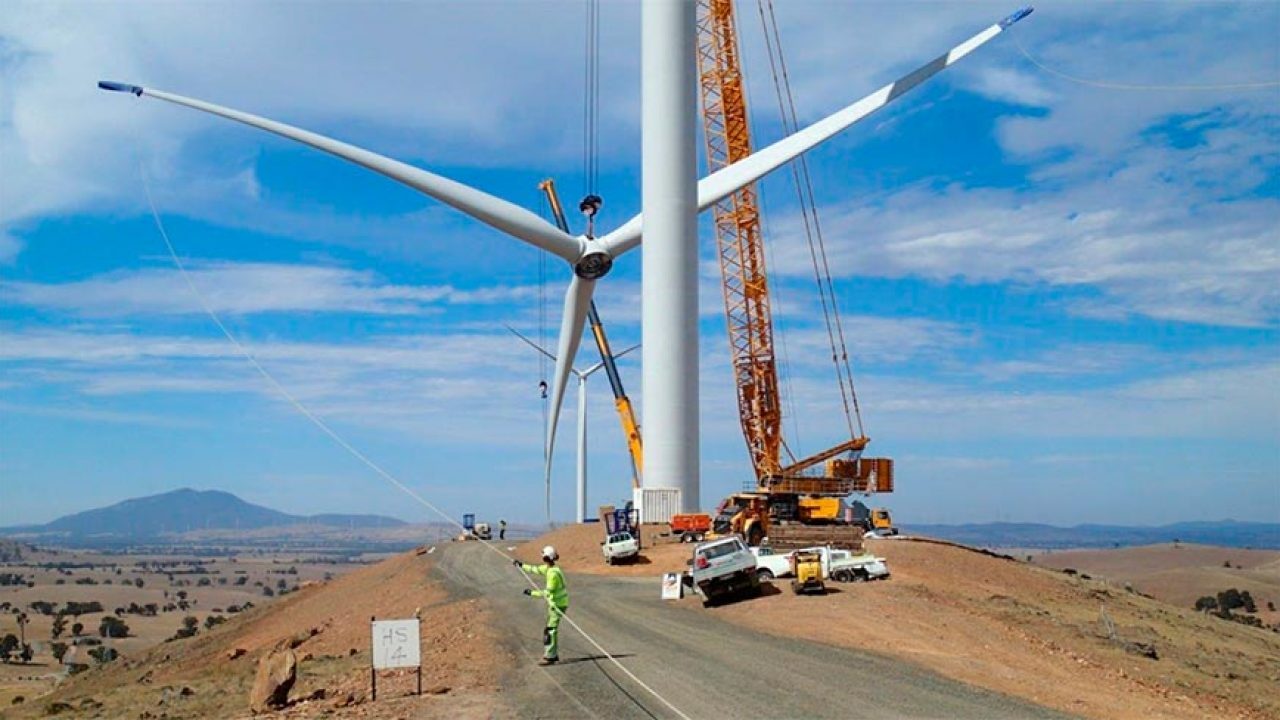

Renewable energy and storage company Pacific Blue plans to use the decommissioning of the Codrington wind farm in Victoria as a template for how it decommissions batteries in future, says chief executive Domenic Capomolla.
He says the company has a 70-80 per cent recycling threshold for its projects.
“One of the pieces of work we do with our battery supplies right now, before we buy them, is what can we recycle and how do we then decommission batteries?” Capomolla told an industry forum on Thursday.
“It’s not acceptable anymore to dig a hole and drop the batteries in. You need to do something with them. So I can’t answer that, because we haven’t crossed that bridge yet, but we’re doing a lot of work with our battery manufacturer around trying to recycle as much of those batteries as we can at end of life.”
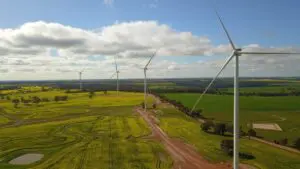
Pacific Blue’s 18.2 megawatt (MW) Codrington wind farm will be decommissioned in 2027 and Pacific Hydro is currently working through a range of factors for how to do this.
And as the first big wind farm to go through this process, the company is under pressure – and intense scrutiny – to get it right.
Capomolla admitted that merely following the four-age remediation plan that was developed in 2001, when the wind project was built, won’t cut it in an era when these plans now run to 20-30 pages.
“So with respect to Codrington, and we’re having to make a lot of this up, if we went strictly to what’s in our approved documents, we don’t have to do much, but that’s not socially responsible,” Capomolla told a morning audience at Australian Energy Week.
“So we’re working with state governments. We’re working with local community, local councils on trying to build a template, which will we can then take into the battery space.”
That template, Capomolla says, is built around recycling.
While Pacific Blue is yet to decide on the ‘how’ for the most difficult part of wind turbine recycling, the composite blades, a consultant working with the company outlined the options earlier this year.
Everoze partner David Millar said Australia has the industrial capability to recycle and re-use 95 per cent of a turbine, and foreign contractors are now looking to set up hubs in Australia to handle the 3000-odd turbines due to be decommissioned by 2045.
And the most likely option for turbine blades is as an additive to cement and add this into existing concrete recycling processes, says Delta Group senior project manager Andrei Naumovich.
The devil in the detail is ensuring the ideas coming out of the Codrington process work at scale.
“The tests will always come when you’re actually have decommissioned,” he said.
“Once we start, for example, decommissioning Codrington we have these great visions of removing the blade, separating the [layers]. We’ve conducted trials with CSIRO and Deakin University. But now we’re trying to do that at scale in the next 12 months. So will it actually work?”
The same test will apply to batteries: is the level of proposed recycling possible for a hundred of megawatt battery, and what does decommissioning look like in reality when combined with company goals around how to leave the landscape.
Capomolla says they will leave the turbine bases in the ground, with the top shaved off, because neither the landowner nor the council need the whole thing removed.