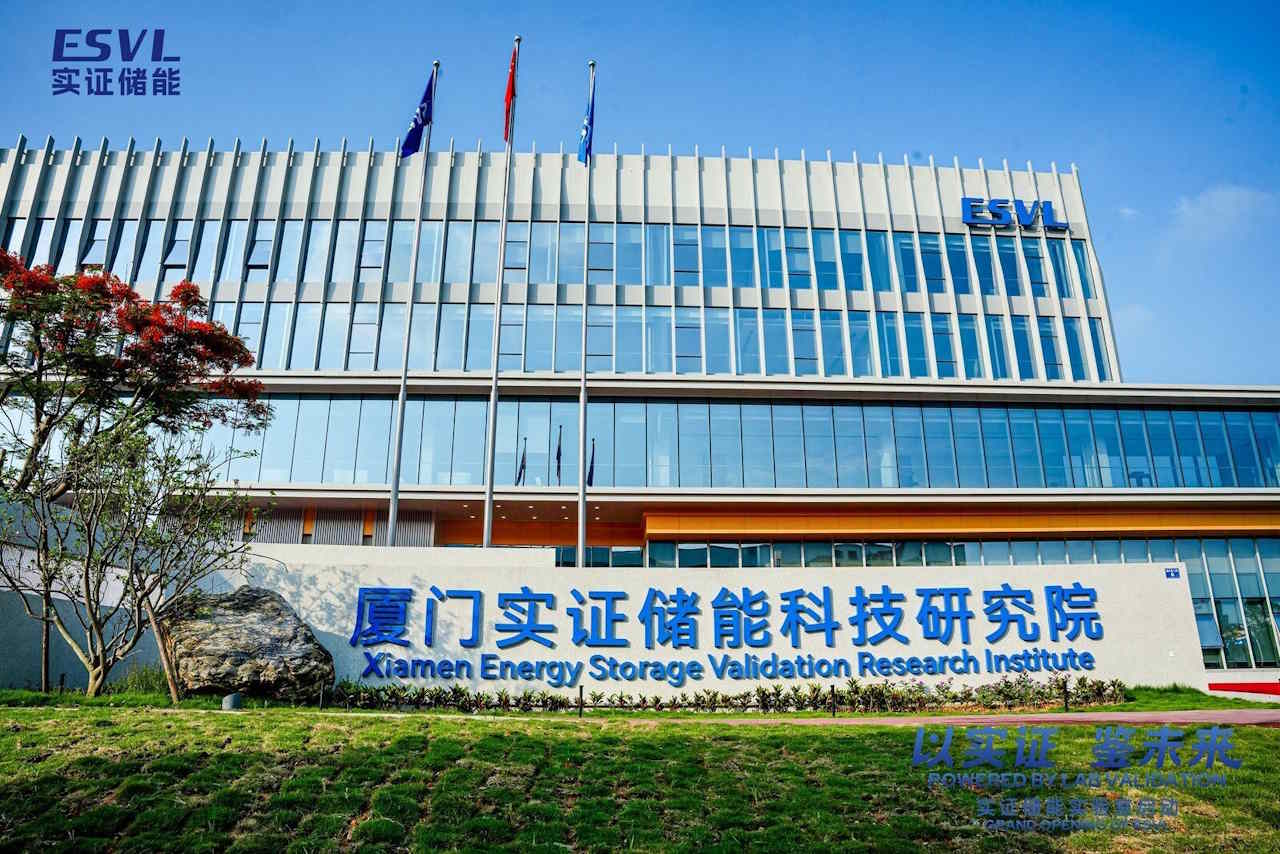
Chinese battery manufacturing giant CATL has officially launched the world’s largest and most comprehensive energy storage testing and validation platform in China.
The Xiamen Energy Storage Validation Research Institute (ESVL) officially began operations on May 28, marking what CATL hopes will be an important next step into the era of real-world energy storage validation.
The news comes as CATL chief scientist Dr. Wu Kai announced that the company’s sodium-ion batteries will enter mass production this year.
This development will also allow CATL to redirect its long-term research and development activities towards developing high-density lithium-air systems, which use lithium as the negative electrode and oxygen from the air as the positive electrode reactant.
The technology possesses extremely high theoretical energy density and is expected to be the next battery storage battleground, though a lot of work is currently needed to address safety issues
The new centre is built across 10 hectares and backed by an investment of approximately RMB3 billion (around $A620 million) – and has been designed to be an open and shared infrastructure accessible to all players across the global energy storage sector.
“As energy storage increasingly becomes a critical infrastructure asset, ESVL’s independent, traceable real-world validated data can help regulators make evidence-based decisions, insurers price risk more precisely and financial institutions assess energy storage as a more credible, bankable asset,” said Dr. Chen Xiaobo, head of the ESVL.
CATL is specifically aiming to tackle the widening gap between installed energy storage capacity and real-world performance.
According to the company, nearly one in five large-scale energy storage power stations across the globe are under performing, while at the same time nearly half of energy storage systems experience grid-connection delays of more than two months.
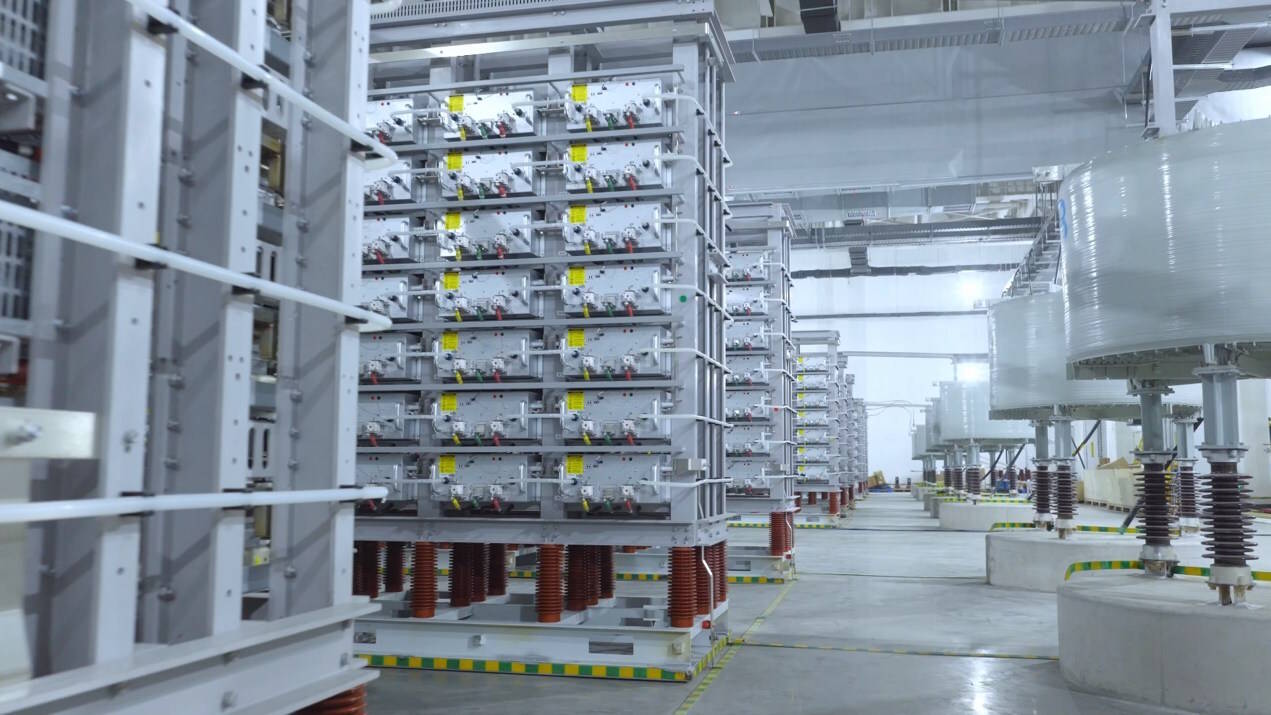
Image Credit: CATL
The validation capabilities of the new testbed aims to expand the industry’s capacity to validate large-scale energy storage stations.
Specifically, the new centre moves validation from component-level testing to full system- and station-level validation covering everything from safety, grid support capabilities, and long-term reliability prior to deployment.
“Scientific rigor is more critical than ever as energy storage enters the gigawatt era,” said Dr. Wu Kai, chief scientist of CATL.
“That means being honest about equipment performance, respectful of grid dynamics, and disciplined in testing results — while raising industry quality standards to the station level and bringing validation forward to the pre-delivery stage.
“ESVL is designed to reflect that rigor, and to help usher in a more trusted and sustainable era of real-world validation.”
The centre is built around five laboratories including the world’s first station-level grid integration laboratory, a high-voltage safety laboratory, a thermal safety and combustion laboratory, an environment reliability laboratory, and the electromagnetic compatibility laboratory.
The Thermal Safety and Combustion Laboratory is the world’s first large indoor combustion facility equipped with a 20MW calorimeter – a scientific device used to measure the heat absorbed or released during physical changes, phase transitions, or chemical reactions.
The Environment Reliability Laboratory is equipped with climate, environmental, salt spray, rain, and sand chambers that can verify full-system energy storage containers under extreme conditions ranging from -50°C to 100°C and simulated high-altitude pressure environments up to 7,200 meters.
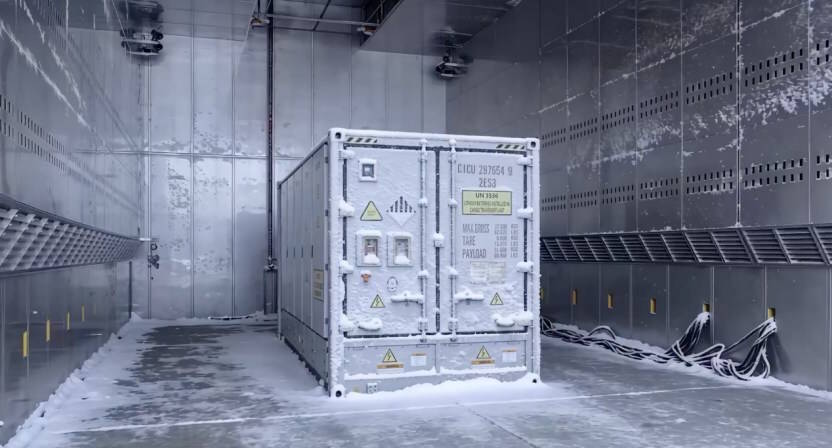
Image Credit: CATL
The world-first station-level grid integration laboratory is equipped with a 35kV/100MVA grid simulator and a real-time simulator that is 14-times larger than the 13.8kV/7MVA platform at America’s National Renewable Energy Laboratory (NREL), setting a new global benchmark for grid‑level testing.
Soon after the official launch of the ESVL, Dr. Wu Kai also took to the stage at the 2026 Equipment Power Forum where he announced that the company’s sodium-ion batteries will enter mass production this year.
This will also allow CATL to redirect its long-term research and development activities towards developing high-density lithium-air systems, which use lithium as the negative electrode and oxygen from the air as the positive electrode reactant.
The technology possesses extremely high theoretical energy density and is expected to be the next battery storage battleground, though a lot of work is currently needed to address safety issues.
If you would like to join more than 29,000 others and get the latest clean energy news delivered straight to your inbox, for free, please click here to subscribe to our free daily newsletter.