The hope is that the Australian Energy Technology Assessment (AETA), the first iteration of which was released by the Bureau of Resources and Energy Economics (BREE) earlier this week, should enable a more balanced, rational and transparent approach to electricity generation technology cost assessment in Australia to emerge over time.
To be reviewed formally every two years and more frequently if required, and with its modeling tools accessible for general use, the AETA should, over time, become a valuable interactive tool to support the design of a future energy system that represents the best economic and environmental options for Australia.
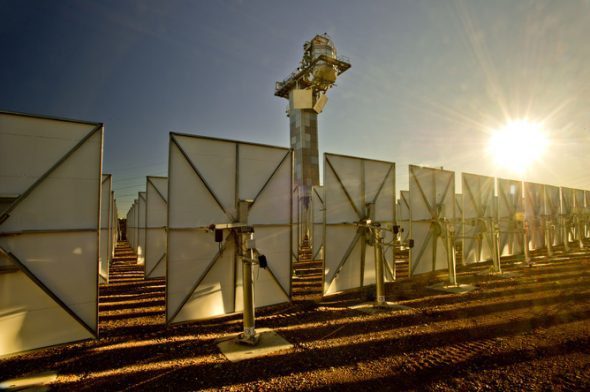
For solar thermal power in Australia, the first AETA contains both encouragements and disappointments.
The AETA’s authors ignored the best available data and analysis of current costs and likely cost reductions for solar thermal power in Australia, from the major report ‘Realising the Potential for CSP in Australia’, funded by the Australian Solar Institute and released on June 6.
The CSP Report found a baseline cost of $252/MWh represents the most conservative, least technical-risk CSP technology built at a ‘most favourable’ site in Australia.’ This compares with the AETA’s finding, for the same technology, of $322-$393/MWh; 30-55 per cent higher.
No explanation is provided in the AETA to reconcile such a significant difference.
The second disappointment is that the AETA continues a prevailing approach of Government energy policy development in Australia which considers levelised cost of energy (LCOE) as the only relevant measure of economic worth of energy generation technology. It assumes that electricity must be produced the instant it is needed. It follows from that logic that at the critical determinant is the cheapest possible generation cost.
This over-reliance on LCOE as a determinant of policy has significant weaknesses that have led Australia, in recent years, down the path to a very expensive electricity system.
The quality of analysis of value – as opposed to simply cost – of different generation technologies will have deep and lasting impacts on Australia’s economy and environment.
With upwards of $120 billion in electricity network investment forecast to 2030, and the need to replace virtually all Australia’s current generation fleet by 2050, there is an urgent need to move away from over-reliance on levelised cost comparators and adopt more nuanced measures that take account of the value generation output from different technologies, in the context of the future electricity system.
Australian industry and consumers are suffering very steep electricity price increases driven mainly by two inter-related forces – increasing peak electricity demand, and the consequent need to massively upgrade electricity distribution networks. These forces have been created by an excessive focus on LCOE and ‘instant generation’ costs.
The very different future the AETA acknowledges will be about dispatchable electricity capacity, positioned in the optimal places to drive network efficiency, and able to generate at times when the generation output is of most value. The future will be about a combination of low-cost technologies that generate supply whenever their motive resource is available (wind power and solar PV being a major portion), supported by technologies with the ability to release electricity into the system at optimal times to most cost-effectively meet demand.
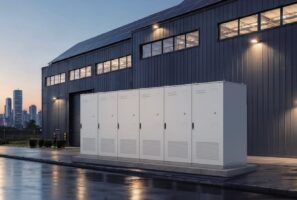
And that means the future must include energy storage.
The ‘Realising the Potential for CSP in Australia’ report highlighted that the value of solar energy can be more than 40% greater than electricity randomly generated, and dispatchable solar energy – using thermal energy storage – 100 per cent greater. Research in Australia and internationally continues to show that solar thermal generation with energy storage can support the reliability and stability our future electricity networks will require.
While the authors of the AETA acknowledge that Australia is heading rapidly towards a very different energy future, there is not yet an acknowledgment of the central role of energy storage in that future. The AETA does not create any facility to value energy storage capability.
The combined impact of over-statement of CSP current costs, understatement of future CSP cost reductions, and the failure to take account of the value of solar thermal power generation and commercially available CSP energy storage, means that this first AETA fails to accurately represent the comparative value and advantages for Australia of solar thermal power development.
The AETA and the draft Energy White Paper released in December 2011, read together, illustrate the belief in energy bureaucracy that power from things we can dig up, process and burn is better than power from sources we don’t need to dig up.
In a matter of less than a year since the draft Energy White Paper was released, the data as to reducing solar PV power costs has reached that tipping point – it has become so compelling that it simply can no longer be ignored.
That the AETA acknowledges a very different energy future for Australia, and recognises the vital role of solar power in that future, is profoundly to be welcomed.
The challenge now for the solar thermal energy industry is to redouble efforts to show that current costs, cost reduction potential and the value of solar thermal power have not yet been properly understood and incorporated into the AETA’s analyses – and to continue to work towards the data tipping point.
Andrew Want is the CEO of Australian solar thermal developer Vast Solar, and is the Chair of the Australian Solar Thermal Energy Association (www.austela.com.au). Andrew is a member of the Review Reference Group for the report ‘Realising the Potential for CSP in Australia’