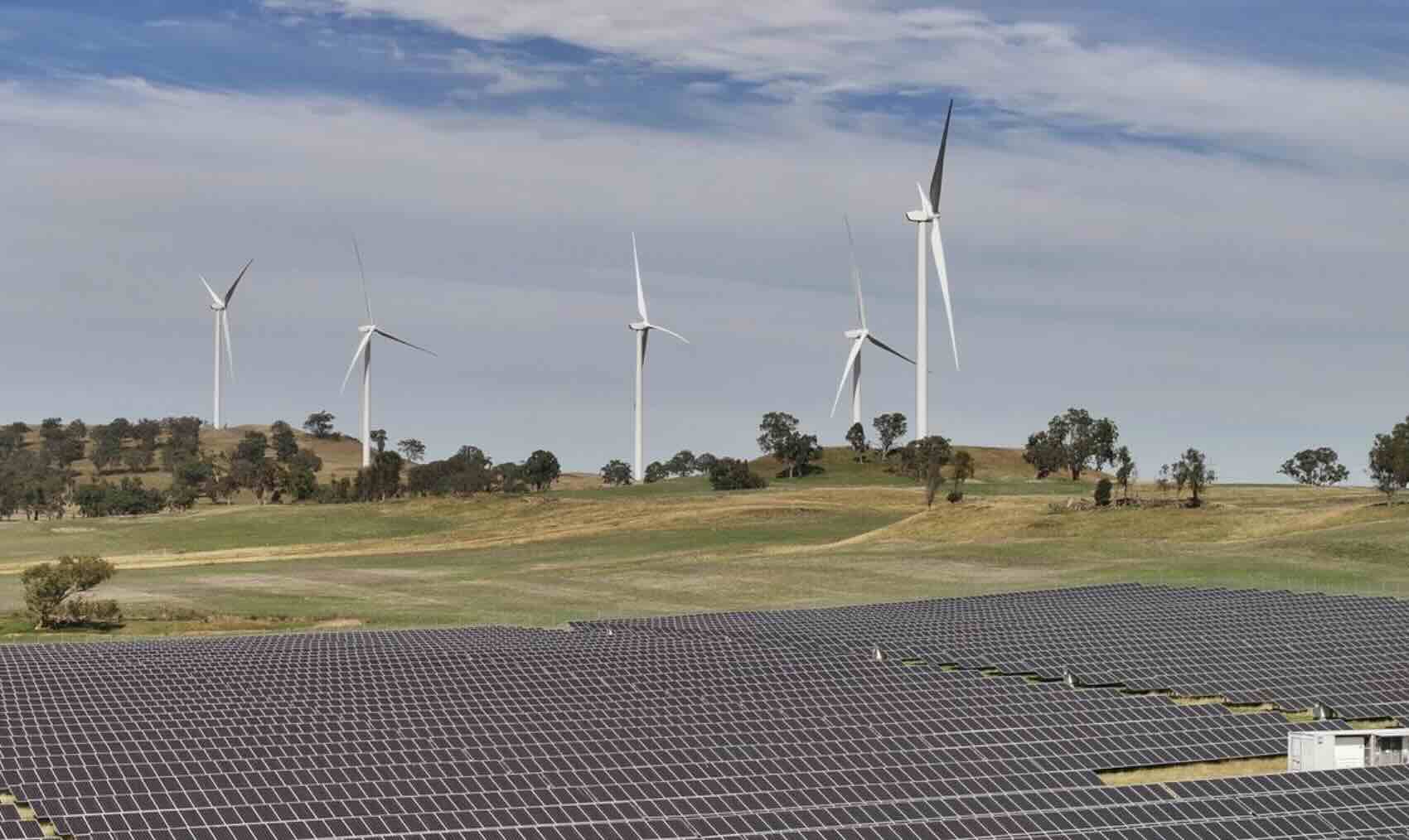
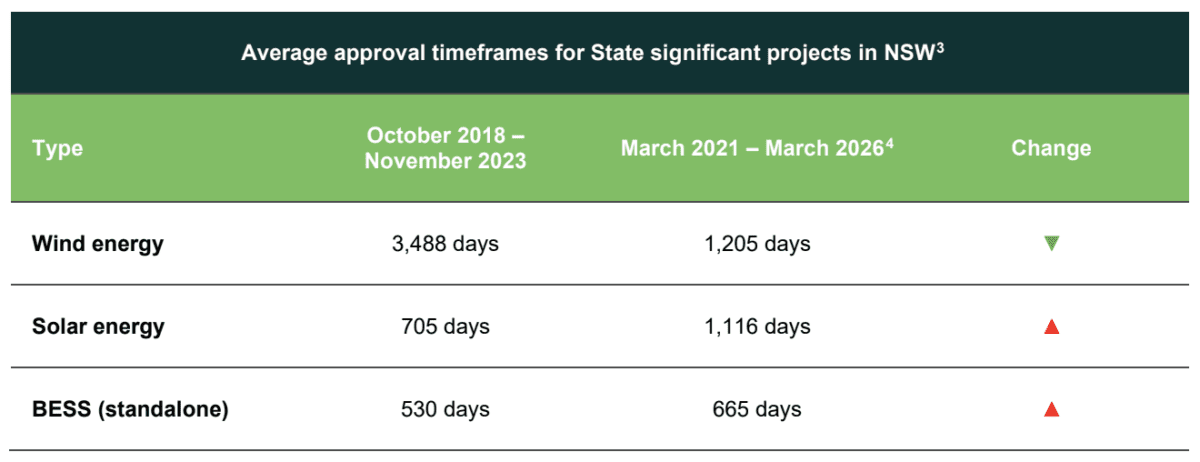
New South Wales (NSW) has slashed the amount of time it takes to approve a wind project from 9.5 years to just over three years.
But bringing these into line with other states, which have even shorter average approval timeframes, needs more than just tweaking the submission threshold that forces a review of a planning approval, according to a report today by the Clean Energy Investor Group (CEIG).
“Planning is still the Achilles’ heel in NSW, in that it takes so long to get renewable energy projects through this system, but it’s going in the right direction,” CEIG chief Richie Merzian tells Renew Economy.
“There have been significant improvements but there’s a lot more work to do. Even the NSW government recognises this, which is why in the last month they’ve brought forward this Prioritising Renewable Energy Bill… because they’ve seen too many major projects get caught up in the system.”
Even factoring in Queensland’s move a year ago to lengthen planning processes for solar and wind projects, and later batteries as well, all other states are beating NSW on planning timelines.
The state is also charging up to 48 times more for a planning application than Queensland, even though it’s taking three times longer to approve solar and wind farms, according to today’s CEIG report Delivering Major Clean Energy Projects in NSW: 2026 Update.
A $1 billion project in NSW could cost up to $1.4 million in planning fees alone.
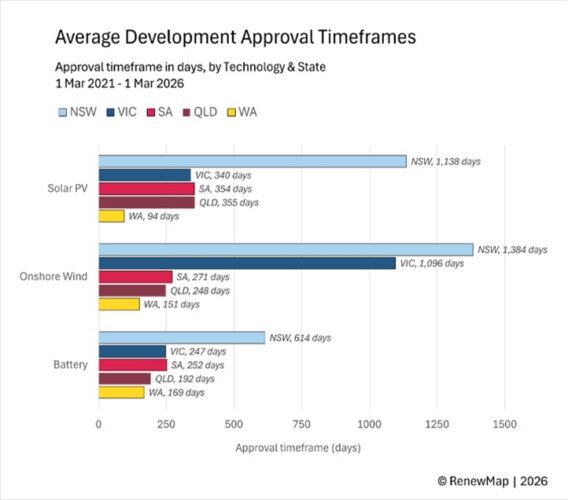
And yet NSW is clean energy investors’ favourite state because it’s moving in the right direction, Merzian says.
The five year average time in the planning process has come down significantly, and while solar and battery decision times are longer, Merzian says it’s because there are more of them in the pipeline.
He pointed to progress on reasonable dwelling entitlements, visual impact assessments and template private agreements as ways the state has moved to calm particularly heated issues.
“CEIG membership alone have 50 gigawatt (GW) built or in pipeline in NSW. That’s about a third of what our membership have across the country,” Merzian says.
“There’s so much interest in NSW and that’s why there’s so much attention on making it work better. This is even more sharply in focus given the very strong desire from data centers to build in NSW.”
Other states have their own quirks:
- Queensland’s new rules requires a deft political touch but it’s now too unstable for international investors to touch;
- Western Australia is pushing approvals through at pace, but it’s a shallow electricity market still with sizable government involvement;
- South Australia is on the fringe of the National Energy Market (NEM);
- and Victoria comes its own issues, from a will-we-won’t-we build key transmission election in November to strict rules around renewable energy zones.
Envision’s Peter Cowling put it plainly last week when he said that if the Victorian Liberals upset the planning balance put in place by the current government – specifically in pausing plans for the two new transmission lines – there will be a capital flight to NSW.
New backbone industry
NSW is the largest electricity market in Australia, and still relies heavily on coal-fired generation, all due to be phased out by 2040.
As a result, investment into clean energy is flooding into the state – to the point that NSW treasurer Daniel Mookhey said in May that energy projects are why the state is not in a recession.
The tally of renewable energy projects inside the NSW planning process on May 22 comes to 48 wind, 38 solar, and 68 batteries, the CEIG report says.
The bulk of these are preparing environmental impact statements.
“There has been a significant improvement in primary approval timeframes for wind farms (with eight being approved in the last five years), while the rate of approval for State significant solar energy and BESS projects has slowed,” the report says.
“The data shows signs of improvement in NSW relative to its 5-year average. However, approval timeframes remain substantial in absolute terms, with wind (1,324 days) and batteries (729 days) continuing to take multiple years on average to progress through the system.
“At the same time, Victoria’s average wind approval timeframe for the one-year period (1,734 days) is higher than NSW, reflecting a cohort of wind projects approved in 2025 that were lodged between 2018-2019.
“While this indicates a high volume of approvals being finalised, it also underscores that these projects remained in the system for extended periods before determination.”
In CEIG’s view, NSW’s planning bottlenecks that are still to be unplugged include better use of state significant designations, clear framework on cultural heritage consultation, and streamlining what the system wants on biodiversity assessments.
That’t not even touching the fact that NSW allows submissions from anywhere in the world to influence and lengthen the planning process.
More than 50 objections will send any project, be it energy or something else, to the Independent Planning Commission (IPC).
This is supposed to be a final review of an approved planning application, but merit appeals against the Hills of Gold and Valley of the Winds wind projects show that determined objectors can drag the process out further into the courts.
In February this year, NSW planning minister Paul Scully asked the IPC to review the Bullawah, Dinawan and Winterbourne wind projects as public hearings – a process that shuts down any further right to merit appeals in the courts.
But faster, cheaper planning approvals alone won’t do the whole job, the CEIG says.
Post-approval bottlenecks are responsible for a “significant proportion’ of approved projects not moving into construction.
These include rising capital costs, transmission and curtailment risk, logistics constraints, and the need to retrofit storage for earlier-generation solar projects to remain commercially viable, the report says.
If you would like to join more than 29,000 others and get the latest clean energy news delivered straight to your inbox, for free, please click here to subscribe to our free daily newsletter.