A Victorian parliamentary inquiry on apartment energy issues has recently reported and identified several issues that require urgent attention to address the failures of energy policy.
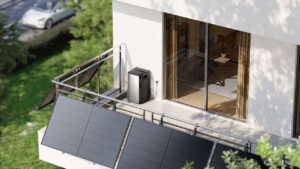
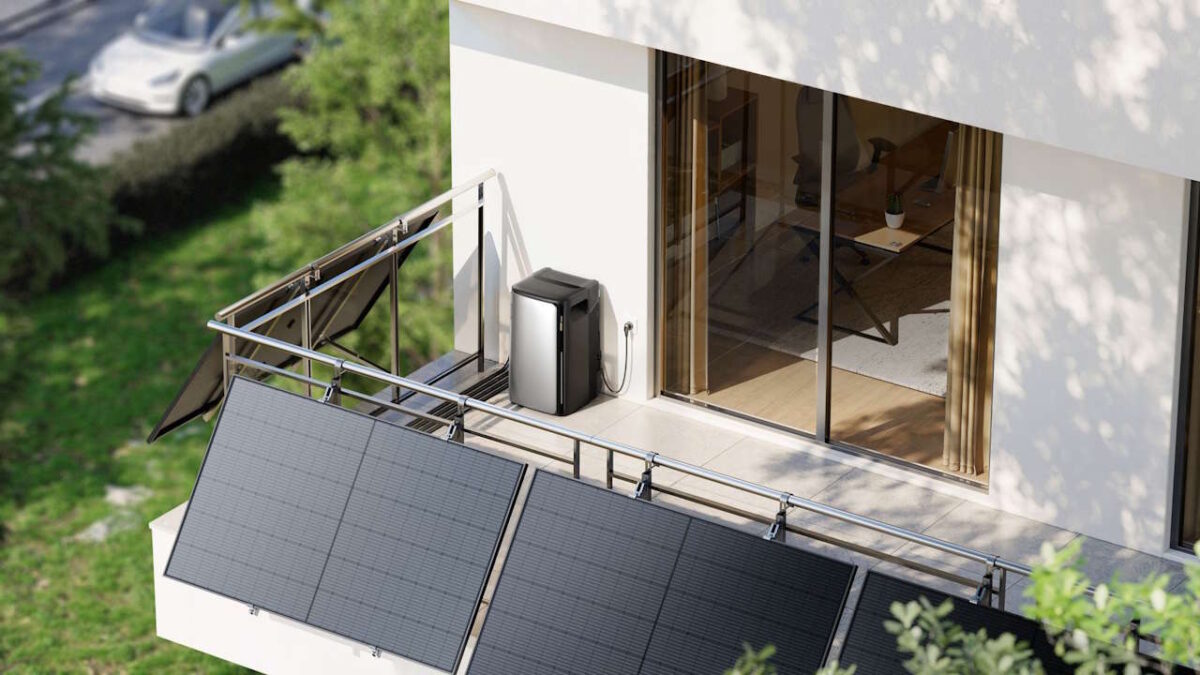
One interesting issue that relates to both high rise apartments, and plug-in ‘balcony solar’, is where solar fits into apartment occupant energy costs.
High rise apartment buildings have very limited roofspace. Individual apartment occupants may wish to install plug-in balcony solar that is near vertical. But how does that impact on energy bills?
Just looking at annual PV output, near vertical PV doesn’t look great. But that’s not the whole story. A kilowatt-hour generated in winter can be worth far more than one generated in sunny weather over the rest of the year.
I used the PVWATTS calculator to look at monthly generation at Tullamarine, near Melbourne. This suggests that a vertical (or near-vertical) PV system facing between north-east and north-west produces similar output to a rooftop PV system from April to August. Reflection from a balcony could improve the story as shown below.
So building integrated PV may be much more valuable financially, and to cope with winter peak demand, than many think.
We are awash with solar in sunny mild weather but winter is a serious challenge that is increasing as we electrify. Linking balcony solar to a small plug-in battery that can store the output to deliver in late afternoon and evening will save even more as retailers charge increasingly higher prices at that time, and as part of the ‘solar sharer’ prices.

A challenge in many apartment buildings is that some apartments, especially those oriented outside the attractive north-east to north west or those shaded by nearby buildings, will have poor solar access, which could affect sale value.
Virtual solutions may help. The Allume solshare system could be used with both rooftop and building Integrated PV to share benefits to other apartments.
Alternatively, a third party or Owners Corporation could fund BIPV with battery storage to reduce Owners Corporation energy costs and allocate those savings to apartments with poor solar access via OC fee adjustments or other mechanisms.
Owners of apartments with poor orientation could also adopt an emerging virtual approach.
They could buy part of a PV/battery system on another building under a model that delivers these apartments a revenue stream based on the difference between the retail price of grid sourced electricity avoided by the PV system host minus the cost of maintaining and managing the output of the separately located system.
This would be outside the energy markets as it would be a purely financial arrangement. It could offset the lower value of an apartment with poor solar access.