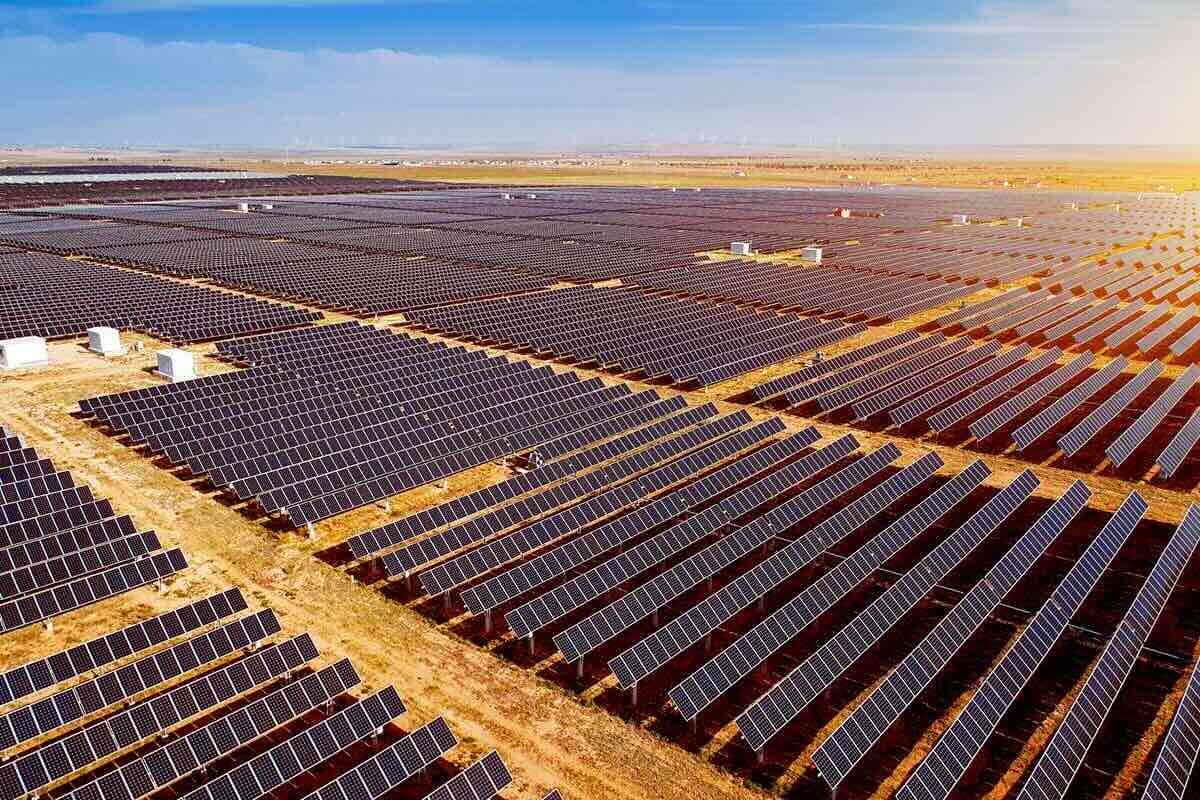
As the Northern Territory government fights to power future data centres with Beetaloo gas, its publicly-owned utility Territory Generation is turning its focus to more renewables, as it prepares to launch a tender for additional grid-scale solar generation capacity to bolster its grids.
Territory Generation on Thursday called for Expressions of Interest in the development of utility-scale solar for Alice Springs, which is served by one of the NT’s three small, stand-alone grids.
The utility says it is scoping out options for projects with a generation capacity of between 5 and 15 megawatts (MW), with or without battery storage included, and will use the EOI process to identify commercially and technically viable approaches for delivering the solar plant.
The NT is made up of three regulated grids based around its biggest population centres – Darwin and Katherine, Tennant Creek and Alice Springs – but these are not interconnected and have had limited success integrating utility-scale renewables, despite solar being easily the cheapest source of new supply.
Three solar farms – at Katherine, Batchelor and Manton Dam – totalling around 45 MW and all owned by Italian energy giant ENI were notoriously left idle for some five years after being built, due to grid connection complications that made commercial operation unworkable, without more battery storage.
The “slow, turgid, expensive process” – as described last year by Rod Hayes, chief executive of the main energy retailer in the NT, Jacana Energy – is now largely resolved, although a fourth project, a 10 MW facility also located at Batchelor, had been seeking damages for the delay in production.
Meanwhile, the NT’s first big battery – sized at 35 MW, and 35 megawatt-hours (MWh) – was commissioned in Darwin in 2024 and, having “exceeded expectations,” will now be followed by another two, including a 12 MW, and 48 MWh battery in Alice Springs, next to the Owen Springs dual fuelled (gas and diesel) power station.
The $46.5 million Alice Springs battery and the $35.6 million Katherine battery (21.5 MW, 21.5 MWh) will be built by Pacific Energy, a specialist in off-grid and remote grid installations that also features on the very long list of prospective tenderers for the new Alice Springs solar plant.
In its notice to the market, Territory Generation says the Alice Springs load is mainly supplied by the gas-powered Owen Springs plant, as well as the Uterne solar farm and other distributed commercial and residential solar, with peaking support from the Ron Goodin Power Station (RGPS).
But it says the increase in the contribution from behind-the-meter solar, its gas plants have had to work harder, ramping up and down, which has led to “reduced operational efficiency, higher fuel consumption, and increased maintenance requirements.”
Territory Generation is hoping the new battery and more firmed utility-scale solar will remedy this.
“In combination with existing thermal generation assets and the forthcoming BESS at OSPS, the integration of additional solar generation within the ASPS is expected to support system reliability, optimise utilisation of existing assets, and reduce reliance on thermal generation.”
The EOI documents say the commercial delivery models for the new solar plant could include leased asset, Engineering Procurement and Construction (EPC) and power purchase agreement (PPA) structures and could have the option to use government land near the Owen Springs Power Station.
The documents also warn prospective tenderers that the Alice Springs grid – which currently has a peak load of around 54 MW, an average load of 23 MW, and a minimum load of 6 MW – is “subject to a range of technical and operational constraints that will influence the design, configuration, and performance requirements of the proposed solution.”
More specifically, Territory Generation suggests a range of considerations propsective developers should keep in mind, to avoid future curtailment.
“Existing solar assets may be subject to operational curtailment during periods of low demand and high generation,” the EOI documents say.
“In their solution, the Respondents must take into account … minimum demand events; …interaction with existing thermal generation assets; …integration with existing and planned battery energy storage systems; approaches that maximise useful renewable generation while maintaining system security and reliability.”
An industry briefing on the proposed solar plant will be held on Monday, and Expressions of Interest will close on September 22 at 2pm (NT local time).
To join more than 29,000 others and get the latest clean energy news delivered straight to your inbox, for free, click here to subscribe to our free daily newsletter.