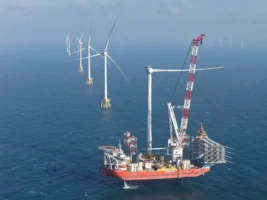
Danish offshore wind energy giant Ørsted is currently well into constructing what will be the world’s largest offshore wind farm, the 2.9-gigawatt (GW) Hornsea 3 project, which will also be the first project in the world to feature a utility-scale battery integrated directly into an offshore wind farm’s transmission infrastructure.
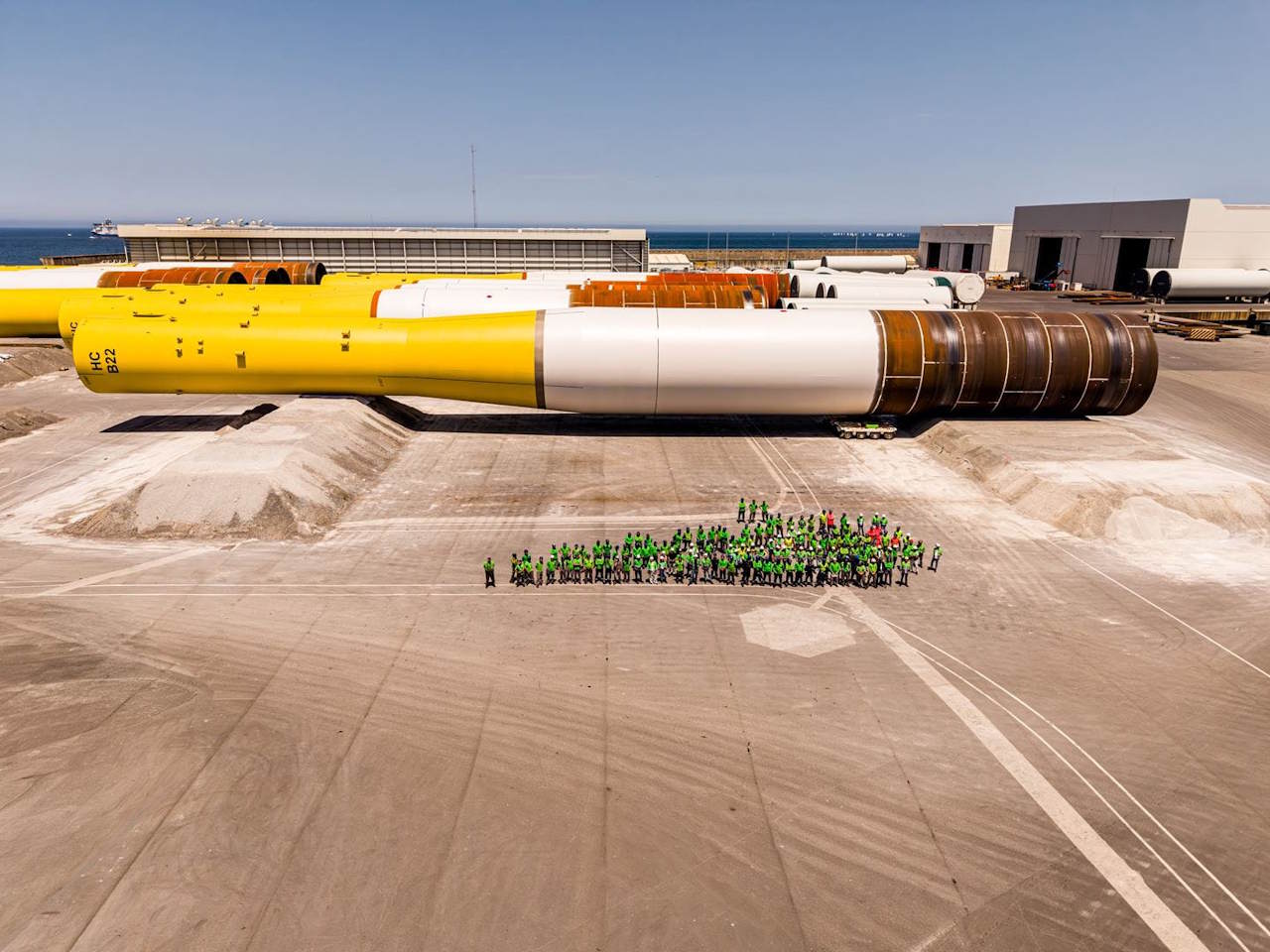
Ørsted began installing the foundations for the wind farm earlier this year, with the first mammoth monopile being sunk into the seabed in May. The wind farm, which will feature 197 wind turbines and is expected to be completed by the end of 2027, will generate power equivalent to the needs of 3.3 million UK homes.
In addition to the massive number of wind turbines, Hornsea 3 is also adding a two-hour 300-megawatt (MW), or 600 megawatt-hours (MWh) battery energy storage system.
Construction of the Iceni battery energy storage system (BESS) – named for the Norfolk-based warrior tribe of the Roman era – began in March and is expected to be operational sometime in the first quarter of 2027.
Iceni will feature Tesla batteries and be capable of storing power equivalent to the daily consumption of 80,000 UK homes.
It is also the world’s first utility-scale battery system to be directly integrated into an offshore wind farm’s transmission infrastructure. Iceni will be built on the same land as the onshore converter station, and instead of boasting its own standalone grid connection will share transmission assets and an onshore grid connection with Hornsea 3.
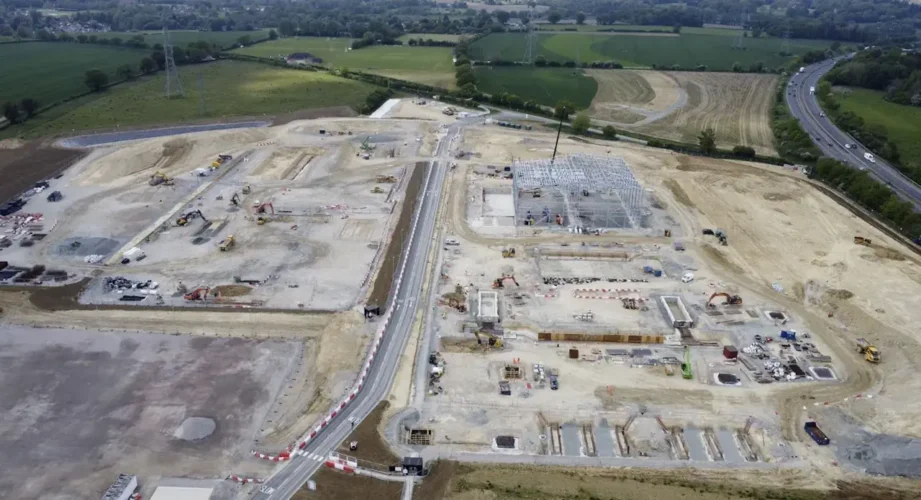
Image Credit: Ørsted
The 300 MW/600 MWh Iceni BESS will also utilise the Nimbus optimisation, asset management, and trading platform designed by London based renewable energy services firm Arenko.
Under an agreement signed this week, Arenko’s will deploy its full Nimbus platform to manage trading, optimisation, and asset management of Iceni.
“Iceni is a highly sophisticated project, coupling a grid scale battery with one of the UK’s biggest offshore wind farms,” said Rupert Newland, CEO of Arenko
“This creates significant opportunities, but also operational and trading challenges, from forecasting and deciding how and when to allocate capacity in real time, to the technical, data and controls integrations between the two assets.
“We’ve worked closely with Ørsted over time as their thinking around flexibility has evolved, and with projects like Iceni they are taking a pioneering role in bringing truly significant generation capacity and utility-scale storage together.
“Nimbus is built for that kind of environment, providing the automation and optimisation capabilities needed to manage increasingly large and complex assets, across multiple markets.”
To join more than 29,000 others and get the latest clean energy news delivered straight to your inbox, for free, click here to subscribe to our free daily newsletter.