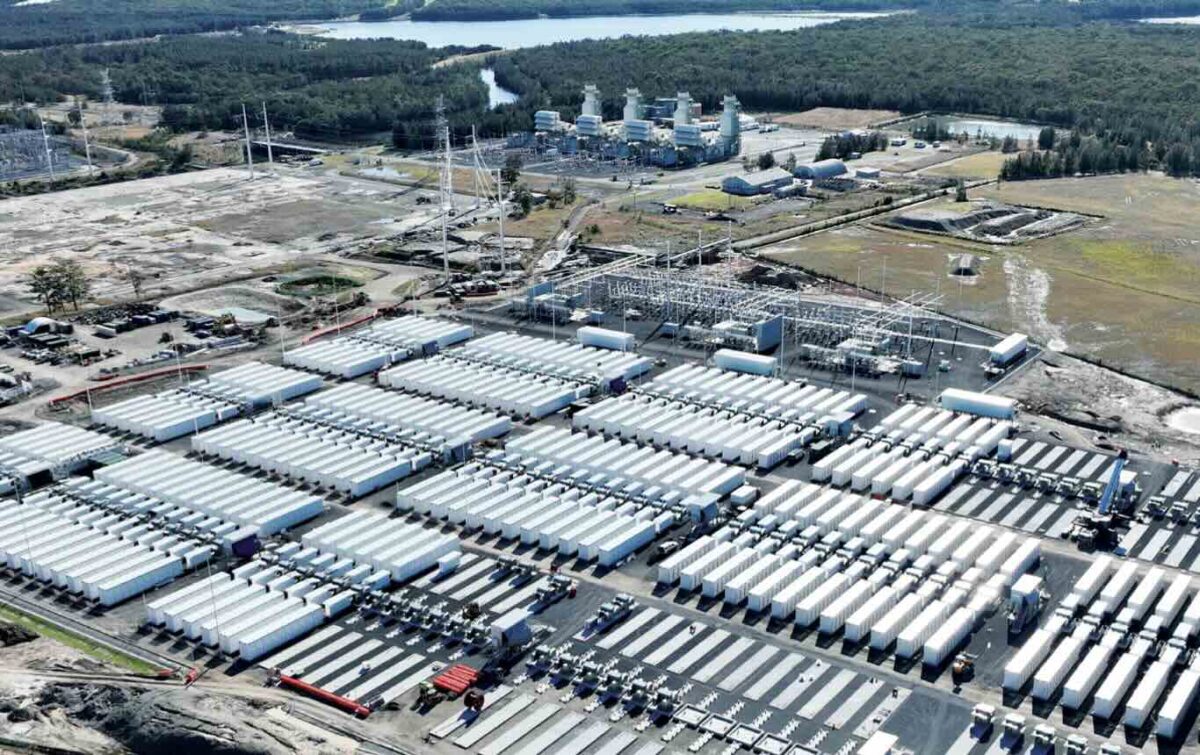
The Waratah Super Battery, the country’s most powerful, has finally reached completion and is now operating at full capacity to deliver on its main contract to act as a kind of giant shock absorber to the grid.
The final sign off, after lengthy delays, was achieved late last week following the completion of tests after a new transformer was delivered at the site.
The Waratah battery, sized at 850 megawatts (MW) and 1,680 MWh, is the most powerful machine of any type to be connected to the Australian grid, although it has only two hours of storage because its prime function is to react quickly in the case of any disruptions.
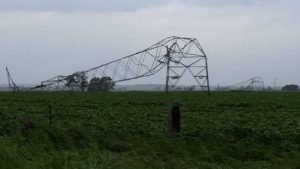
It had been due to be delivered 18 months ago, but construction delays, the financial collapse of its major battery supplier, and then a major failure at one of its transformers and damage to another in the final days of testing nearly a year ago set it back.
NSW energy and climate minister Penny Sharpe announced on Monday morning that the Waratah battery, built and owned by Akaysha Energy, now has approval from the Australian Energy Market Operator to operate at full capacity.
“The Waratah Super Battery is a game changer for NSW,” Sharpe said in a statement. “As ageing coal-fired power stations retire, this project will help keep the lights on for homes and businesses while enabling more renewable energy to flow through the grid.
“This is exactly the kind of infrastructure NSW needs to deliver a reliable, affordable and modern energy system for generations to come.”
The battery had originally been scheduled to come online before the anticipated closure (in August 2025) of the 2.8 gigawatt Eraring coal fired generator – just up the road from its location at the site of the shuttered Munmorah coal plant.
But the closure of Eraring has also been delayed – twice – and is now due to shut down in early 2029. Still, the Waratah battery is seen as important to manage the grid as it allows transmission lines to operate at or near full capacity to import power from the regions to the major load centres in Sydney, Newcastle and Wollongong.
The super battery acts as a giant shock absorber during events such as power line outages caused by storms, bushfires, fallen trees or lightning strikes.
Brett Redman, the CEO of transmission company Transgrid, says the System Integrity Protection System that Waratah is contracted to deliver is the biggest and most innovative in Australia.
“(It) provides an additional level of safeguard as coal plants retire and critical transmission infrastructure is built to connect more renewable energy into the Sydney, Illawarra and Hunter load centres,” he said.
Akaysha Energy CEO Nick Carter said bringing the Waratah battery to final commercial operations is a landmark moment for the company. It is its fourth completed battery project, after the smaller Brendale and Ulinda Park batteries in Queensland, and the 415 MW, 1660 MWh Orana battery in the central west of NSW.
The company has also taken delivery of its second transformer at the 311MW/1244 MWh Elaine battery in Victoria, which will be contracted to Snowy Hydro, and many of the Megapack battery modules are also now onsite.
Akaysha had to repair one of its three transformers at the Waratah project site and order a replacement after what it described as the “catastrophic” events of last year.
It has been delivering around half of the SIPS contract on an interim basis since then. Under the full terms of the contract, it will make up to 700 MW and 1,400 MWh of capacity available to respond to any grid disruptions.
“Waratah has been a complex and demanding project,” Carter said in a post on LinkedIn.
“This project tested us in many ways, but the team kept going, solved the problems in front of them, and delivered. Waratah is a testament to the grit, perseverance, and problem-solving capability of the Akaysha Energy team.”
The NSW minister for the Central Coast David Harris said transforming the former Munmorah power station site into one of the world’s most powerful batteries “is a great example of how we can give former industrial sites a new purpose, while supporting jobs, investment and new opportunities for the Central Coast.”
Note: This story has been corrected to note the completion of the Orana battery and some details about the Elaine battery.
To join more than 29,000 others and get the latest clean energy news delivered straight to your inbox, for free, click here to subscribe to our free daily newsletter.