When Greens elder Bob Brown addressed a throng of forest campaigners at a Uniting Church in Sydney last Saturday, he did so beneath three suspended paper mache angels – dubbed courage, joy and compassion – created after devastating floods in northern NSW in 2022.
Of the three sculptures, “courage” seemed the one most in play.
Where will the federal Greens land when it comes to next week’s Senate disallowance vote on a contentious carbon credit method that has been approved by the Albanese government to fund the Great Koala National Park (GKNP) in northern NSW?
The Nationals, backed by the forestry industry, want the Improved Native Forest Management (INFM) method disallowed because they rightly see its survival as bringing logging in much of NSW to an end.
While most of the afternoon session was focused on the prospects of creating a new Great Southern Forests national park spanning 1.7 million hectares, Brown understood the INFM was – as described here – the “Greater Glider in the room”.
Brown echoed the sentiments published by his eponymous Foundation in opposition of the use of carbon credits to save the koalas. Forests should be saved for their natural values and not be used as an out for carbon polluters. (The Minns Labor government has sought to block fossil fuel firms from buying the credits.)
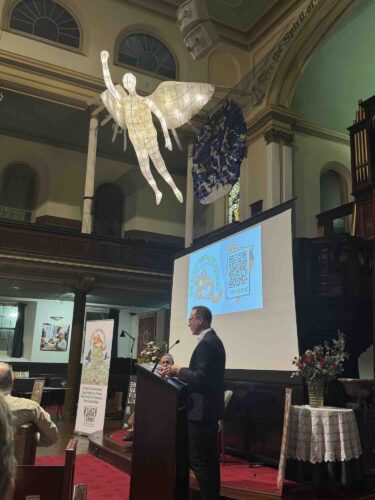
Still, Brown went some way to convince the audience of several hundred seasoned campaigners that while he was “totally against” the use of credits, he was prepared to rejoin the cause of saving native forests should the mechanism end up being a mercantile one.
Brown acknowledged the hope by activists that the days of locking onto dangerous logging machinery might be over for much of northern NSW, and even for the southern forests should the government seek to extend the method.
“I totally understand environmentalists who says the gain here is bigger than the loss that will come from [carbon credits],” he said. “Whatever happens here, I’ll be behind the people.”
Moments earlier, Sue Higginson, co-lead speaker for the event, and the NSW Greens spokesperson for climate change and the environment, had helped set the scene.
The GKNP had been “a 15-year campaign and it’s nearly, nearly delivered,” Higginson implored. “Oh my God, it’s taken so long. We have hope … and then I realise, we’re nearly there!”
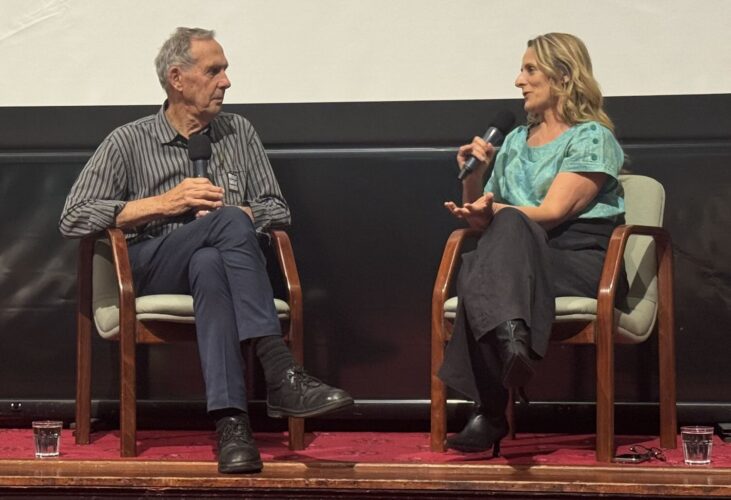
As revealed by Renew Economy on Monday, Higginson will go public with the call to her federal counterparts to vote down the Nationals’ disallowance motion. It’s understood the former lawyer’s views reflect those of the NSW Greens party room.
The case for ditching the carbon credits has been led by organisations such as The Australia Institute, the Bob Brown Foundation and The Wilderness Society. These groups are generally opposed to the use of Australian Carbon Credit Units (ACCUs) in general, but particularly when it allows for a “monetising” of forests.
“There is a line we will not cross: protected areas and Australia’s forests must not become a licence to keep logging or expand fossil fuel extraction,” the Wilderness Society said on Tuesday, in a statement.
“The INFM method could set a dangerous national precedent,” it said. “If approved, it could be rolled out across Australia’s public native forests – including in Lutruwita/Tasmania and Queensland, where native forest logging continues.”
Those supporting the method include leading forest scientists, such as David Lindenmayer from the Australian National University (ANU), and organisations including WWF-Australia and the Nature Conservation Council of NSW.
These groups stress that the INFM has elements that set the method apart from less credible carbon schemes. They point to the role of ANU professor Andrew Macintosh – a prominent whistleblower on “fraudulent” schemes – as the main architect of the method, in partnership with the state government.
“All carbon offsets come with risks,” Lindenmayer writes, but he says the designers have worked hard to limit the risk of “perverse outcomes.”
“Under the INFM method, logging is prohibited in carbon protection areas and must be completely stopped for 100 years,” he notes. That compares with a 15-year period that the NSW government will be able to generate credits.
“If harvesting occurs at any time over the 100-year permanence period, it can result in the deregistration of the project, a requirement to relinquish carbon credits, and the imposition of civil penalties,” Lindenmayer said.
“To make sure of this, the method explicitly prohibits the removal of biomass from carbon protection areas. This means there can be no burning of forests to generate energy and no harvesting dressed up as something else.”
The government has argued that the ACCUs generated by the GKNP project are likely to account for a very small proportion of the broader market, at less than 1%. Hence, they will do little to drive down ACCU prices for carbon polluters.
Within the environment department, there is also an understanding the government does not have additional funds – other than carbon credits – to fund the GKNP. Any national park in the great dividing range is also bound to be expensive to set up and maintain, certainly more than parks in the state’s less-vegetated west.
“It’s a way to get conservation outcomes,” was one person’s response to Renew Economy. “Will there be some other source of money that’s magically going to appear? That’s not going to happen.”
The application of caps on logging designed to prevent “leakage” to other native forests – such as on private land – is among the reasons veteran campaigners, including Dailan Pugh, strongly back the INFM.
“We’ve been running down the biomass of our forests, and therefore running down their carbon stores,” Pugh told Renew Economy.
“If we stop logging them and releasing that carbon and allow them to regain that lost carbon, they can make a significant contribution to our carbon budget,” he said, adding that the government will only generate ACCUs for a quarter of the actual benefit.
“So basically, three quarters of the carbon benefit is extra on top on top of the carbon credits,” he said.
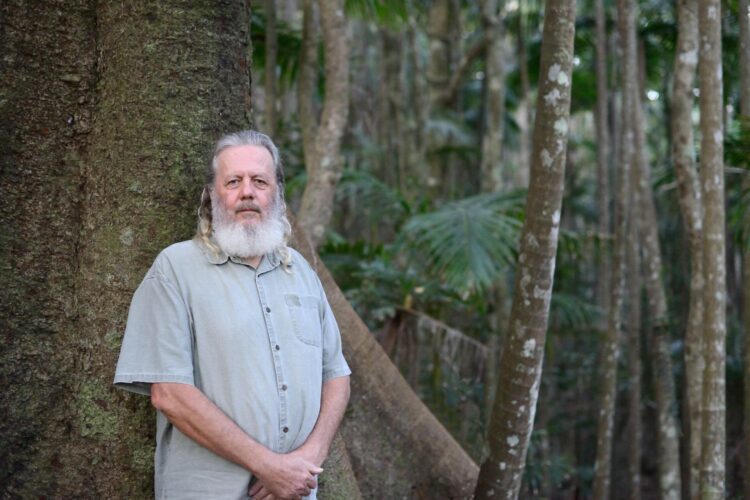
Pugh adds that with some large wood supply agreements expiring by 2028, it’s vital the INFM survives now.
“I very much see that we’re at a crossroads,” he said. “Either we’ll get this method up and we’ll have a chance of of protecting all public native forests … or we’ll end up with these wood supply agreements, locking in logging for another 10 years.
“This is an opportunity, from my perspective, not to be missed,” Pugh said, who said he began his forest activism in 1978, with his first arrest coming a year later.
“I would be devastated if they stopped this method now because we’re so close.”
Supporters of the method have also shared links showing Bob Brown has previously supported carbon credits.
Tasmanian Premier Will Hodgman “should end all logging in Tasmania’s native forests and, instead, seek to trade the forests as multi-million dollar offsets to atmospheric pollution in an age of lucrative carbon trading,” Brown said in 2018.
“This will be a win-win policy for Tasmania which is benefitting so much from its reputation as the clean, green island.”
Asked about what had prompted the change of heart, Brown told Renew Economy that “the global environmental crisis has been come much worse” in the intervening years.
Carbon credits could also be “a foot in the door,” and governments could end up using the credits for national parks across the nation, he said.
As for what will happen to the riven environmental movement after next week’s Senate vote?
“We’re united on saving forests,” Brown said. “And that will keep up together.”