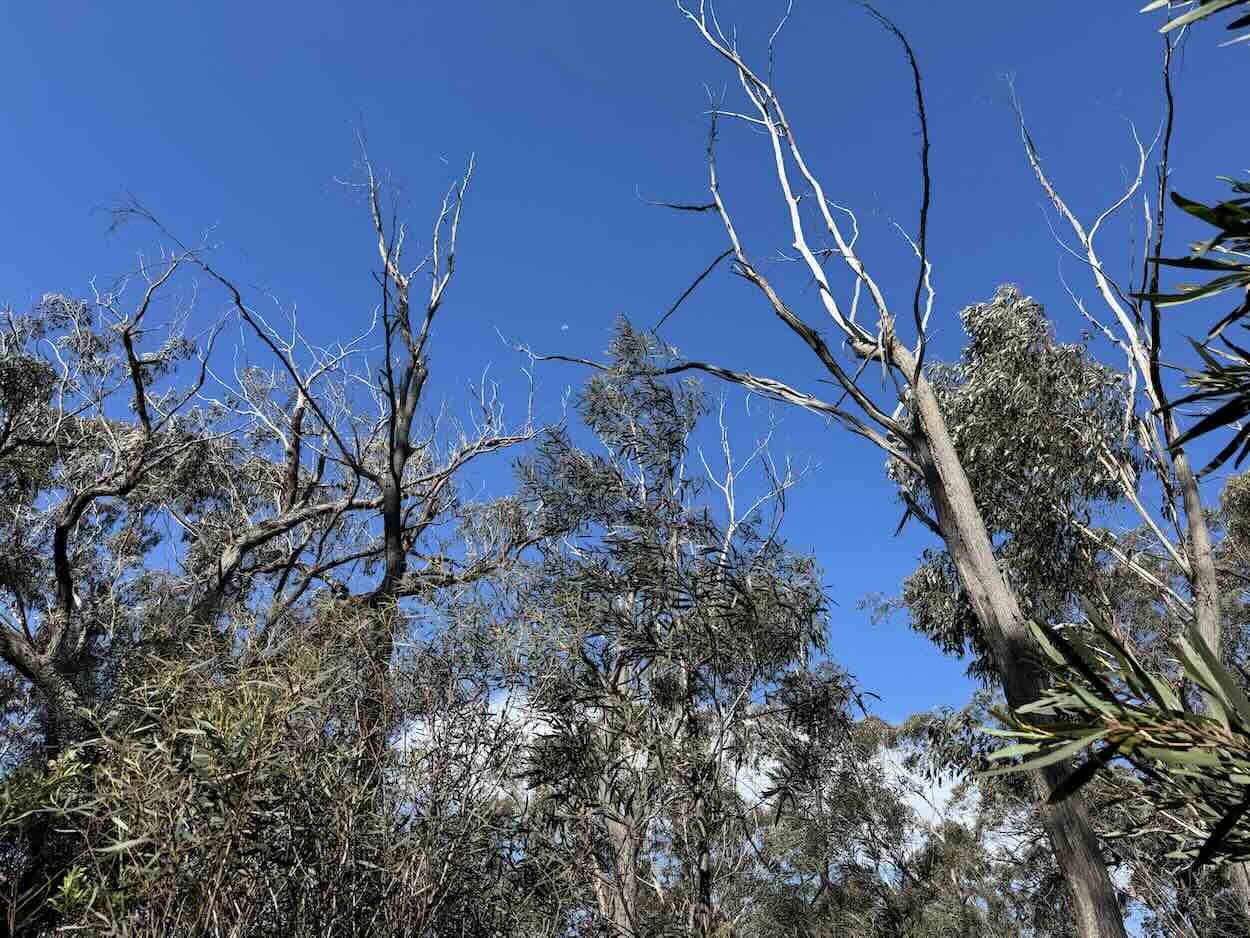

Thelma Johnson was busy weeding a conservation patch on her block in late 2019 when she first noticed the leaves in the canopy above taking on an unusual hue.
The dark green foliage of the eucalypts had turned a dirty brown, a shade “never seen” in any the droughts Johnson’s family had endured since moving in 1970 to the hamlet of Canyonleigh in the NSW Southern Highlands, a two-hour drive south of Sydney.
Ancient eucalypts, like scribbly gums, had “seen a lot of drought and survived, and we could tell they were dying,” she told Renew Economy. “It was very, very upsetting.”
That big drought, which took in much of eastern Australia, fuelled a record bushfire season during 2019-20. Somewhat miraculously, Canyonleigh was spared, even though a ring of fires around the region meant that for every wind change, “there was no good one,” Johnson recalls.
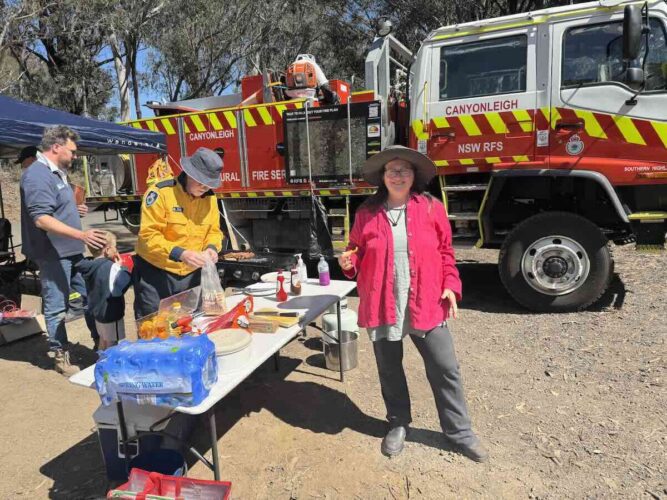
Memories of that conflagration may have faded after several relatively wet years. That’s one reason why the NSW Rural Fire Service, a mainly volunteer agency, has been stepping up “Get Ready Weekends” to urge residents to prepare, including at Canyonleigh last Saturday.
Conditions, across much of NSW, including Canyonleigh, have also started to turn dry after a record mild winter for the state. Early-spring heat brought Sydney’s earliest 32-degree day on record.
Remnants of the 2019-20 dieback – trees which defoliated and often perished – that Johnson witnessed will add another elevating factor for bushfire risks during the coming summer.
That’s before expected extreme temperatures – and even so-called “flash droughts” – from the record strength El Niño in the Pacific are taken into account.
The combination has fire researchers worried for exposed communities. Ecologists and the Wingecarribee council – that encompasses Canyonleigh – are also worried about the impact on flora and fauna, alike, as they endure frequent bouts of whiplash weather.
One person spanning both fields is Rachael Nolan, an associate professor at Western Sydney University.

Nolan led some of the post-2020 studies that identified the likely causes for the deaths of many millions of trees in NSW. A shifting climate could also be exacerbating the threats to trees in Australia and elsewhere, according to her paper in the New Phytologist journal.
“The increased incidence of drought has raised concerns that climate change may lead to broad-scale tree mortality in many regions, as the pace of climate change outstrips the capacity of trees to acclimate or adapt to greater drought stress,” the paper noted.
Nolan is also director of the NSW Bushfire and Natural Hazards Research Centre, a body that links research from six universities across three states and the ACT with NSW emergency services.
“I just feel like we’re in uncharted territory” when it comes to the approaching bushfire season, Nolan told Renew Economy this week. “Things are not looking especially dry, but when you have record-breaking heat, then things can just dry out really quickly.”
New England, in northern NSW, is one region of concern because of signs of dieback in the forests after dry conditions for much of 2026, as highlighted recently in Renew Economy.
“They were having trees with canopy dieback in winter, which is quite surprising,” Nolan said. “It still has an underlying water deficit, so I think that part of the world has me a bit concerned.”
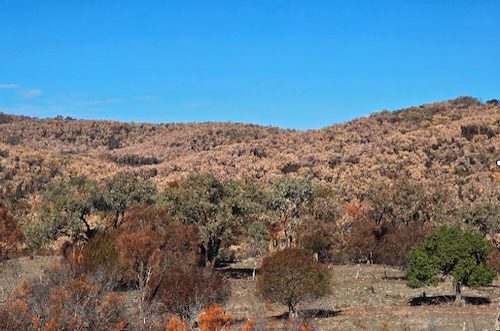
Nolan says the extent to which forests have recovered from the 2019-20 drought varies. In some areas, such as the Blue Mountains west of Sydney, the story is one of significant regrowth.
Work by one of Nolan’s post-doc students, Chris Gordon, has found that three relatively wet years in a row mean “fuel loads just absolutely exploded,” with small trees and shrubs particularly dense.
“So you can imagine if they dry out, then that is quite concerning,” Nolan said.
Regions with dieback present a different type of risk, because micro-climates have altered.
“When the trees lose their leaves, you get more sunlight coming through [and] the wind can penetrate a bit more,” she said. “So it just creates conditions that are a bit more conducive to fire.”

Separate research, published recently by another of Nolan’s researchers, Eli Bendall, found the recovery of tree species varied after the combined drought and fire of recent years, potentially permanently changing the forest mix.
“Drier eucalypt forests are really resilient to fire and have recovered really well,” Nolan said. “[But] wetter eucalypt forests have had much higher rates of tree mortality.”
The results were “consistent with what we think is going to happen with climate change,” she said. Species that are already on the dry edge of their distribution range will retreat if conditions get even drier and hotter.
The research by Bendall and co-authors in Global Change Biology Communications “was actually able to show that that is is now happening,” Nolan said.
Back in Wingecarribee, the shire council commissioned its own research into regional dieback.
“Generally, dieback in trees has been attributed primarily to extreme climate events over the last approximate seven years,” a council report states.
“Causes such as extreme drought transitioning quickly to high/extreme rainfall, as well as plant disease agents such as Phytophthora are assumed to be the main causes,” it said.

Rainfall typically drops sharply in the shire for regions further from the coast, with various species found to be struggling from the drought and then wet years.
Among the hardest hit were species such as the hard-leaved scribbly gum – or Eucalyptus sclerophylla / racemosa – with about half the 442 trees surveyed found to be dead or in poor health.
Sydney peppermints, or Eucalyptus piperita, were also severely affected. Of a total of 369 trees surveyed, 51.5% were dead and another 20% in poor health.
The NSW government said it had worked with the Wingecarribee Shire council to monitor and identify the causes of eucalypt canopy dieback in natural bushland and farmland, including Southern Highlands Shale Woodlands.
“The 2019-20 drought provided an important insight into how severe and prolonged dry conditions can affect native forests which placed significant stress on many native plant communities across New South Wales,” a spokesperson said.
The government’s work is aimed at understanding drought impacts and to support evidence-based management of native vegetation and threatened species.
Time, though, is running out.
Funds for conservation are perennially tight at state and federal levels, and the Southern Highlands Shale Woodlands is already listed as “critically endangered” under the EPBC Act.
Thelma Johnson knows better than most what’s at stake if forest health declines, running, as she does, the Southern Highlands Koala Sanctuary on her land.
While koalas get much of the public’s attention – and government funding – many other species inhabit even narrower ecological niches that are thinning further.

Johnson singles out the threatened Glossy Black-Cockatoo. It’s a “very picky” eater that seems to chew on only the most select she-oak, or allocasuarina, nuts.
She and other land managers identify which are the “chewing trees,” whose food passes muster. Ecologists then turn up to the collect the seeds and propagate them in the hope of maximising future edible offerings for these beautiful birds.
The Indigenous populations, Johnson says, had a deep understanding of their surrounds but their knowledge has been “so disrupted in many parts of Australia.”
As for the rest of us, “we’re still so young at even understanding what we’ve got, let alone the interactions between species, and plants and animals”.
To join more than 29,000 others and get the latest clean energy news delivered straight to your inbox, for free, click here to subscribe to our free daily newsletter.