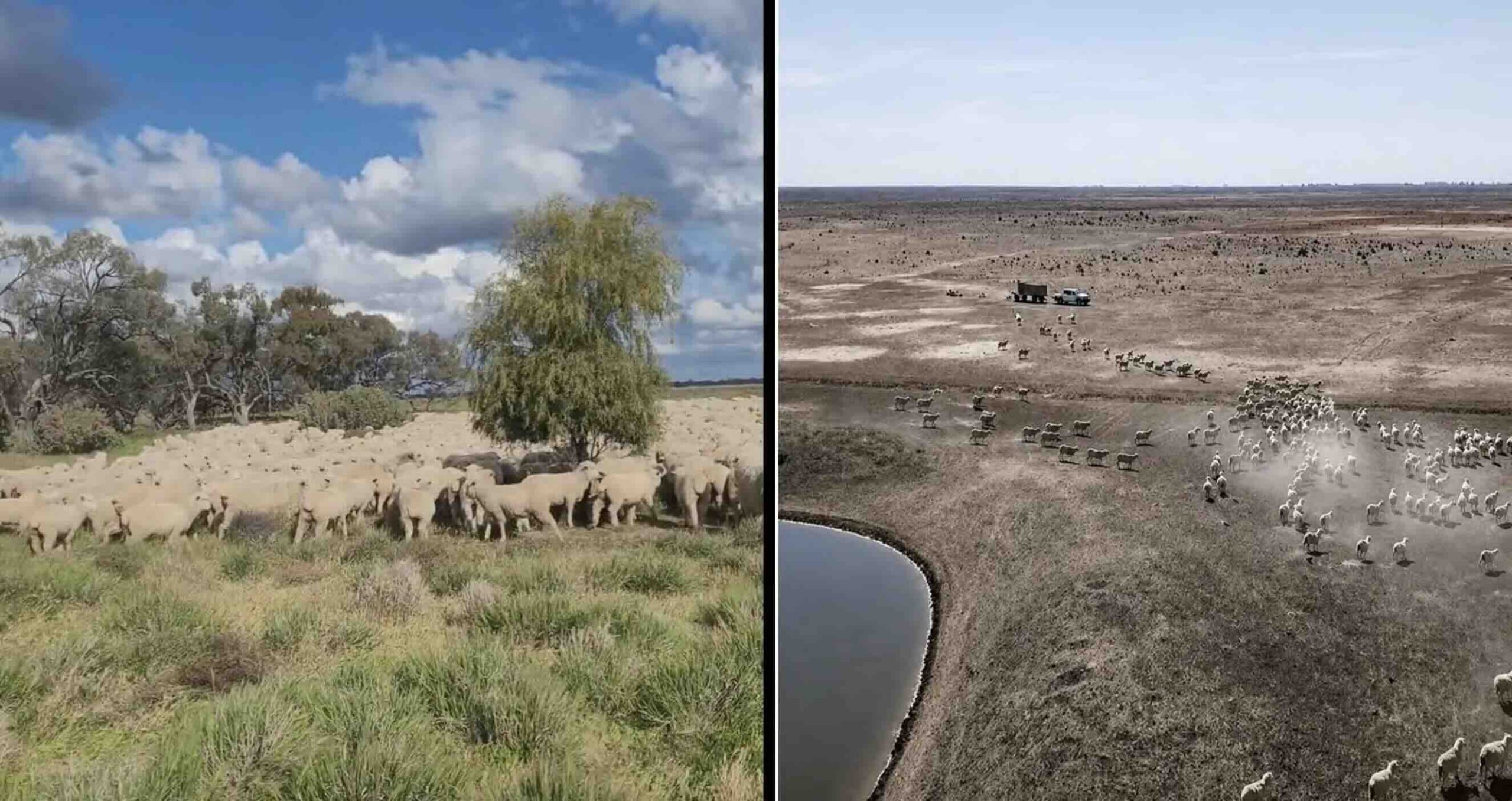

The farming family proposing to host wind turbines at a new project in south-west New South Wales has delivered a powerful argument why such investments are helping to protect and improve pasture, rather than damaging agriculture as is often portrayed.
Rhys McCulloch, from McCulloch Pastoral, which is one of three properties hosting up to 140 turbines for the 800 MW Bullawah wind farm proposed by Europe’s Bay-Wa, says the one of the most valuable assets a grazier can have in marginal country is choice – to move livestock and rest paddocks, and stop grazing when the country needs rest.
“As a grazier, you are ultimately at the will of the climate. Drought is inevitable, but the long-lasting damage it can cause to native vegetation and habitat does not have to be,” McCulloch said at a presentation earlier this month to the Independent Planning Tribunal that is reviewing the project.
“Our experience has shown us that when our farming business has financial resilience, it can make better decisions earlier, reduce grazing pressure, protect ground cover, and give the country time to recover.
“When we look at the Bullawah Wind Farm, we don’t simply see wind turbines. We see another opportunity to give our farming business something that experience has taught us is incredibly valuable. Choice. Choice to reduce stock pressure before the country deteriorates.
“Choice to rest paddocks. Choice to invest in and protect native habitat. Choice to prepare properly for drought and fire. And the choice to continue improving the way we manage Bullawah.”
The IPC held a public hearing on the Bullawah project this month because of laws – since amended – that required any project that attracts more than 50 submissions opposing it to be referred to the IPC.
In the case of Bullawah there were 65 objections, but none from anyone within 15 kms of the project, and many of those lodged against it were simply nonsense, including confusing studies into solar farm heat island effects with wind energy, and alleging harm to koalas from a nearby wind farm that does not actually exist.
Most of the people who spoke at the IPC hearing into Bullawah are committed objectors to renewable energy projects, and some do not accept the science of climate change.
“The planned Bullawah swindle factory is like all other ecocidal inferior pathetically intermittent weather dependent industrialised wind solar junk and BESS bombs that don’t work most of the time,” Lynette LaBlack, a repeat objector told the tribunal by telephone, according to a transcript published on the IPC website.
Other speakers included Alan Moran and Rafe Champion, who both blamed wind and solar for multiple blackouts. Moran, who has previously worked at the Institute of Public Affairs, cited South Australia, Broken Hill, Spain and Portugal as key examples, even though authorities in all those locations say wind and solar were not to blame.
Moran also said it was pointless for Australia to act on cutting emissions to address global warming “if, in fact, it is occurring.”
Champion, a founder of Energy Realists of Australia, and a long time solar and wind critic, echoed a common accusation: “It’s destroying agricultural production, destroying the harmony of rural communities and it’s not going to work.”
His comments were echoed by another speaker. “We are taking agricultural land out of food production and the future of our rural communities,” said Annie Hare. “We are a farming community. If we cannot farm them, what do we do?”
But McCulloch’s point was that wind farms will not take agricultural land out of food production, but it will enable cropping and grazing to be managed in a way that doesn’t damage the land and will improve productivity.
McCulloch said he had been working with Bay-Wa to identify the conservation areas and productive cropping country on the property and to design the project around those areas wherever possible.
“That has been important to us,” he said. “We don’t want a wind farm that prevents us from improving Bullawah as an agricultural business or compromises the conservation work we are already doing.”
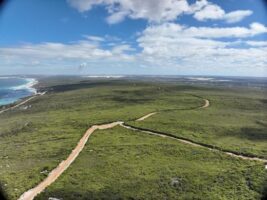
He presented these two photos in his presentation to IPC (see the photos at the top of this story), the first of sheep among native grasses and on healthy protected soil, that required no cultivation and no fertiliser.
“We’ve been able to achieve this because today we have something that I believe is one of the most valuable assets as a grazier can have in marginal country and that’s choice,” he said.
“The choice to move livestock and rest paddocks, the choice to stop grazing when the country needs rest and having that choice requires infrastructure. Fencing, watering points, containment areas, feed equipment and transport, but it also requires education and an understanding of grazing management.
“But as you can see on the right, Bullawah hasn’t always looked like the first photograph. This photo was taken on 22 March 2019 and we were in drought, 190 ml rainfall for the previous year.
“There was very little grass, poor ground cover and sheep spread across the landscape looking for feed. I think this photograph demonstrates something important about farming in this environment.
“When low rainfall coincides with poor livestock and wool prices, the financial pressure on farming businesses can begin to influence decisions made on the land. A farmer might know that a paddock needs six months rest, but knowing what should be done and having the financial capacity to do so are two very different things.”
Aidan O’Mahonym, the Bullawah project manager for Bay-Wa, told the IPC that benefits totalling $1.9 million over the life of the project had been offered to all neighbours within 11 km of wind turbines, and voluntary planning agreements totalling $15.7 million had been agreed between the three local councils.
A further dedicated First Nations fund of $2.8 million, will be administered by Bullawah Wind Farm, and access fees to the South West REZ associated with Stage 2 of the project will go towards the EnergyCo Community and Employment Benefit Program, amounting to $9 million over 15 years.
“We are pleased to see no objections from anyone within 15 km of the proposed project,” he said. “We’ve worked to embed ourselves into the community while developing trusting relationships over the past five years. We’ve listened to and understood community perspectives and they’ve been incorporated into the planning of this project.”