The shift to renewable energy is not just a technological feat. It is one of the most significant social changes regional Australia has navigated in decades.
I recently published research examining the experiences and motivations of people actively opposing renewable energy in western Victoria. It’s complex, but common threads emerged: profound distrust toward those developing renewable projects and policies; concerns about local impacts; a deep sense of lost agency; and feelings of government overreach – particularly among those who felt they had already had a gutful during COVID-19 lockdowns.
Opposition extends far beyond technical concerns about transmission towers and turbines. It reflects a web of trust, social identity, place attachment and community dynamics. For some, renewables are not just infrastructure. They are symbolic of faraway decisions, with local impositions.
Ask communities, or experts in social licence, what makes a project less polarising and the answers are consistent – trust, agency and a fair distribution of benefits. Getting these right is highly localised. It depends on relationships, history and identity. That makes it hard for newcomers to get it right, be they developers, bureaucrats or transmission companies.
A different approach
It doesn’t always have to be out-of-towners.
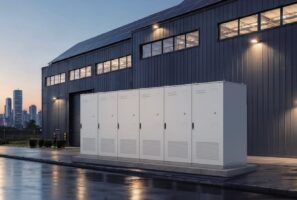
Community energy offers another model. These projects are community-led, with locals involved in governance, design and financing of projects.
The Manilla Solar Project in northern NSW is a great example. In the heart of Barnaby Joyce’s electorate, a community organisation is developing a 4.6MW (AC) solar and battery project with 186 investors – around 80 per cent of them local. As their president Emma Stilts, tells the Select Committee on Information Integrity on Climate Change and Energy:
“When you know the landowner and who’s championing [the project], you can trust that they’re true to their word. And I think that’s the type of trust that is special sauce kind of stuff.”
Community energy projects can build bridges where polarisation has become entrenched. Voices for Walcha, a community group opposing large-scale windfarms and transmission infrastructure planned for their area, has a blog post suggesting the Walcha community should instead explore community-owned renewable energy, citing Manilla’s project amongst others.
And the appetite is there. At Community Power Agency, we recently launched a Community Energy Incubator with the aim to find and support five community groups to pursue their own mid-scale projects. We received 26 applications.
When communities have genuine agency and share meaningfully in the benefits, resistance can give way to participation, and even pride.
Filling the “missing middle”
This is not just a social licence opportunity. It is a network opportunity.
There is capacity on our distribution network – the existing poles and wires that already run through towns and regional centres. In the draft 2026 Integrated System Plan, AEMO has identified around 4GW of latent capacity from consumer energy resources and roughly 2GW of potential grid-scale generation and storage that could connect directly to distribution networks.
That matters because it is exactly where mid-scale projects like Manilla’s fit.
These mid-scale projects do not require major new transmission corridors. They connect to local networks. They are large enough to contribute meaningfully to the system, but small enough to avoid many of the social flashpoints associated with new, large, high-voltage infrastructure.
Transmission remains essential. The transition cannot happen without it. But if we focus solely on transmission, we overlook the opportunity sitting on the grid we already have, and the chance for communities to directly participate in building the energy system in a bigger way than just rooftop solar.
The UK has backed community energy, Australia should too
Last week, the UK launched its Local Power Plan, committing up to £1 billion to community and local energy, with an ambition that by 2030, every community will have the opportunity to own a local energy project.
This is not a niche idea. Community energy is already a meaningful part of the energy mix in countries such as Denmark, Germany and the United States. In Denmark, for example, the Promotion of Renewable Energy Act has required that at least 20 per cent of new wind projects be offered to local community ownership since 2008. Community participation isn’t an afterthought, it is embedded in policy.
Australia, meanwhile, has no coherent national strategy, no dedicated funding at scale, and no clear pathway to integrate community energy into mainstream system planning. That is a missed opportunity, not only to ease tensions, but to build a stronger and more resilient energy system.
Backing mid-scale, community projects through dedicated funding, integration into system planning and clear policy settings would not slow the transition. It would strengthen it.
The UK has recognised that community ownership builds trust and resilience. Australia has the capability to do the same. What’s needed now is the policy commitment.
Eleanor Buckley is communications and project manager at the Community Power Agency