Fifteen big battery projects, almost all of them with four hours of storage and nearly half of them destined for Queensland, have been named as the winners of the federal government’s latest auction – a storage-only affair – under its Capacity Investment Scheme.
The results CIS Tender 8 were announced on Wednesday by the federal Labor government, having more or less met its target of 4 GW of four-hour equivalent clean dispatchable capacity across the National Electricity Market (NEM).
The result of the latest storage auction comes as batteries, both big and small, are being hailed by the market operator and by pricing regulators as playing a major role in pushing down electricity prices, flattening the solar duck curve, and generally stabilising the market.
Australian Energy Market Operator chief Daniel Westerman told Australian Energy Week earlier this month that there is currently around 7 gigawatts of grid-scale battery capacity installed on the National Electricity Market (NEM) – enough capacity to meet roughly 20 per cent of peak demand.
On average, Westerman says large-scale batteries have been delivering more than 1,000 MW – or 1 gigawatt (GW) – into the evening peak over the first quarter of the year, “reducing the need for more expensive peaking gas generation.”
Federal energy minister Chris Bowen on Tuesday said the 15 newly successful CIS projects will deliver a total capacity of 4.2 GW and 16.2 gigawatt-hours (GWh) of storage, including seven projects in Queensland, three each in New South Wales and Victoria, and just two in South Australia.
Bowen also noted the “strength and quality” of the bids from battery developers this round, with proposed capacity exceeding the tender target by almost five to one. To this end, CIS Tender 10 has launched, targeting a further 4 GW / 16 GWh – open to bids until 18 August 2026.
“We’ve got the best sun and wind in the world, and we’re using our sovereign renewables, stored in batteries, to shield our grid from global energy volatility and to bring down your energy bills,” Bowen said on Wednesday.
“These batteries will soak up cheap renewable energy during the day and send it back into the grid when demand is highest, helping keep the lights on and bills down.”

Two of the biggest projects named in the round are being developed by Australian outfit Ampyr Energy, including the huge 1,602 megawatt-hour (MWh) Rutherglen Battery, which Ampyr is proposing for Queensland’s Gladstone region in a joint development with Gryphon Energy and Red Hill Renewable Energy.
Ampyr has a total of four projects named in the tender, making it the biggest winner of the round. Its projects include the 375 megawatt (MW) / 1,500 MWh Wimpole Battery being developed Victoria’s Bunyip North, and the 350 MW / 1,428 MWh Grahams battery in Queensland’s Western Downs region.
Ampyr’s 300 MW / 600 MWh (two hours duration) Bulabul 1 battery energy storage system (BESS) near Wellington in NSW also makes the cut at after the second stage Bulabul battery was named among the winners of the last battery-focused CIS tender in September last year.
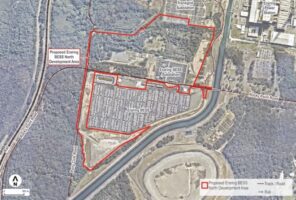
Also in the mix with its very big, 400 MW / 1,600 MWh Gelston Energy Park project is fellow Australian outfit Ascera – a Sydney-based “firmed energy platform” funded by Federation Asset Management.
The Gelston Project, which is also known as McCully’s Gap, joined the queue for state development approval for construction on the ‘Spring Flat’ of Muswellbrook in the Upper Hunter Region of NSW.
In South Australia – where the urgent need for additional deep storage capacity was cast in stark relief by a severe wind drought over the weekend – the two projects selected in the CIS round are both being developed by Potentia Energy, including a 225 MW/ 900 MWh BESS near Port Augusta.
As Renew Economy has reported, the Emerooo battery last year became the first to gain an environmental green tick from the SA government under a new act designed to streamline approvals. It is proposed to be built next to the 220 MW Bungala solar farm.
A couple of big Victorian projects have also made the grade, including a second stage to what is already the state’s biggest operational battery yet, the Melbourne Renewable Energy Hub (MREH).
The 200 MW/ 800 MWh MREH Side B is being developed entirely by Equis, which also co-owns the first 600 MW/ 1,600 MWh stage of MREH with the Victoria government-owned State Electricity Commission (SEC).
MREH Side A, which came into operation in Victoria in time for the 2025-26 summer, has been described as a “standout” success by SEC chief Chris Miller, for helping to fill a gap in investment in four-hour battery storage in the state.
“It was a large-scale battery located in a strategic part of the high voltage transmission network that we knew would simultaneously strengthen that part of the grid and unlock capacity for more renewables to be developed, particularly in the west of Victoria, and it is having a measurable impact on wholesale prices, particularly over the summer period,” Miller told Renew Economy’s Solar Insiders podcast earlier this month.
“My trading guys have tracked the average wholesale prices over the Victorian summer through from 2023-24 to the current summer, 2025-26 and what we’re seeing is a market decline in the average wholesale prices, and even more importantly, a flattening of that duck curve, which is, we think, largely attributable to the role of utility-scale and home batteries.”
Bowen says the 15 successful projects underwritten by this latest Capacity Investment Scheme will support enough battery storage to power 3.7 million homes for four hours.
“Our opponents say the wind doesn’t always blow and the sun doesn’t always shine, and that’s true,” he told a press conference on Wednesday.
“But the rain doesn’t always fall either. We store rain in dams across the country, and we can store renewable energy in batteries across the country and put it to work for Australians.
“That’s exactly what we’re doing.”
The 15 batteries are also expected to unlock $6 billion in private investment and deliver an estimated $62 million in community benefits. The projects are also expected to create more than 6,800 jobs across construction, operations and maintenance.
If you would like to join more than 29,000 others and get the latest clean energy news delivered straight to your inbox, for free, please click here to subscribe to our free daily newsletter.