Solar’s end of life is not a problem for 2050. Decisions are being made right now.
Ask most people when an Australian solar farm reaches end-of-life and they will point to a date three decades later. The panels degrade, the story goes, and around year 30 a crew arrives to pull them down and hand the land back. It is a tidy picture.
It is also mostly wrong, based on what people running these assets tell us.
In recent months, we have spoken with utility-scale solar developers across Australia about how these decisions actually get made. Two things came through clearly and, together, they suggest we are watching the wrong clock.
The first is that end-of-life is not about age. It is about money.
The decisions that shape a solar farm’s fate are commercial and could be made far earlier than any technical end point. One asset manager described starting to weigh the asset’s future, whether to extend its life, repower it, or decommission it, around “the halfway point of, you know, 15 years.”
What tips the decision is the market. The same manager watched large-scale generation certificate prices fall from “forty-five or $50” a few years ago to $4 today, pulling the business case with them.
A farm generating perfectly well can hit a decision point the moment its off-take contract expires, and the contracts on offer are changing.
Conversely, an ageing asset can run long past its design life. As one practitioner put it, “if it’s still producing and it’s still making money… just let it drag on until it finally falls apart completely.”
The panels are not the point. The point is the revenue, as well as the connection to the grid.
“That grid connection, like just the physical grid connection… whether anything’s generating or not, it has value,” one grid specialist said.
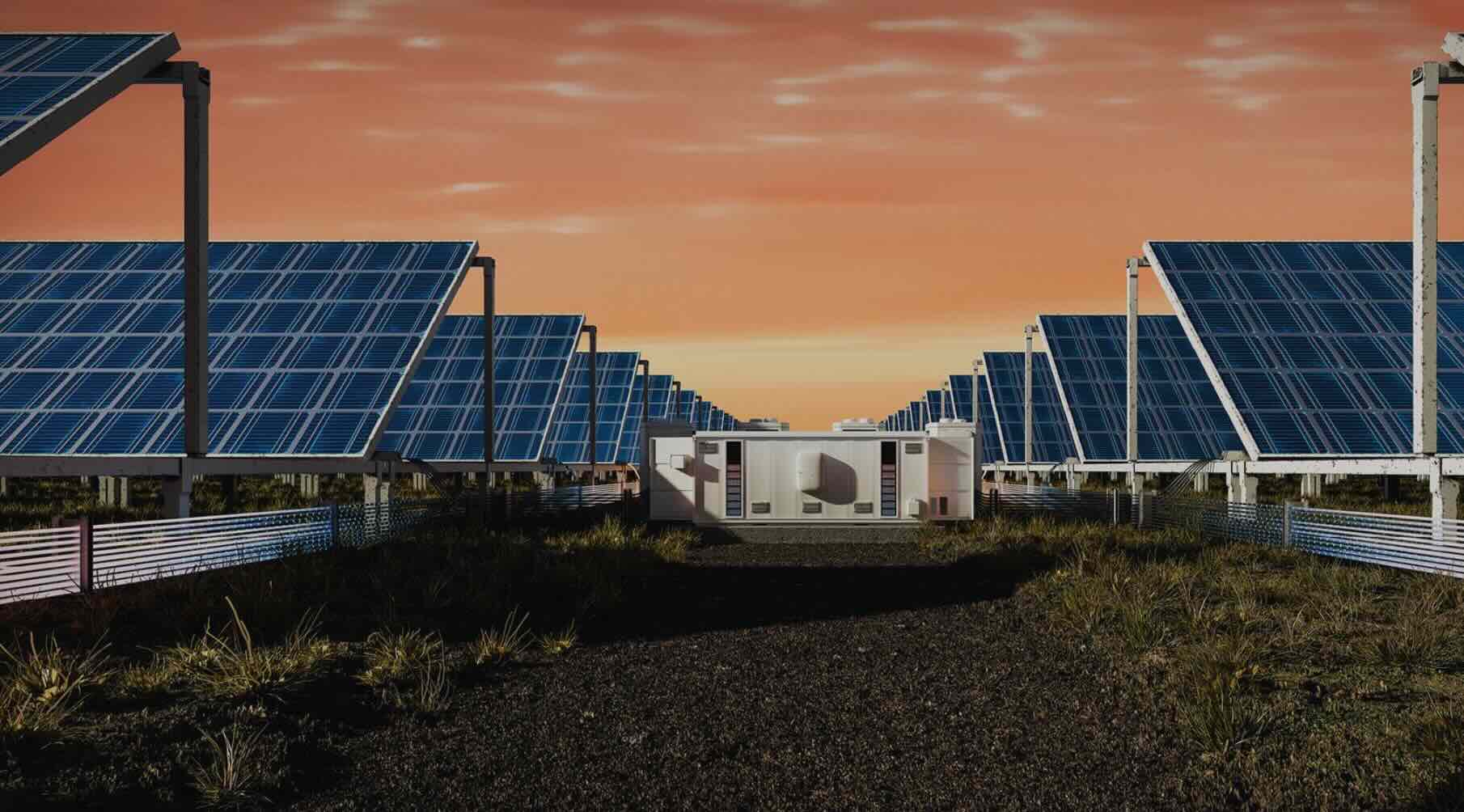
Hybridisation, adding storage to an existing site, is now standard. Almost no solar-only project has got off the ground in two years, and older farms are being retrofitted to add storage.
Repowering, if it comes, may arrive by stealth, one inverter block at a time, until the farm is effectively new without any single decision ever being called “end of life.”
The connection may not even stay solar. The specialist predicted data centres, chasing speed to first power, will simply buy distressed solar sites for their connection points.
The connection outlives the asset. It may outlive the obligation too.
Which brings us to the second point, and it is the more uncomfortable one.
Exactly one obligation is genuinely fixed to the end of a solar farm’s life. Decommissioning.
Removing the infrastructure and returning the land is written into leases and planning consents. It is the one part supposed to be locked down, and the part least resolved in practice.
What sits behind the obligation varies.
At one end, a developer described engineers costing the full deconstruction at roughly $10 a panel, booked as a liability. At the other, a developer reported “no contract obligations, there’s no bonding, there’s no… anything like that.”
Where protection exists, it is often landowners rather than regulators demanding terms before they sign.
Even then, it is often a plan without money behind it, “just a piece of paper… to tick a box and get people off your back.”
On the number itself, one participant was blunt. “I don’t know what the cost of decommissioning is, but it doesn’t seem like anybody knows… to me that’s a massive problem.”
Now put the two points together.
Assets whose fate is set by commercials get sold, hybridised and reworked whenever the numbers move. The decommissioning obligation travels with every sale, but only as a line in the model, a number nobody has tested, often with no money behind it.
And the sales are happening. The European developers who built the fleet have largely sold up, and the buyers are funds whose business is buying and selling.
In that world, one asset manager observed, end of life “becomes a number in a spreadsheet… but who’s going to do it? How are they going to do it? When are they going to do it?”
One developer was disarmingly frank. “That is going to be in 30 years. We are not going to be here… the idea is to sell all the projects… that is not going to be our problem.”
The number keeps moving until it stops with whoever holds the site last. One participant doubted anyone is “saving their pennies to the side for it,” predicting owners will “get to it and go, oh… what are we going to do here” when a bill of “$3 million to remove this offsite” finally lands.
A liability everyone has priced and nobody has tested, moving from owner to owner, waiting.
Or the bill never lands at all, which is its own problem.
Around an operating farm, nobody has an incentive to call time. The landowner keeps the lease income, the council its rates, the community its benefit-fund, and an owner short of payback cannot afford to stop. One asset manager forecast that end of life “is going to keep getting kicked down the road.”
Deferral is not an escape. An obligation never triggered is never funded, costed or tested.
That is exactly why decommissioning processes, costs, funding and rules need working out now, not on the day a firm decision is finally forced.
Research at the Arena-funded Australian Centre for Advanced Photovoltaics (ACAP) at UNSW seeks to provide the information the industry needs.
Are we too focused on a distant decommissioning event and not enough on the commercial decisions already reshaping these assets?
Is the connection point, not the panels, what determines a site’s future?
And who will be holding the obligation when it comes due, and what does it mean if it never does?
We do not think the answers are settled, or even widely asked. This research is ongoing, and if you see it this way or differently, we would like to hear from you.
Verity Tan is a research officer and PhD candidate at UNSW’s School of Photovoltaic and Renewable Energy Engineering (SPREE), where her research covers end-of-life management of PV systems. Her PhD focuses on end-of-life decision-making for utility-scale solar. To take part in the research or continue the discussion, contact [email protected].