The head contractor of Snowy Hydro’s giant 2.0 pumped hydro project has blamed “additional adverse geological and hydrogeological conditions” for part of another expected blow-out in costs, just three years a major “reset” lifted the scheme’s direct price tag to $12 billion.
The Albanese government is expected to release this week updated costs of Snowy 2.0, prior to a senate estimates grilling of the Commonwealth-owned corporation next Monday.
Critics, such as Ted Woodley, a former senior energy executive, predict the revised estimate will come in close to $25 billion, excluding interest and the additional transmission required to connect Snowy 2.0 with the main grid.
In its submission this month to a parliamentary inquiry into the project’s developments since a major reset in August 2023, Future Generation Joint Venture (FGJV), the head contractor, cited several key drivers for the upcoming “cost adjustment.”
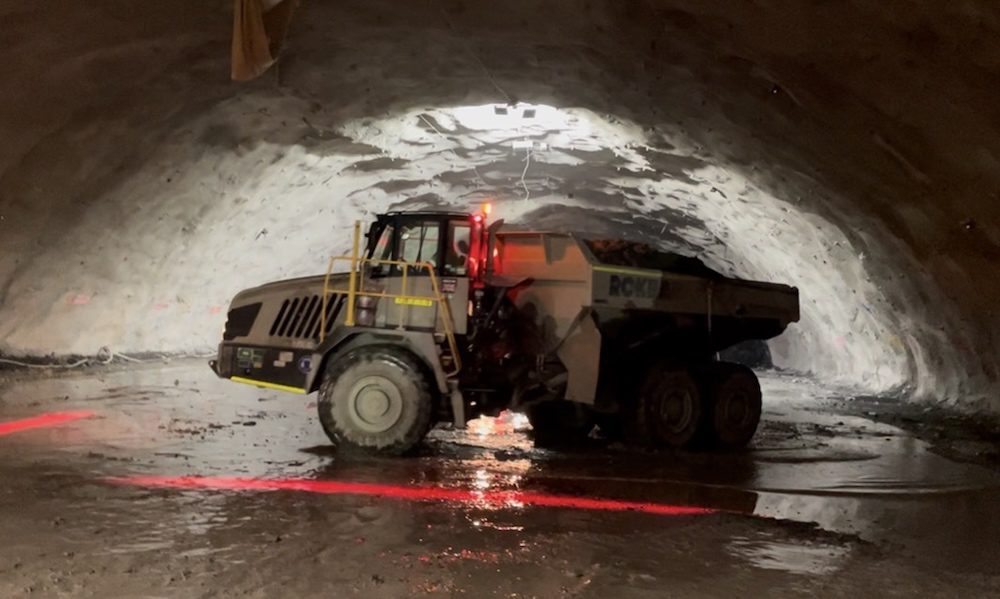
Among factors “outside of the control” of either Snowy Hydro or FGJV, were the tunnellers encountering “additional adverse geological and hydrogeological conditions affecting critical-path workfronts”, the contractor said its submission.
The tunnel boring machines (TBMs) were slowed or stalled by “variations in rock strength and abrasivity, groundwater inflows and the way the rock mass behaves as excavation progresses.”
“While certain conditions were first encountered earlier in the delivery period, their most severe effects have only materialised more recently,” FGJV said.
These included “groundwater inflows associated with water-bearing geological features that were not identifiable through initial probing techniques, requiring extensive grouting, pumping and water management measures,” it said.
In another instance, cavern excavation had to be redesigned, construction sequences altered and blasting works and methods revised.
The submission also detailed how little initial investigation was done for a project that includes 37 kilometres of tunnels and underground caverns to house a power station and other equipment.

FGJV said ground investigations were “necessarily limited” because Snowy 2.0 is located entirely within the Kosciuszko National Park, NSW’s largest national park that’s also home to Australia’s tallest peak.
“As a result, conditions only become fully apparent as excavation progresses,” FGJV said, citing an example of the main 16 km Head Race Tunnel that traverses five different rock formations and nine anticipated fault zones.
The initial investigation drilled “only around 22 boreholes, spaced on average approximately 760 metres apart, with the largest gap being 1.75km”, it said.
“Ordinarily, boreholes would be undertaken every 100m to allow adequate profiling of the geological conditions”, as would be the case with urban tunnelling.
Woodley, one of Snowy’s most prominent critics, said the lack of initial drilling was hard to comprehend given NSW’s national parks authority had apparently “just rolled over” on every request from Snowy.
“There were no constraints that I’m aware,” Woodley said, adding that the initial surveys had been part of a $100m investment. Drilling core holes would typically only require limited surface disturbance, with little excavation and spoil, he said.
FGJV noted the original project design had envisaged that three TBMs would excavate the tunnel system, with the first TBM to excavate the section of the head race tunnel passing through the Long Plain Fault Zone. That fault, which runs from NSW to Victoria, encapsulates about 1394m of the tunnel, at a depth of approximately 400m.
“However, additional geotechnical investigations revealed that tunnelling through the [fault] using TBM1 was no longer practicable due to the near certainty of [the machine] becoming stuck,” it said. The solution was to start design on a fourth borer – dubbed Monica – that is expected to be able to tunnel through the conditions, with approval for the machine coming in September 2024.
Snowy 2.0 has been dogged by delays and blowouts since then Prime Minister Malcolm Turnbull announced the project in March 2017.
A “back of the envelope” calculation at the time put the bill at $2b with the 2.2 gigawatts of generation capacity with 350GW-hours of storage supposed to be operational by 2021.
Snowy Hydro later revised the project’s completion date to the end of 2028 – a timing that is also likely to be revised when the government releases the results of the year-long cost review.

FGJV also cited a blowout in construction costs generally for major projects in Australia – and globally – in recent years, particularly for labour. It says the geological difficulties, by delaying the project and requiring other changes, had exacerbated the labour and material cost increases.
FGJV cited work it commissioned by Boston Consulting Group that found construction enterprise agreements had delivered cumulative increases averaging approximately 29% since 2020. “Discrete regional projects have experienced even higher impacts,” it said.
Concrete production costs, meanwhile, had increased by about 33% since the first quarter of financial year 2023, and 50% since 2020. Mining and construction machinery costs had also risen by about 35% since Q1 FY2023, and 85% since 2020, FGJV said, citing BCG.
Other challenges include the excavation of one tunnel with a steep incline of at about 25 degrees, with FGJV described as “the first drive of this kind undertaken anywhere in the world”.
“Snowy 2.0 remains an extraordinarily ambitious undertaking,” it said. “The project has delivered substantial achievements under exceptionally challenging conditions.”
Woodley, though, says the overall operation has been “just an absolute shambles,” and the Albanese government should have conducted an independent expert review when it came to office in May 2022.
To join more than 29,000 others and get the latest clean energy news delivered straight to your inbox, for free, click here to subscribe to our free daily newsletter.