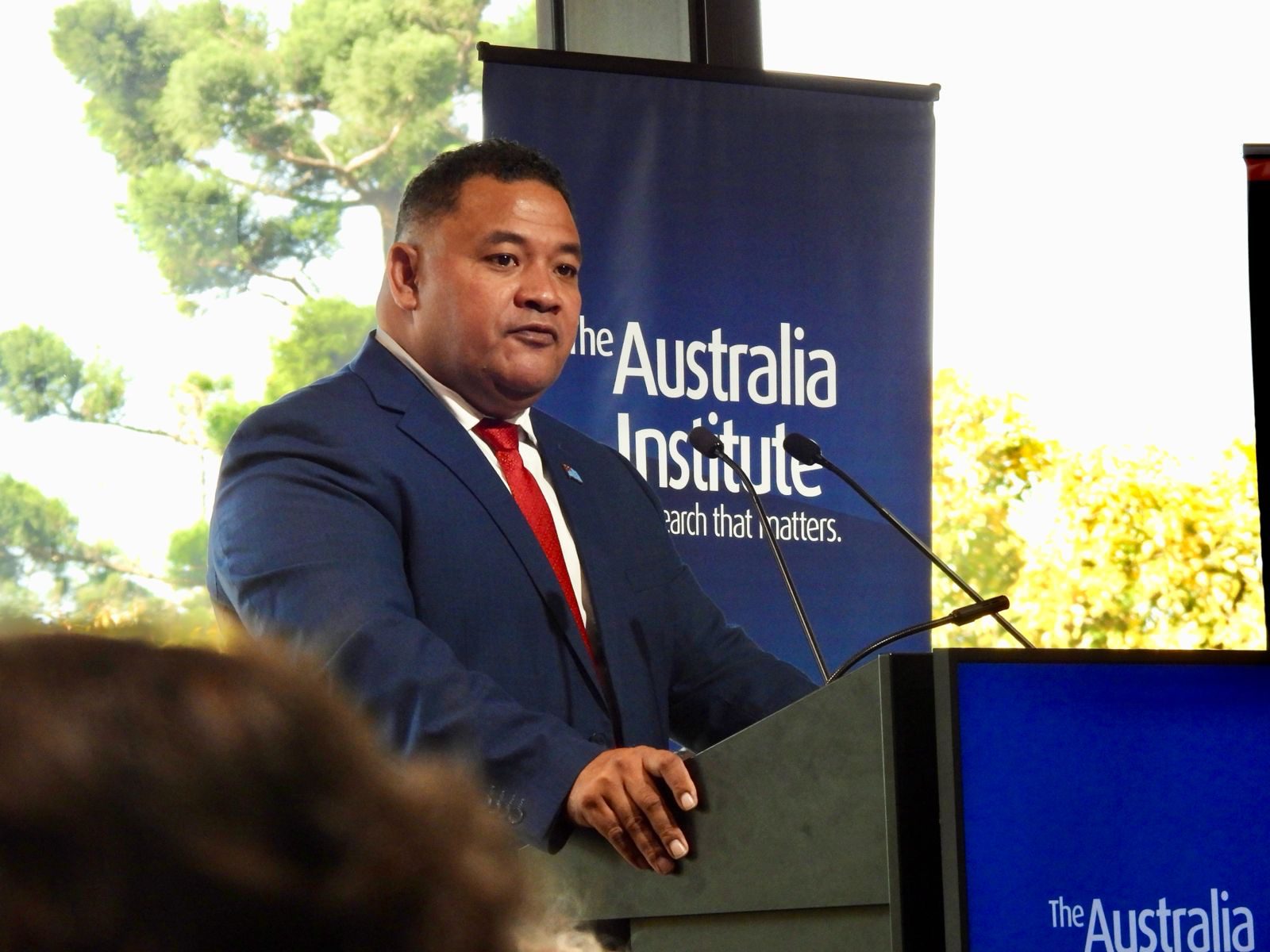
Australia’s subsidies for fossil fuels since 2020 were almost six times the amount the nation gave in aid to the Pacific, underscoring the importance of halting new coal and gas expansions, Maina Vakafua Talia, Tuvalu’s climate and environment minister, said.
The comparison in subsidies was made in a report by The Australia Institute. It found Australian governments funnelled $62 billion into fossil fuels subsidies between 2020 to 2025, dwarfing the $11 billion in aid to Pacific neighbours. Just $1.3 billion of those funds were climate-specific aid.
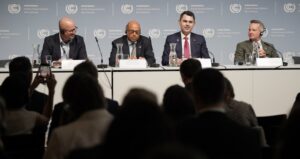
“It doesn’t really matter how much money we subsidise, if we don’t put a stop to the real problem,” Minister Talia told a climate integrity summit run by The Australia Institute in Sydney on Tuesday.
“The logic is very simple,” he said. “We should put a stop to the expansion of coal mines and gas to ensure the survival of those who continue to live in the small island states.”
The aid from Canberra is partly intended to stem growing Chinese influence in the Pacific region to Australia north-east. Some of our Pacific neighbours, though, are less worried about geopolitical issues than environmental ones, a point Prime minister Anthony Albanese acknowledged during his visit to Palau three weeks ago.
“Climate change is an existential threat to the very existence of some of the countries who are represented here,” Albanese told the Pacific Islands Forum gathering.
Low-lying Tuvalu is also preparing to host a special leaders’ segment as part of a pre-COP summit in Fiji that will run 5-8 October. Australia has helped fund the pre-COP events after it lost out to Turkiye in a bid to host the full Conference of the Parties (COP) in November.
During Question Time in Parliament on Wednesday, climate change and energy minister Chris Bowen said he would be “spending time” with Talia in the next few weeks “as the Prime Minister will be, to elevate the issues of the Pacific on the global stage.”
Concerns about Tuvalu’s future have been heightened by record global sea-surface temperatures and the recent release of a major United Nations report showing temperature increases would likely soar past the Paris climate agreement’s 1.5-degree target.
“The UNEP report on the overshoot didn’t just bring data, it brought sleepless nights filled with the faces of my people and the uncertain future of my children,” Talia said in a statement accompanying the release of The Australia Institute report.
“As climate minister, I carry the heavy burden of full responsibility. This is not about politics; this is about our very survival – it is a matter of life and death,” he said. “That is why transitioning away from fossil fuels is not just necessary, but non-negotiable.”
The TAI’s report, Transition Away from Fossil Fuels: A Roadmap for Australia, set out a five-point plan for Australia to meet its own COP28 commitment to transition of fossil fuels in line with the 1.5-degree goal.
Since signing the Paris agreement in 2015, Australia had more than doubled its gas exports. The Albanese government had also approved 37 new coal and gas projects, the Australia Institute said.
Canadian Senator for Quebec Rosa Galvez, another of the speakers at the Tuesday event in Sydney, blasted the lack of subsidy transparency in fossil-fuel-exporting democracies.
“We are told markets are free,” Galvez, an independent senator for Quebec province, said. “Markets are not free, because we are giving huge subsidies and we are favouring this industry.”
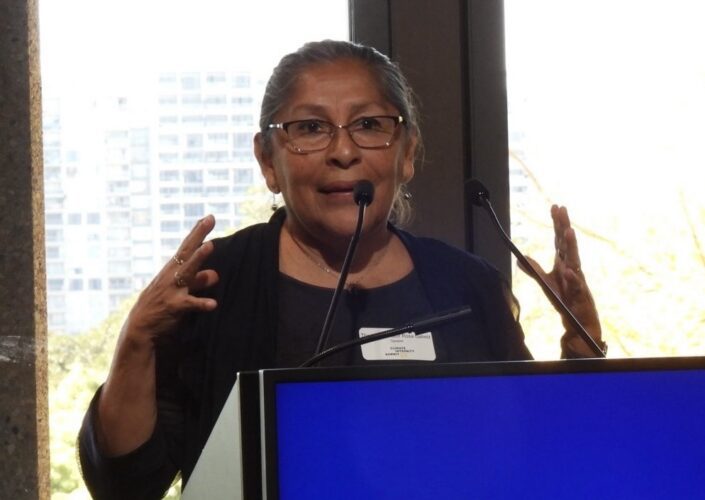
In a separate Guardian opinion piece, Senator Galvez drew parallels between Canada and Australia as two wealthy, resource-exporting democracies with similar resource bases and fossil-fuel subsidy debates.
“Canada and Australia have focused on reducing emissions from fossil fuels while avoiding the harder conversation about reducing our dependence on them,” she said in the article. “That distinction matters. It determines whether we are managing decline or genuinely transforming our economies.”
Tuvalu will also co-host the Second Conference on Transitioning Away from Fossil Fuels, along with Ireland, next April.