Do you remember the excitement about the first two-hour big batteries in Australia?
It is not that long ago: The world’s first big battery, at Hornsdale, in South Australia was commissioned in 2017 with barely more than an hour of storage. It took another two years for the first two-hour battery, at the Lake Bonney wind farm, to be commissioned. By 2023, there were still only two two-hour batteries in the country.
Then the shift changed to four hours of storage, helped by mandates for the country’s two biggest batteries at Collie in Western Australia. Then it shifted again, in quick succession, to six hours, and then to eight hours with the commissioning of the 50 MW, 400 MWh battery at Limondale in the south-west of NSW.
Now, it’s moving further into double figures, to 10 hours and beyond, as battery costs continue to fall, market needs change, and also because battery chemistries are evolving again – from lithium NMC, to lithium LFP and now to sodium and other novel technologies such as nickel hydrogen.
One of the features of the All Energy conference in Melbourne this past week was the focus on batteries – for EVs, for homes, for balconies, and for the grid. And at the grid scale, it was the new chemistries and the longer duration storage that stood out.
The world’s biggest battery maker, China’s CATL, is already rolling out the first of its new sodium batteries and reports significant interest in Australia. Valo, currently building the biggest battery at Hornsdale, also reports interest in the technology, and a new player, Enervenue, is promoting nickel hydrogen chemistry, also known as aqueous metal.
The selling point of these new technologies is their ability to operate at extreme temperatures, their longer life, and the absence of fire risk. They don’t necessarily aspire to replace lithium LFP, but they see plenty of opportunity in remote, off-grid, high usage and other facilities where fire risk must be eliminated.
“So the (nickel hydrogen) chemistry I think, has three main characteristics,” EnerVenue’s Henning Rath tells Renew Economy, in a special episode of the Energy Insiders podcast, to be published this coming week.
“We can do 40,000 cycles over the lifetime, which is probably three times that of of lithium. We have extreme temperature resilience from minus 20°C to plus 60°C.
“We have minimum efficiency losses, no liquid cooling required, and by default, we cannot have a fire risk from thermal runway due to the fact that we have a water-based electrolyte, and that makes it an extreme resilient technology.”
Interestingly, the EnerVenue technology is adopted from the original nickel hydrogen chemistries used for the Hubble telescope – because of extreme temperature variations, the zero fire risk, and the long storage duration. It is now being brought back to Earth thanks to falling technology costs.
Valo’s Peter Fath had a similar message when he talked to Renew Economy about sodium batteries in another episode of the Energy Insiders podcast published earlier this month.
He said sodium batteries offer reduced fire risk, longer duration as battery requirements push out towards 12 hours, and the ability to operate within greater temperature extremes. And, as the technology rolls out its first projects and manufacturing efficiencies are achieved, the costs will also fall.
“It will serve long duration at a better cost structure compared to lithium iron phosphate,” Fath says. “I feel in the future we will have mixed setups. We might have even mixed, one site (connection) setups.”
EnergyVenue’s Rath agrees that future battery storage systems may come with mixed chemistries, to address various parts of the capability suite – ranging from very fast response to longer duration storage, and for multiple cycles in a single day.
“So typical lithium-based battery, you can find it in your car, in your e-bike, in your in your in your home, and on the grid. That is that is the first bucket.
“The second bucket is sodium is coming in, and sodium I would say is cannibalizing in certain applications the lithium-based chemistries, and will be successful I think in the stationary applications, and maybe even in some mobility applications.
“And then you have the third bucket which we call non-lithium-based long-duration energy storages. So batteries that are lithium free and addresses a different problem.
“Most of the other chemistries cannot discharge continuously over a very long period of time or multi-cycling a day because certain resting times are needed. And this is where we come into play.
“So we are not competing against lithium directly. We are competing in the third bucket, where you have applications where you cannot have any risk from fire, and you need long discharge durations from, let’s say, six hours plus, and a venue is able to discharge the battery up to 24 hours, so it is very flexible chemistry.”
CATL, meanwhile, is also seeing the grid need for longer duration batteries, driven by the increased penetration of wind and solar, market changes, and falling costs, as well as the emergence of new chemistries like sodium.
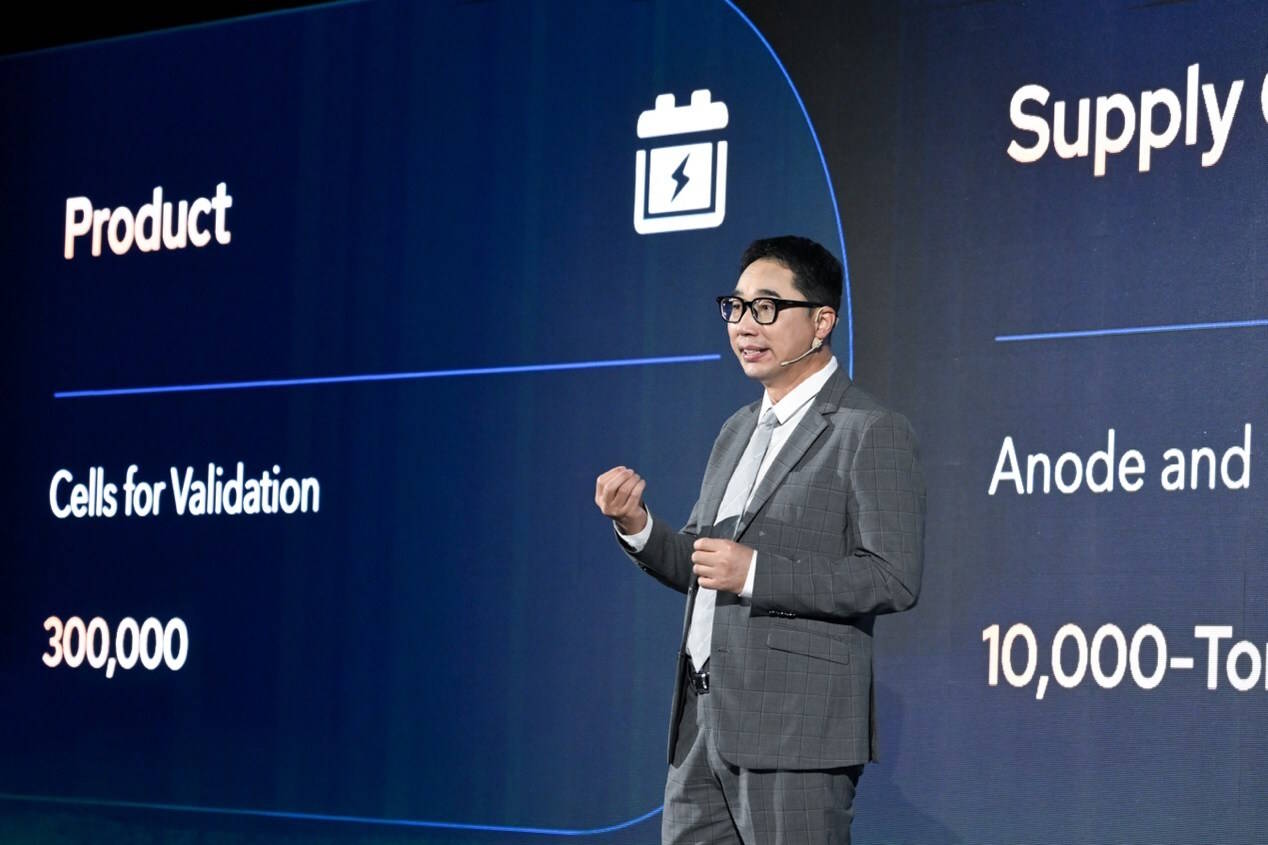
It has rolled out its Tener Sodium sodium product, which it says has already generated big interest from the industry in Australia.
“There has been huge interest in sodium batteries [in Australia], not just on the NEM (National Electricity Market) but also in the off-grid sector,” the general manager of CATL Australia and New Zealand, Zane Zhou, said on the sidelines of the conference.
“We just need to translate [that interest] into real-life projects,” she said, noting that the company is getting very big interest miners keen to electrify their operations and cut their diesel consumption.