Origin Energy is planning to double the size of the big battery that is already being built in the shadow of the 2.88 gigawatt (GW) Eraring coal power station, with an expansion that will ultimately deliver a facility rated at 1,200 megawatts (MW) and 8,600 megawatt hours.
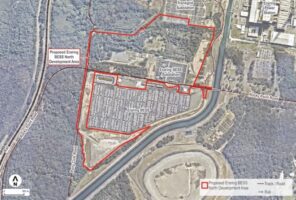
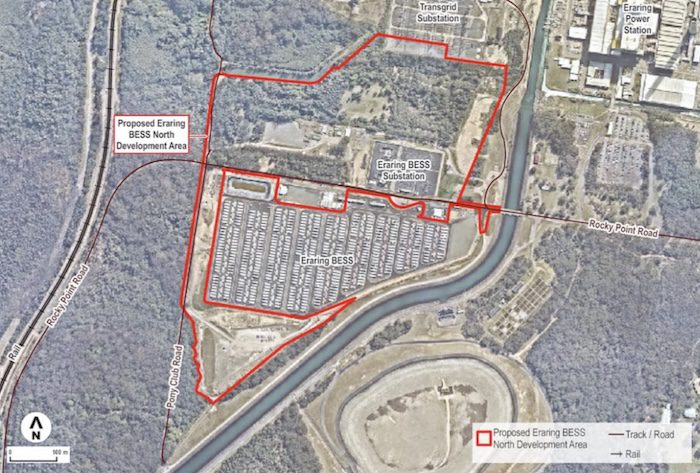
Australia’s biggest utility is seeking approval to add a 500 MW, 4,942 MWh addition, known as Eraring North, to the Eraring battery precinct that is being built over four stages, and which is already competing as one of the biggest in the country.
Origin hopes to start construction on Eraring North in 2028, a year before the latest closure date for the Eraring coal generator, and expects it to take around 2.5 years to build with full commercial operations due in early to mid 2031.
While there are a number of enormous battery projects proposed around the country, the Collie batteries in Western Australia – Synergy’s 500 MW and 2,400 MWh and Neoen’s 560 MW and 2,240 MWh installations – are the biggest operational units, with Eraring competing with Quinbrook’s Supernode battery in Brisbane among those still being built.
In its EPBC referral, Origin says that it’s responding to structural shifts in the National Electricity Market (NEM) “as the electricity sector transitions from coal-fired generation toward variable renewable energy”.
Origin announced in 2022 the planned “early closure” of the Eraring coal power station in late 2025, but has so failed to invest in any new wind and solar capacity, although it has been a major investor and contractor for battery storage – including at Eraring, the newly completed Mortlake battery and contracts with Supernode.
The lack of new wind and solar capacity forced an initial delay in the Eraring closure to 2027, before another delay – this time blamed on the lack of critical grid services, pushed the latest closure date to April, 2029. Many in the energy industry are still to be convinced that date will hold.
Origin’s EPBC document notes the completed closure of the Liddell coal generator in 2023 (now replaced by its own big battery), and the planned closure of the Eraring coal facility.
“This represents the largest single generation exit in Australian electricity history and is expected to be followed by further retirements at Vales Point, Bayswater and Mount Piper power stations,” the document notes.
Same same but different
Eraring North is still at the earliest stages of planning with only an EBPC referral and a scoping report lodged with the New South Wales (NSW) government.
The EPBC application is being led by Adam Marshall, formerly the Nationals state MP for the Northern Tablelands, and a former minister for renewables in the Coalition state government.
Origin says Eraring North will be “electrically separated” from the existing batteries with its own 300 kilovolt (kV) grid connection into a spare spot in the nearby Transgrid substation. The plan is to reduce the environmental impact and share some infrastructure, by using 11 hectares of existing Eraring battery land and adding another 11 hectares.
Origin Energy declined to provide an attributed response to questions about this project.
Wind and gas
Origin, meanwhile, is trimming its renewables portfolio, recently dumping the Skye Ridge wind project near Walcha in NSW on cost grounds, and focusing instead on the Northern Tablelands wind project in the same region. It is also seeking equity buyers for the 1.45 GW Yanco Delta wind project in the state’s south west.
Last month, Origin – already the biggest operator of gas fired generation in the country – dusted-off decades-old plans to build a massive new gas fired power station in NSW’s southern tablelands.
Origin and EnergyAustralia are both reviving old plans for gas peaking plants, citing a need to meet the volume of firmed power deemed necessary by both state and national market overseers. And that is despite the CSIRO’s latest GenCost report for 2026 says both the construction and running costs of gas peakers are rising quickly.
“New electricity generation capacity required to meet demand from data centres is growing strongly and is impacting gas turbine costs,” the report says.
“Gas turbine costs have already increased for the last four consecutive years. As a result of this ongoing demand from data centres, the projections assume that the cost of gas turbine technologies will continue to increase in the next two years.”
To join more than 29,000 others and get the latest clean energy news delivered straight to your inbox, for free, click here to subscribe to our free daily newsletter.