The federal government needs to take a hard line on its flagship energy support scheme, focusing only on shovel-ready projects and scrutinising the ones that can’t move ahead, says Neoen Australia CEO Jean-Christophe Cheylus.
Cheylus says projects that can start being built within a year should be the only ones eligible for the few remaining rounds of the Capacity Investment Scheme (CIS) in order to attempt to meet the 2030 renewable energy target of 82 per cent.
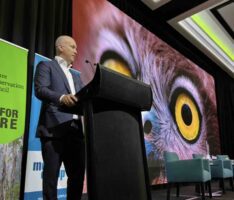
“We need to change the [CIS] selection criteria so that the projects that are awarded are the ones that are going to be built, or maximise the chance that they are going to complete,” he said at the Australia Energy Week last week.
“When the projects are very advanced, when they have [a development application], when they know their cost, they are in advanced discussions with their suppliers, they know everything, so that when they are awarded, we know that they can do it.”
The CIS was supposed to be the Albanese government’s accelerant for the renewable energy sector, after years of Liberal policy and government changes stalled development and delayed the build out of new generation as coal plants approached retirement.
But many projects are stuck, as the gap between what the CIS contract promised to pay out when a contract was won and what it costs to build something now is too large to justify starting construction.
“There’s a lot of projects that have been awarded long time ago, even more recently, that have not started building, that have not even signed sometimes the CIS, so they have already been awarded, so theoretically they are stuck where they are,” Cheylus says.
“There is the issue of the ones that have been awarded before and that are not investing at the moment.
“The only option is not to sign the CIS, to try to go for another round, or to try to sign something else.”
What he says developers can do is start on time, even if building faster in Australia is impossible.
“We cannot build faster. Even in the last [few] years we’ve seen building times for projects being extended most of the time, more costly, more time, because there is more requirements for the project, and that’s normal,” he said.
Slow CIS starts
Neoen, now owned by global investor Brookfield, is Australia’s largest investor in renewable energy.
It has three east coast CIS winners, all from the first tender in December 2024: the 300 MW Goyder North stage 1 wind project which received EPBC approval this year, the 600 MW Kentbruck wind project in Victoria which received a state green light this year and is now owned by HMC Capital, and the Thunderbolt wind project which is fully permitted and won a CIS contract for 230 MW of capacity.
None have started construction yet.
Overall, 88 projects have won CIS contracts of which 74 are in the east coast energy market.
But only one, the 46 megawatt (MW) Mokoan solar farm, is operating after winning a contract in the first tender, according to data tracker RenewMap. It was already being built when it won the contract.
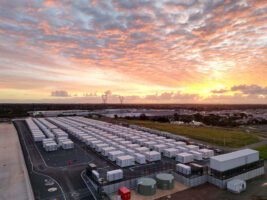
One project is currently commissioning, the 240 MW, two hour Mornington battery which won a deal in September last year.
And another seven are currently being built: the 600 MW Smokey Creek solar-battery hybrid, the 150 MW, two hour Calala battery, the 250 MW, four hour Reeves Plains battery, the 256 MW Carmodys Hill wind project, the 274 Palmer wind project, the 450 MW Goulburn River solar project, and the 380 Lower Wonga solar project.
CIS needs more transparency
Cheylus says the lack of transparency around the CIS is making planning difficult.
Wholesale prices are averaging around $90 per megawatt hour (MWh) when renewables need at least $120/MWh, which is a problem, Cheylus says.
“If generally speaking, we are not transparent about the cost and the prices, it is making our life very difficult,” he says, pointing to the secrecy around the rates CIS contracts have awarded.
“The lack of transparency… of the CIS, but not only we know we can see that we are late, we can see that we are not delivering.
“Because the only outcome of the CIS is who has been awarded or not, and that’s it. From there, you know nothing. You don’t know if they have… signed the [CIS] contract.
“You don’t know their floor, you don’t know their cap, you have zero information about what effort has been necessary to win the CIS, so you learn nothing. You don’t know if you have to change your parameters.
“When you are an investor, you want to invest… you want to be able to understand what is happening. You want to understand the rule of the games. You want to be able to model what’s happening.”
If you would like to join more than 29,000 others and get the latest clean energy news delivered straight to your inbox, for free, please click here to subscribe to our free daily newsletter.