A huge Queensland wind and battery project has been bought up by Danish renewables giant Copenhagen Infrastructure Partners, achieving the rare feat of financial close for both a Capacity Investment Scheme winner and for a hybrid renewables project under the state LNP’s strict new planning regime.
Copenhagen Infrastructure Partners (CIP) on Monday announced the acquisition of Gawara Baya, a wind and battery project formerly known as the Upper Burdekin wind farm that was originally developed by renewables outfit Windlab on on Gugu Badhun Country south-west of Ingham.
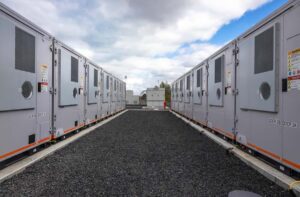
Located around 65 km south-west of Ingham, Gawara Baya will combine 408 megawatts (MW) of wind with a 104 megawatt “grid-forming” battery energy storage system (BESS) with about two hours of storage (217 megawatt-hours), according to EPBC documents.
In a statement issued on Monday, CIP said it has acquired 100 per cent ownership of the project from Windlab, through its Copenhagen Infrastructure V (CI V) fund. The project was given state approval in 2023 – and has not been called in by the LNP – and federal environmental approval in 2024.
The purchase gives a much-needed boost to Australia’s renewables pipeline, after a long period where wind energy projects have struggled to secure finance, despite many of them being supported by underwriting agreements under the federal government’s Capacity Investment Scheme (CIS).
Over the past financial year, only a spate of smaller wind farms – Waddi, Palmer, Carmody’s Hill and Delburn – managed to reach final investment decision, a total of just 857 MW, according to the Clean Energy Council, compared to 2.2 GW in the 2024-25 financial year.
Things have been particularly tough in Queensland, where the LNP government has taken a hard line against renewable energy projects, scrapping the state’s renewable energy targets, cancelling the approvals of two wind projects, and “calling in” a number of wind and battery projects, one of which has already decided not to proceed.
Gawara Baya had already secured state development approval under the former Labor Queensland government, more than a year before the LNP came into power in October 2024. But as a number of other wind and battery projects have learned, this was no guarantee that the approval would stick under the new regime. So far, however, it remains intact.
As well as being a contract winner under the CIS, Gawara Baya has long-term energy off-take deals with Queensland government-owned utility Stanwell Corp and with SmartestEnergy, an independent outfit that specialises in corporate Power Purchase Agreements (PPAs).
Windlab is majority owned by Federation Asset Management, which earlier this year bought out the 75 per cent stake owned by Andrew Forrest’s Squadron Energy. In a statement on Wednesday the company described the sale of Gawara Baya as one of its most significant milestones since taking ownership of Windlab in 2019.
The project also has a binding Indigenous Land Use Agreement with the Gugu Badhun Aboriginal Corporation that embeds cultural heritage protection, environmental stewardship and economic benefit, and it Australia’s first to be developed with a “biodiversity net-gain strategy,” Federation says.
“Gawara Baya demonstrates what patient private capital and responsible development can achieve together,” said Federation founding partner, Neil Brown, in a statement on Monday.
“The acquisition by Copenhagen Infrastructure Partners, one of the world’s leading energy infrastructure investors, is a strong endorsement of the quality of the project.
“It confirms our conviction that projects developed the right way, with community, Traditional Owners and the environment at their core, are also the most valuable.
“We congratulate the Windlab team and look forward to continuing to support the business as it develops its high quality 10GW+ pipeline of renewable energy and storage projects,” says Brown.
Windlab CEO John Martin said reaching financial close was the culmination of years of “responsible” development, with a focus on respecting Country, working with landholders and delivering lasting benefits for local communities.
“That commitment has shaped every part of the project, from our relationship with the Gugu Badhun People through to Australia’s first renewable energy biodiversity net-gain strategy,” Martin said on Monday.
“These initiatives reflect our belief that renewable energy projects should leave a positive legacy, not just generate electricity.”
The wind and battery did not have an entirely smooth path to this point, however, with challenges including the 2023 loss of a highly publicised PPA with global tech giant Apple, and a legal challenge to the project brought by the now-defunct anti-renewables outfit Rainforest Reserves.
In the legal challenge, mounted after former federal energy minister Tanya Plibersek approved the project in 2024, Rainforest Reserves alleged that the project’s wind turbines would kill, injure or disturb endangered or protected species of birds and bats, thus contravening Australia’s obligations under international treaties to protect Migratory Birds.
According to a summary of the case by Clayton Utz, the Federal Court dismissed the challenge on the grounds that compliance with international treaties is not an essential precondition to EPBC approval, but rather one of many factors to be considered in the decision-making process.
“In any event, the Court held that the approval of the project did not authorise the taking of birds contrary to the international treaties. Rather, it sought to implement a series of measures designed to control and eliminate or minimise the risk of death, injury or other harm to the birds. Therefore, the approval of the project on the basis of these conditions did not amount to conduct that was inconsistent with the obligations in the treaties.”
As Renew Economy has reported, the wind component of the project was approved by the EPBC following a “rigorous assessment process” and subject to “strict conditions” to protect the Sharman’s Rock-Wallaby and northern Greater Glider.
At the time, Plibersek noted that the conditions also included clearance limits, hours of operation during construction, and submission of environmental management plans which will set out how any impacts will be managed, mitigated, avoided or offset.
On a fact sheet on the project website, Windlab says the final design for Gawara Baya includes no more than 69 turbines, and occupies less than 0.3% of the project’s cattle property location with an operational footprint of approximately 147.9 hectares.
“The revised layout minimises… the overall footprint of the project by more than 50 per cent, avoiding discrete habitats for key species, and minimising the potential risk of habitat fragmentation and cumulative risk associated with another project proposed for the region,” it says.
Around 98% of the habitat available to species across the property will remain undisturbed for the life of the project, the company says.
It notes that Gawara Baya is located on land used for grazing cattle and these operations will continue alongside the generation of clean energy.
The project will now move into construction and is expected to be fully operational in 2030.