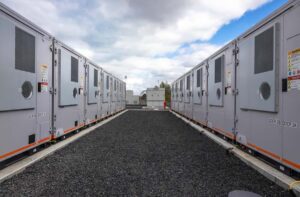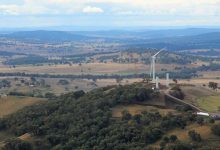
EnergyCo, the NSW authority charged with rolling out the state’s new renewable energy zones as it transitions away from coal, says it has has selected ACE Energy as the “first ranked proponent” to be network operator of the first REZ in the country.
The Central West Orana REZ is expected to have capacity of up to 3GW by the mid 2020s, although the state has been swamped with wind, solar and storage proposals nearly ten times that amount. An expression of interest attracted 113 registrations representing 27 gigawatts of capacity.
Ace Energy is “sponsored” by Spanish energy giant Acciona, which has significant interests in Australia, along with another renewables developer Cobra and NSW-based network operator Endeavour Energy.
The consortium beat out two other short listed competitors – Network REZolution, which was made up of Pacific Partnerships, UGL, CPB Contractors, and Newton Networks, which was made up of Plenary Group, Elecnor, Essential Energy and SecureEnergy.
Interestingly, the CWO renewable zone is located largely in the network area normally covered by Essential Energy, so its local network rival Endeavour – whose network area adjoins the REZ – may have scored a bit of a coup here.
According to EnergyCo, the CWO network operator will be responsible for designing, financing, building, operating and maintaining the network infrastructure for the REZ. The new grid connections will include energy hubs and new high-capacity transmission lines.
It is expected to bring more than $5 billion of new private investment to the Central-West Orana region.
Having identified its preferred bidder, EnergyCo will look to finalise its arrangements with ACE Energy and plans to enter into a “Commitment Deed” in the September quarter.
It says it reserves the right to recommence discussions with the second ranked proponent if EnergyCo considers it appropriate to do so. It did not identify which of the other two parties had been ranked second.
Meanwhile, renewable energy and storage developers are awaiting the results of the state’s first formal renewable and storage tender that will seek to build enough capacity to replace the ageing coal plants that are expected to retire in the coming decade.
The first of these coal generators, Liddell, is expected to switch off the last of its units on Friday, while Eraring – the country’s biggest – is currently schedule to close in 2025. Vales Point is due to close in 2029, with Mt Power and Bayswater seen likely to close in the early 2030s.
The first tender is seeking 950MW of wind and solar capacity, and 600MW of long duration storage – defined as eight hours or more.
The government was swamped in the first round of the tender with more than 5.5GW of wind and solar projects and more than 2.5GW of long duration storage.
The results are expected to be released in the next week or so. They had been due at the end of April.