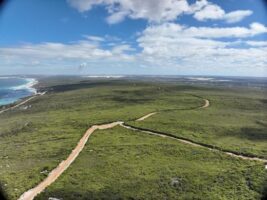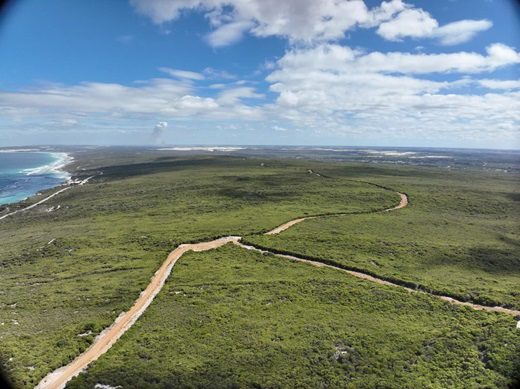
The site of one of Australia’s very first wind farms now shows little evidence of ever having hosted turbines, according to photographs shared by the state energy company charged with returning the decommissioned project to its natural landscape.
The former Esperance wind farms on the south coast of Western Australia included the nine-turbine Ten Mile Lagoon project, commissioned all the way back in 1993, and the six turbines added at Nine Mile Beach in 2004.
(The state’s very first wind farm – and Australia’s first ever commercial project – was Salmon Beach, also near Esperance, with six turbines commissioned in 1987.)
Synergy started the end-of-life process for the wind farms in 2022 – once the option of repowering them was ruled out – and has spent the past year rehabilitating the site, working with the Esperance Tjaltjraak Native Title Aboriginal Corporation (ETNTAC) on seed collection and planting.
The focus has been on planting native species and building a self-sustaining ecosystem to match the surrounding flora reserve and Synergy says the site is now home to a diverse range of vegetation, including eucalyptus and melaleuca trees and flowering shrubs and grasses.
In a post shared on LinkedIn, Synergy says the decommissioning process has also been about finding new life for wind farm infrastructure, with two turbines donated to North Metropolitan TAFE’s Clean Energy Training Centre to give students “hands-on experience” with equipment.
“Six of the turbines are being used for renewable energy generation in local agricultural facilities, with a further six to be installed for a similar purpose later this year,” Synergy said in the post, earlier this week.
“The tower concrete foundations were also gifted to a local contractor for reuse.”
Synergy says it will continue ongoing monitoring for several years to assess and support vegetation growth at the site of the former wind farm.
As RenewEconomy explains here, repowering old turbines – that is, replacing them with newer models, as opposed to decommissioning, which is when a site is returned to its previous state and use – is one of the preferred options for wind farms that have reached the end of their operation lives.
But in this case, both of the Esperance wind farms were deemed as no longer required, having been inactive for a number of years. Synergy’s experience of fully decommissioning the projects and rehabilitating the site offers a valuable example to the industry, for when future projects are shuttered.
As Renew Economy has reported, the Esperance wind farms were built inside a natural reserve, which meant Synergy was required to put a decommissioning and rehabilitation plan to the state Environmental Protection Authority (EPA) before starting work.
If you would like to join more than 29,000 others and get the latest clean energy news delivered straight to your inbox, for free, please click here to subscribe to our free daily newsletter.