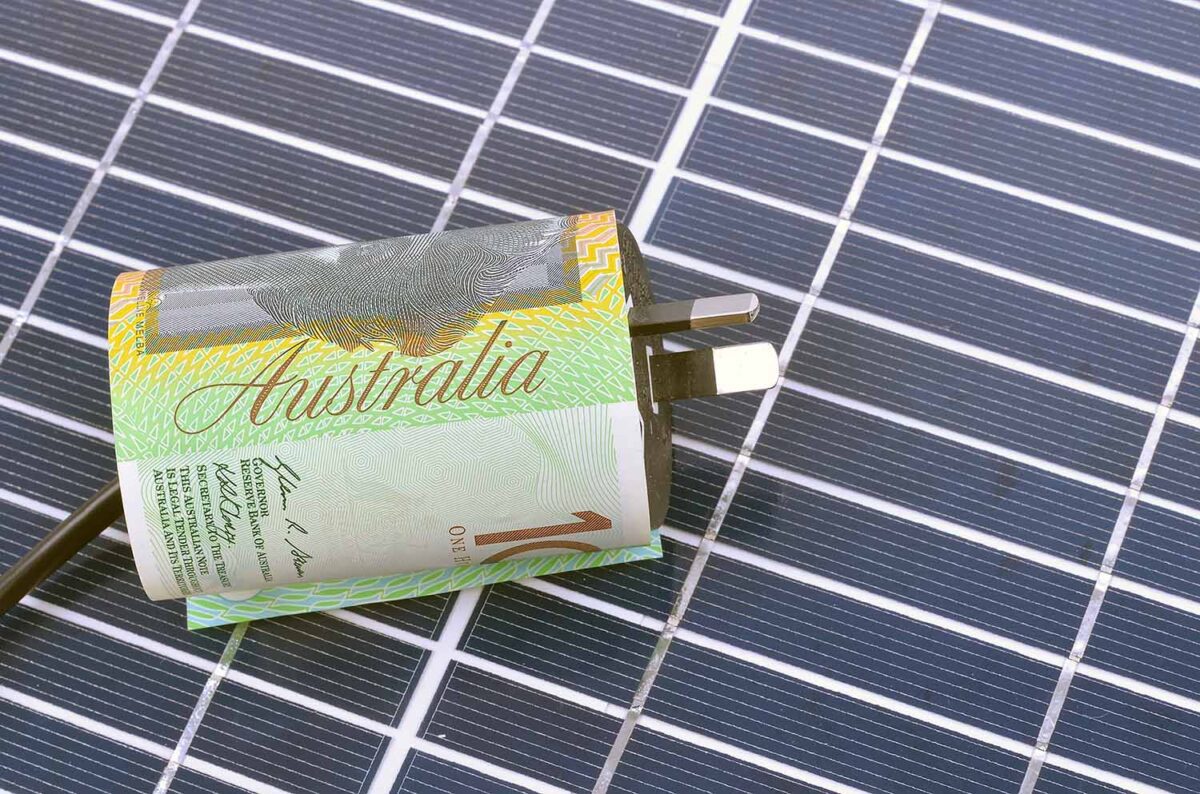
A small handful of Australians are already plugging in portable home batteries – illegally – suggesting that rules may need to change sooner, rather than later, to align with growing demand.
Renew Economy understands the battery boom is no longer limited to homeowners who can afford to pay for an official installation, as a small number of apartment dwellers and renters are already plugging unofficial devices into their mains.
It’s a risk. Not only is this illegal, but there are also concerns about the safety of such products.
Home battery installations have surged since the federal government launched its rebate program last year, and continue to do so – passing 400,000 installations in May – even after major changes to the subsidy.
But renters and people living in apartments are still missing out, and are effectively shut out of the benefits of rooftop solar and home batteries.
A campaign has been building since last year to permit balcony solar and batteries – like the ones approved for use in Germany – in Australia.
With the federal Solar Sharer and Victoria’s Midday Power Saver schemes set to provide three hours of free power during the day, the pressure is also building to share the benefits with renters and apartment dwellers, says Phil Krok, Anker Solix’s sales manager in Australia.
“Solar Sharer is the policy we see as the one that will unlock all the value for a product like this,” he told Renew Economy.
“Younger Australians are the majority who rent and don’t have access to renewable resources. I sit in that category and am pretty happy to have this fight.”
Questions still need to be answered
The urgency of sorting out new rules to avoid DIY home battery use is ramping up, especially given it’s simple to buy batteries approved for use on German balconies, or unapproved versions through the likes of AliExpress.
“There’s nothing stopping anyone from buying anything. People buy electrical products that aren’t approved for use in Australia either,” says Glen Morris, founder of battery and solar tester Smart Energy Labs.
“There are people doing it already, and there are people doing it in a safe way, who are using products that are approved for use in [other] places, for instance Europe.”
Morris cites an acquaintance who has four batteries plugged into his apartment.
But he also believes that if balcony solar and batteries can be done safely – and he’s reasonably convinced through his work it can be – renters and apartment dwellers shouldn’t be blocked from using them.
He points to products approved for use in Germany as an example.
“[Germany’s] 800 watt (W) of power is roughly only 3 amps, and every socket in Australia rated at 10 amps so it’s way below the max capacity of the circuit,” Morris told Renew Economy.
“However, there is still some concern about what’s known as blind RCDs, that’s the safety switch. Blinding means they don’t function reliably if there is a certain amount of DC injection into the AC circuit.”
Australia has been slow to adopt residual current devices (RCDs) that are tolerant of DC current – the kind that comes in from a solar panel or battery, for example. These are the safety switch on a circuit that shuts off electricity if it detects a fault, preventing electrocution.
Morris says there are still a lot of “type A” RCDs in Australian switchboards that don’t tolerate DC current, so pushing that type of current back into the circuit will blind the RCD so it can’t detect if, say, the electric kettle is malfunctioning.
“This is the slight unknown, because we need testing to know what will happen. Worst case, the RCD doesn’t detect earth leakage from which you would get an electric shock.”
He also points out that German electrical systems and standards are similar, but not the same as those in Australia, and there is an issue for electrical workers if they don’t know that an external device is still putting power into a circuit when they think a switchboard is off.
Pressure is on
And yet Morris says he’s been contacted by multiple European countries and regulators from 15 states in the US about plug in balcony solar-batteries, as international pressure grows to approve the technology.
Krok says New South Wales energy department people are excited by the concept.
That purported enthusiasm just needs to be turned into action.
Anker Solix is in the process of building a website in Australia, penciled in for the start of the Solar Sharer scheme in October, where people can register interest in the company’s own plug-in battery, and build grassroots pressure for change.
“This year would be amazing to see recognition of the product and the category itself. And to have some sort of framework to allow customers to get on board,” Krok says.
He is exploring the option of allowing renters and apartment dwellers to plug their Anker battery into the wall to charge and then run appliances directly from a backup port on the unit – but it’s “not my favourite idea.”
If you would like to join more than 29,000 others and get the latest clean energy news delivered straight to your inbox, for free, please click here to subscribe to our free daily newsletter.