The detailed cost review of Snowy Hydro’s delayed and controversial Snowy 2.0 pumped hydro project has run over time, despite being given nine months to complete the detailed cost analysis.
The line-by-line review was announced last October by the federal government owned Snowy Hydro as it flagged yet more cost overruns and potential delays. But it is yet to be produced, and its ministerial owner says he has yet to see the document.
“No, I haven’t received it,” federal energy and climate minister Chris Bowen said on the weekend, when asked about the project by a journalist.
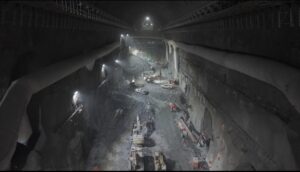
Snowy 2.0 was originally pitched as a $2 billion project when first promoted by then prime minister Malcom Turnbull, and was then costed at $5.1 billion when the first contracts were announced, before blowing out to double that amount to $12 billion following a review by new management in 2023.
It is now expected to cost at least $20 billion, the result of multiple geological problems, technical challenges and the rising costs of civil construction. Some analysts put the total cost at around $40 billion if interest and transmission costs are added.
A spokesperson for Snowy Hydro told Renew Economy in a statement:
“Snowy Hydro is conducting a detailed review of the contractor’s cost reassessment, informed by independent construction cost experts.
“We are considering the commercial and practical implications which will then inform our advice to Government.
“Snowy Hydro has had independent construction cost experts supporting the reassessment process since late last year.”
Bowen on Saturday was withering in his assessment of the previous Snowy Hydro management, whom he said had failed to do proper due diligence on the project before committing to it.
“The work done when it was announced was underdone,” Bowen said. “It was immature at final investment decision. They hadn’t done their geotechnical work. We’ve been dealing with that since.
“But nevertheless, it’s an important nation building project. It’s substantially now- you know, well over 50 per cent complete. And yes, there is a cost reassessment, and I will say more about that, (finance) Minister Gallagher and I, when it’s been completed.”
Snowy 2.0 will deliver 2.2 gigawatts of capacity and 175 hours of storage. The company, and many others, argue that this will be incredibly useful for the future grid dominated by wind and solar and as coal fired power generation retires, particularly in the case of long wind or solar droughts.
But others also argue – and have done since it was first announced – that other options could have been much cheaper and delivered more quickly, and would not have caused the same reputational damage to the green energy transition as this project.
The federal auditor-general in June slammed the management Snowy Hydro in a report, citing multiple failures and pointing to yet more delays for the project.
Snowy Hydro CEO Dennis Barnes told the AFR in June that is confident Snowy 2.0will prove good value for Australian taxpayers, even as he acknowledged a revised 2028 start date was also in doubt.
Webuild, which is the lead partner in the Future Generation Joint Venture, which now serves as the principal contractor designing and constructing Snowy 2.0, released its first half results late last week. But there was little mention of Snowy 12.0 in either the presentation or the analyst discussion that followed.
To join more than 29,000 others and get the latest clean energy news delivered straight to your inbox, for free, click here to subscribe to our free daily newsletter.