A massive Top End solar and battery proposal has hit the federal environment queue following a bruising, but brief, experience in the legal system.
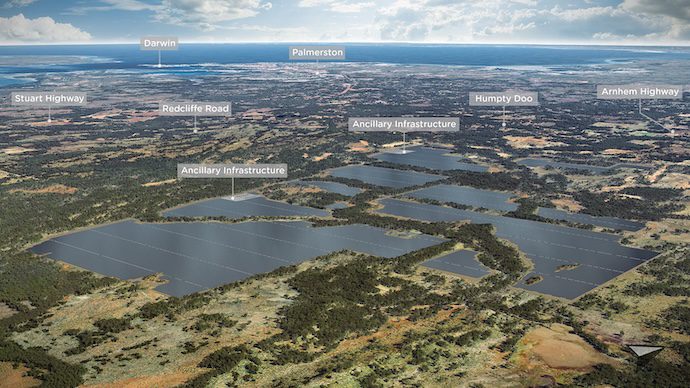
The Wak Wak solar project is looking to combine a 2.7 gigawatt (GW) solar farm and a 6 gigawatt hour (GWh) battery on the Koolpinyah station, a pastoral lease near Humpty Doo and about 48km south of Darwin.
The 56-page EPBC referral maps out its potential environmental impact, which includes seven federally-listed birds, animals and reptiles and a range of different landscapes. The developer, TotalEnergies and Eren Group subsidiary TE H2, closed a legal bid last month that sought to declare no native titles exist over the piece of land.
It was a move TE H2 said last year was to find the rightful owners rather than cancelling any native title over the property. It scrapped the suit after finding more Indigenous families in the area to negotiate with.
The project, which is listed in the referral with an estimated works start date of May 2027, will cover an area up to 3,400 hectares and disturb up to 2,500 hectares of land.
TE H2’s original construction timeline started in 2028.
Both figures are conservative maximums, the EPBC referral is at pains to say.
“The project is currently at concept design stage and the project area (up to 3,400 ha) and disturbance footprint (up to 2,500 ha) have been presented as conservative, rounded-up estimates to define the maximum credible development envelope,” the referral says.
“The significant impact assessments for Matters of National Environmental Significance (MNES) have been undertaken using the higher, conservative area estimates.”
The massive project will connect to a planned high voltage overhead transmission line that is currently being planned by the Northern Territory government called the Territory Energy Link, running up to the Middle Arm Peninsula industrial hub.
TE H2 has a longer term plan to use Wak Wak to power a hydrogen facility in that industrial precinct, so it needs to fit into the link plans.
Seven EPBC at-risk creatures
The environmental investigation area took in a bigger area than the patch of land Wak Wak will disturb, covering 5000 hectares.
It found seven at-risk creatures across that space: the black-footed tree-rate, bare-rumped sheath-tailed bat, northern blue-tongued skink, northern brushtail possum, Mertens’ water monitor, Mitchell’s water monitor, and the partridge pigeon.
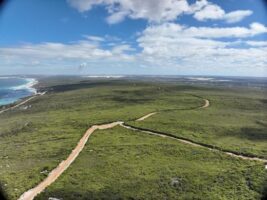
And it catalogued a range of landscapes from low hills, savannah-like woodland, and a section that is inside the Adelaide river coastal floodplain.
Burn-offs have “severely compromised” the ecological condition of much of the proposed site leading to a reduced midstorey and Gamba Grass infestations, the referral says.
“Most of the project area has burnt upwards of 20 times since 2000, but there are areas aligning with watercourses and drainage lines that have burnt less,” it says.
“The northern section has also been subject to late season burns of a higher frequency compared to the south, with some areas being subject to late season burns around 12 times since 2000.
“The project area was deliberately located in the poorest quality habitat to minimise impacts to biodiversity values and threatened species.”
The risk to animals, birds and reptiles comes from the disturbances from construction.
The EPBC referral says surveys only found black-footed tree-rats in one spot, and that’s outside the disturbance footprint in the south-west.
The bare-rumped, sheath-tailed bat was found in five places on the site including one inside where the project is proposed to be built.
Northern blue-tongued skink were found at three disparate locations, one of which is inside the project disturbance area.
TE H2 says in the referral the habitat inside the disturbance footprint is “the lowest quality” and wildlife corridors will improve the volume of the kinds of bush the skinks like to live in. Moreover, it doesn’t believe building a solar farm will bring in more cane toads, which are a threat to the skinks.
The northern brushtail possum may be more of an issue, as it was found across the Wak Wak site, and the partridge pigeon which was found at eight places inside the lease area.
Habitats for the Merten’s and Mitchell’s water monitors are not inside the areas where TE H2 plans to build.
If you would like to join more than 29,000 others and get the latest clean energy news delivered straight to your inbox, for free, please click here to subscribe to our free daily newsletter.