Plans to build a world-first renewable energy mini-grid in Broken Hill in New South Wales have cleared another key milestone, securing grid connection approval for a groundbreaking compressed air energy storage project.
The 200 megawatt (MW), up to eight hour (1,600 MWh) duration Silver City Energy Storage project by Canadian outfit Hydrostor was this week given the tick of approval by the Australian Energy Market Operator (AEMO), confirming it meets the all-important Generator Performance Standards of the main grid.
Hydrostor said on Wednesday that the key approval for the compressed air storage system, which will be housed in a cavern inside Perilya’s Potosi silver mine, has followed a rigorous assessment process involving extensive modelling, simulations and network studies.
“Grid connection approval is another significant step for Silver City and reflects the considerable work that has gone into progressing a critical piece of energy infrastructure for Broken Hill,” said Hydrostor country lead Martin Becker.
“We are proud that this is now one of the most advanced long duration energy storage projects available for New South Wales.”
Hydrostor describes its Advanced Compressed Air Energy Storage (A-CAES) as similar to pumped hydro, delivering long duration storage using a proprietary thermal management system and hard-rock air-storage caverns. Essentially, the technology uses renewable energy to compress air and store it underground. When electricity is needed, the air is released through a turbine.
Silver City was selected back in 2020 by network company Transgrid as the best option to replace two ageing 25MW diesel-fuel fired generators currently used to provide back-up electricity supply for Broken Hill, which is located at the end of a long (260km) single line and prone to outages.
The technology is designed specifically to do what the 50MW/50MWh Broken Hill battery couldn’t do during the two week blackout last year, when storms ripped up transmission lines.
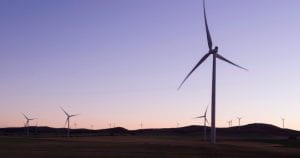
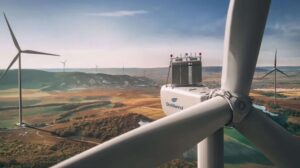
It will be the backbone of a mini-grid which will be able to connect to the 200 MW Silverton wind farm and the 53 MW Broken Hill solar farm during outages, which the battery was originally deliberately not set up to do.
The two week blackout in 2024 followed an eight hour outage in 2023, when the two local diesel generators tripped after being unable to cope with the variable renewable power.
To get to this point, Silver City has had to navigate archaic energy market regulations and a legal challenge launched last year by local tourism business Outback Astronomy, challenging the government’s decision to approve the project.
But with the regulatory issues resolved, the project has now won council support, has been awarded federal government funding through Arena, has been waved through the federal EPBC queue, has been awarded a state-based Long-Term Energy Service Agreement (LTESA), and has secured state development approval.
Becker says the storage system will play an important role in strengthening energy security for Broken Hill and the Far West, with 50 MW / 250 megawatt-hours (MWh) of capacity reserved to provide backup power during planned or unplanned network outages.
“While delivering a project as innovative and complex as Silver City presents challenges, the long-term benefits for Broken Hill and the Far West, including greater energy security, new investment, jobs and economic activity, make it a project worth getting right,” he said on Wednesday.
“Long-duration energy storage will be essential as Australia brings more renewable generation online, providing reliable power when it is needed and strengthening the resilience of the grid, and we thank Transgrid for their support in helping us bring this solution closer to life.”
With the legal challenge now behind it – the challenge in the NSW Land and Environment Court has been resolved through mutually agreed conciliation – Becker says Hydrostor still has a few hurdles to clear before shovels hit the dirt.
“There are still a few important project development steps to work through before construction starts, including obtaining secondary approvals required under our Development Consent, appointing the balance of our key contractors, and finalising the remaining commercial arrangements with government and other project partners,” he told Renew Economy on Wednesday.
“We’re working through those now and are currently aiming to reach financial close in the first half of next year.”
Silver City is expected to support more than 700 jobs during construction and up to 35 jobs during operation. Once complete, it will operate as a large-scale energy storage asset connected to the NSW grid, storing energy when it is abundant and dispatching it when needed.
When fully charged, the project will have enough storage capacity to supply the equivalent of more than 80,000 homes for a day. Broken Hill has roughly 11,400 homes.