Snowy Hydro, in the midst of a significant reassessment of the cost of building its giant 2.0 pumped hydro project, reported a 6% increase in earnings in the year to last June, while the total take-home benefits on chief executive Dennis Barnes were less than $2 million for the second year running.
Earnings before interest tax, depreciation and amortisation (EBITDA) for the Commonwealth-owned energy company came in at $756.8 million for the 2025-26 financial year, Snowy Hydro reported on Friday. That was up from $714.2 million posted for EBITDA in 2024-25.
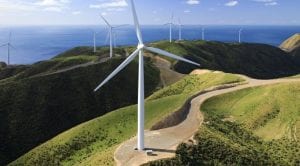
“We locked in a new energy offtake agreement this year that brought our total contracted wind and solar portfolio to 1,980 megawatts,” the annual report said. “We also executed our first two grid-scale battery agreements,
adding short-duration storage to Snowy’s increasingly diverse portfolio.”
The report’s release came hours after Snowy released an updated assessment of its troubled 2.2-gigawatt Snowy 2.0 pumped hydro project.
Barnes described the latest cost blowout to as much as $25 billion and a further delay of full commissioning out to late 2029 as “very disappointing”, while the update also raised fresh questions about Snowy 2.0’s viability.
“Following repeated requests, in late 2025 we formally instructed our contractor Future Generation Joint Venture (FGJV) to carry out a line-by-line reforecast of the project’s construction program and costings,” the annual report noted.
“While our contract with FGJV contains obligations that ensure the contractor is motivated to reduce cost and schedule, as well as penalties for underperformance, given the unique nature of the project, the level of risk and technical complexity, and FGJV’s cost estimation challenges, we are allowing for a cost scenario of $25 billion,” it said.
“Snowy Hydro will continue to hold FGJV to account for its performance and its obligation to deliver the project safely, with completion achieved at the earliest time and for the lowest possible cost,” the report said.
The annual report did not disclose any estimate net present value for Snowy 2.0, and also did not include any impairment for the project’s value.
Snowy, meanwhile, said it was working closely with its shareholder, the federal government, “to develop an appropriate capital structure for Snowy Hydro to support the increase in costs and maintain Snowy Hydro’s target credit rating of BBB+”.
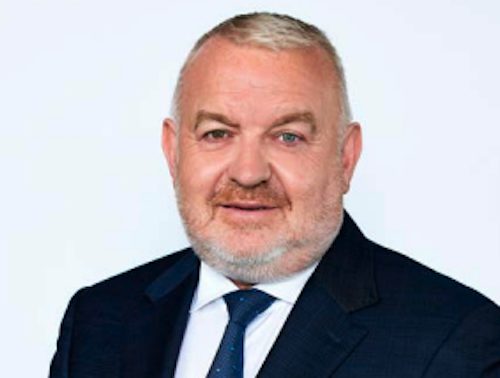
For Barnes, his base salary fattened for the year to June to $1,845,126, rising to $1,889,752 once super contributions and long-service leave were added in.
That annual tally came in at about $36,300 per week, or about triple the compensation collected by Prime Minister Anthony Albanese and 4.5 times that of climate change and energy minister Chris Bowen.
Still, Barne’s benefits were lower than the $2.051 million in the 2024-25 financial year, and $2.298 million for the 2023-24 year, when the total package was swelled by “short-term variable” pay of about $322,500 and $503,300, respectively, for those two years. Barnes missed out on any such variable pay for the year to last June.
All five top Snowy executives will pocket more than $1 million each in total benefits for the year to June.
Newly appointed non-executive director, Sussan Ley, the former Coalition opposition leader and a former environment minister, can expect an annual fee in the order of $128,590, if the 2024-25 and 2025-26 years are any guide.
Ley was appointed to the board in September.