The closure of the Strait of Hormuz is causing another consequential disruption to our economy and security: nitrogen fertiliser.
Australia imports 70% of its fertilizer needs, and supply lines are running dry. Urea, the primary crop nutrient, is no longer produced in Australia. Imports were 3.8 million tonnes last year, 64 per cent of it from the Gulf. Delivered prices have roughly doubled since the strait closed, and industry sources report domestic stocks will last only until mid-April.
Fertilizer price spikes of this magnitude change planting decisions, reduce application rates, and lower yields. Crops will fetch higher prices but farmers might still miss out if they can’t deliver volume, and consumers lose through higher food prices.
For a country that exports enough food to feed 80 million people, high dependence on imported nitrogen fertiliser is a structural vulnerability that deserves the same policy attention we now give to liquid fuels and critical minerals.
Storage and home grown production
The fertilizer components potash, phosphate, and elemental sulfur are stable solids that warehouse cheaply for years. We should stockpile them.
But nitrogen, which accounts for the largest share of fertilizer consumption by volume, is difficult and costly to store. Urea degrades in heat and humidity. Anhydrous ammonia requires refrigeration or pressurised containment. Ammonium nitrate is explosive. No Western nation maintains a nitrogen fertilizer reserve.
How can Australia produce our fertilizer needs domestically, at competitive cost, from resources we control? The key is to ramp up ammonia production, the raw material in nitrogen fertilizers.
The traditional route is ammonia synthesis from gas. But Australia’s gas price is high and volatile, and it would increase greenhouse gas emissions.
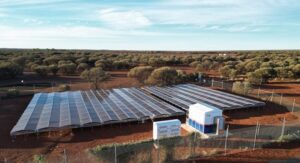
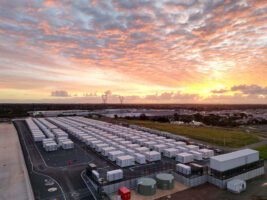
The future-proof answer is electricity-based ammonia, which can have zero emissions. Green ammonia is already produced at commercial scale in China, and a large plant is in construction in Saudi Arabia.
Green ammonia —produced by electrolysing water for hydrogen, then synthesising ammonia via the Haber-Bosch process using renewable electricity—is estimated to now cost in the order of $800 per tonne at electricity supply costs of $45 per megawatt-hour. Ammonia typically fetches $500-650 in international markets, and right now in the order of $900.
Renewable power costs in that range are already achievable in renewable-rich zones across SA, NSW and QLD. Applying the government’s hydrogen production tax credit will lower costs further. And if a border carbon adjustment was implemented for ammonia, as suggested by the carbon leakage review, this would further narrow any remaining price gap.
Critically, the cost of a green ammonia system is set by capital costs and local renewable resources, not by international gas markets. It does not spike when a strait closes or when China restricts exports. For our export-focussed agricultural sector, there is big value in structurally stable nitrogen cost.
There is also a powerful synergy with the broader energy system. The plants that produce fertilizer during the agricultural application season can synthesize methanol, and dispatch power into the grid and the production of hydrogen for Haber-Bosch can provide flexible demand to smooth variable renewable supply.
Methanol is liquid at room temperature, and stored in ordinary steel tanks. It can be blended into diesel at 10 to 15 per cent, thereby extending the national fuel reserve and reducing emissions intensity of liquid fuel. It is also emerging as a green shipping fuel.
An Australian Strategic Resilience Reserve
Australia has recently expanded the role of Export Finance Australia with the recently passed Strategic Reserve bill. These changes allow EFIC to write price floors, finance stockpiling and engage in a range of other interventions that could incentivize a secure supply of ammonia.
The SECURE Minerals Act in the United States similarly proposes an Authority to stockpile materials, make forward contracts, and stabilize prices for inputs deemed critical to national and economic security. The model is designed for commodities where private markets alone cannot provide adequate supply chain resilience.
EFIC could operate on two tiers. For physically and chemically stable products—potash, diammonium phosphate, sulfur—it maintains physical stockpiles at major distribution hubs. For hydrogen based products, it finances domestic production capacity through offtake commitments that de-risk private investment, and it guarantees a floor price that brings finance costs down and prevents boom-bust cycles.
The cost from these arrangements could be covered by way of charging fuel excise to the agricultural sector, or the mining sector. A tiny share of the fuel excise on total diesel use would be enough.
The case for moving now
With Australia’s total dependence on imports for nitrogen fertiliser, our farming sector is dangerously exposed to supply disruption and price spikes. Given Australia’s ample low-cost renewable resources, this is unnecessary.
The technology for renewable energy based fertilizers is commercial. The institutional models are being legislated in Washington. The economic logic works through multi-use plants that serve the farm, the fuel sector and the grid. The supply security benefits, together with the emissions savings and the benefit of kick-starting a green industry, would be well worth the public support that would be needed.
The time for the Australian government to act is now, before the present crisis fades into memory.