Yesterday, Anglo American announced that it had agreed to sell some of Australia’s most emissions-intensive coal mines to a new private owner, Dhilmar, shifting some of the country’s biggest methane away from shareholder interests and corporate transition plans, and into the hands of a largely unknown, 18 month old owner.
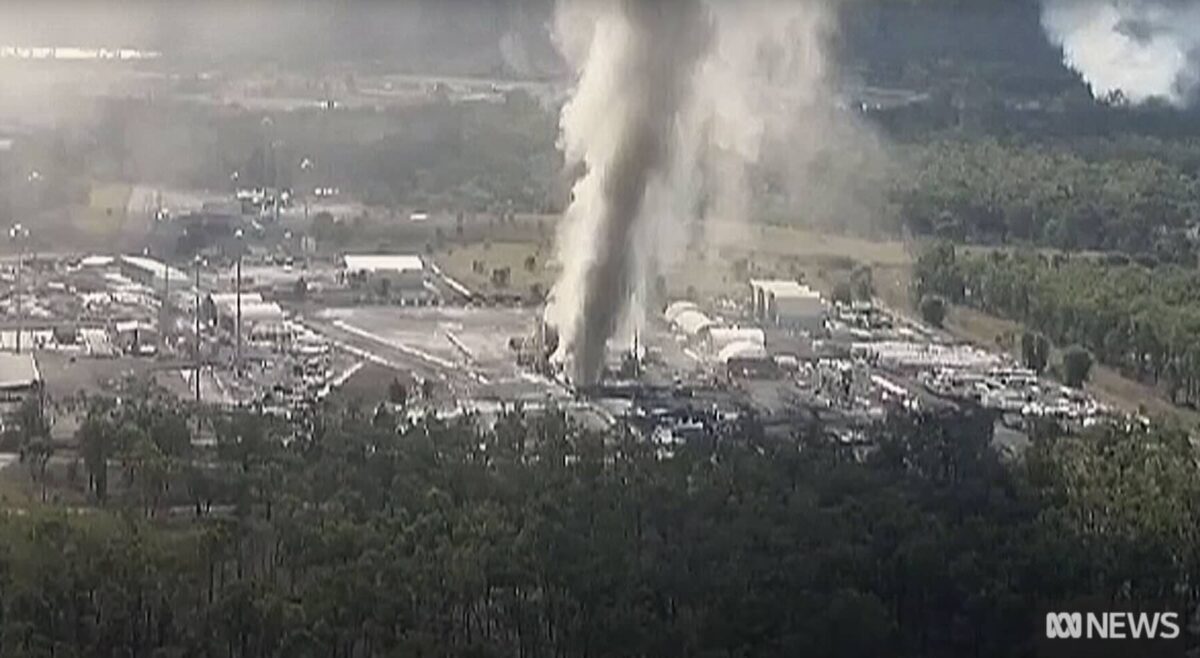
Last year, Anglo American’s coal mine portfolio released just over 3 million tonnes of CO2 emissions. But last year was anything but normal. Grosvenor mine effectively closed all year, following a methane explosion event in June 2024, while production at Moranbah North was paused in March 2025, also as a result of challenges managing the underground environment.
As a result, production fell across Anglo’s coal portfolio by around 30%, reducing their relative climate impact by close to 1 million tonnes compared to last year.
However, with a staged restart underway at Moranbah North, and the goal to bring Grosvenor back online in 2027, these emissions could easily return to normal levels, adding a major methane headache to an already challenging sectoral task. In 2023, for example, Anglo’s mines represented close to a quarter of all reported scope 1 emissions from QLD coal mines.
Under Anglo American, these assets became some of the more sophisticated methane management programs in Australian coal mining. Over the last couple of years, Anglo reportedly invested in excess of USD $100 million across its steelmaking coal portfolio, aiming to destroy and utilise methane through in pre mine drainage systems and mitigation infrastructure.
Even last year, as Grosvenor remiained offline, Anglo American was able to reduce its legacy emissions by 63%, through a capture, utilisation and flaring partnership with EDL. This partnership combines pre-mine drainage and transfer into a 21 MW power station, abating upwards of 700,000 tonnes of CO₂e annually.
This is currently one of the best mitigation partnerships in the sector, but the arrangement also means the system has multiple dependencies. It requires a two-way collaboration and significant ongoing investments to ensure it can be maintained going forward.
And even then, the mines remain some of the most emissions intensive mines in the country. Even after significant investments in pre-mine drainage, Capcoal, Moranbah North and Grosvenor all still have the capacity to release more than four times as much greenhouse gasses per tonne of coal produced, than the average of all other Safeguard reporting mines in QLD.
That brings us to the newest, and potentially critical player in this late stage of Australia’s coal mining journey.
Eighteen months ago, Dhilmar Ltd did not exist. The relatively unknown, privately held company is currently registered in the UK with two directors. One of those directors is Alexander Ramlie, an Indonesian mining billionaire, who is a Comissioner at Amman Mineral Internasional (AMMAN), one of the largest copper and gold producers in Indonesia.
Its major shareholders include two of Indonesia’s biggest private conglomerates, the Medco and the Salim group, which also owns the Mount Pleasant surface coal mine in New South Wales. The other director is 33 year old Mayasari Jasmine Timan.
Under their direction, the company established its Australian subsidiaries only last month, in collaboration with Australian mining services contractor MacMahon, where Ramlie previously served as a director. Alongside him was Arief Sidarto, the President Director of AMMAN, which also happens to be MacMahon’s biggest shareholder.
While MacMahon currently operates the Byerwen surface coal mine and BHP’s Olympic Dam copper mine (among others), it does not currently manage an underground coal mine.
The contrast between the scale of the emissions obligation now attached to these assets, and the complex structure of the entities holding them is no small detail. Depending on regulatory scrutiny going forward, Dhilmar and their Australian subsidies may soon become the majority owners of some of Australia’s most emissions intensive coal mines.
If approved, Dhilmar will join Japanese joint-venture partners Nippon Steel, Mitsui and Co. and JFE Mineral as co-owners of this critical portfolio of Queensland coal mines. While all three face growing pressure to account for their own emissions, their current disclosure and operational expertise stop at the steelworks gate.
While each of these mines are currently captured by the Safeguard Mechanism, the regime’s relative power is very much attuned to its historical baseline settings, and these can vary dramatically per facility.
Capcoal mine for example, reduced its emissions by about 4% last year, due largely to a smal reduction in mining volume. However, due to elevated production levels between 2018 and 2021, when its baselines were being set, it currently enjoys a very generous emissions reduction baseline.
As a result, while its emissions only fell by 44kt/CO2-e last year, it earned over 1.1 million tonnes of Safeguard credits, generating an estimated $42 million in credit value, simply as a result of historical baseline settings.
Without clear commitments and ongoing investment in methane capture and management, emissions at these mines could end up being dictated more by geology than by corporate action or federal policy. These are among the most volatile underground mines in the country, and while methane management results in emissions reductions, its first purpose is worker safety.
Anglo spent years – and hundreds of millions of dollars – building not only emissions mitigation systems, but award winning emergency response teams, to keep both emissions and safety at these mines in check. Yet despite that investment, the volatility of the underground environment still led to repeated ignition incidents, and a significant greenhouse gas emissions footprint.
By 2028, as production restarts across the portfolio, these four mines alone could account for between 1 and 2 per cent of Australia’s national emissions. If Australia meets its 2035 emissions targets, their share could rise to as much as 4 per cent.
In 2024, following the initial bid from Peabody, I wrote that these mines represented the biggest climate acquisition of the year. I still believe that, but I now wonder what might happen under such a fragmented ownership structure, and with no clear track record of proactive underground emissions management.
Whether that governance structure is equal to the task is a question Australia’s regulators should arguably be asking right now.