Australia’s main grid experienced record underlying demand over the September quarter, but the combined impact of more rooftop PV, home batteries, and utility-scale wind, solar and storage helped bring average wholesale electricity prices down to their lowest in five years.
The Australian Energy Market Operator says the growth of rooftop PV, and home and grid-scale batteries, continues to change the nature of the energy system, with the low prices coinciding with gas at its lowest level for Q3 since 2000.
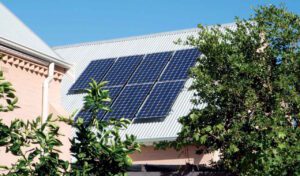
Homes with solar and battery storage are now drawing 75 per cent less power from the grid in evening peaks than homes with solar and no batteries, and grid scale batteries are now setting the price on nearly half of all intervals – as CEO Daniel Westerman flagged last week.
For the first time, according to AEMO’s latest Quarterly Energy Dynamics report, grid scale batteries are supplying significantly more power in the evening peaks than gas-fired generation, and all this has the combined effect of lowering prices in the evening peaks.
“Electricity use continues to grow, but more solar and storage is changing when energy is produced, drawn from the grid and shifted across the day,” said Violette Mouchaileh, AEMO’s executive general manager policy and corporate affairs.
“Batteries continue to shift record amounts of renewable energy into the higher-demand evening period, when households and businesses typically need more power.”
AEMO says the increase in underlying demand (to an average of 25,472 megawatts) reflected ongoing electrification, higher industrial demand and increasing data centre consumption – mostly in Vitoria – and came despite warmer winter conditions that reduced heating requirements.
However, operational demand on the grid actually fell, because of the increase in rooftop PV, which also added to the overall decline in average wholesale electricity prices across the National Electricity Market (NEM), which fell 27 per cent from the same period a year ago to $63/MWh, the lowest for this period since 2021.
Victoria and Tasmania had the lowest prices, averaging $56/MWh, with Queensland at $61/MWh, South Australia at $69/MWh, and New South Wales at $74/MWh.
The share of renewables continued to grow in the September quarter, to a record Q3 share of 44.3 per cent (up from 41.8 per cent a year ago), despite a six per cent decline in wind generation.
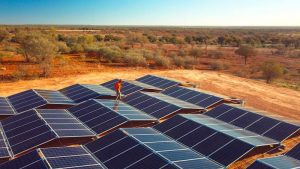
Grid scale solar boosted average output by 30 per cent to a new Q3 high of 2,211 – boosted by the increase in battery storage that meant significantly less economic curtailment, and because middle of the day prices are higher. Midday demand was also boosted by the impact of Solar Sharer initiative that offers free power in the middle of the day.
Hydro output also increased in the quarter, and a new record half-hour renewable penetration of 80.4 per cent was reached on September 19.
One of the interesting development was reduction in negative priced events, because of the increase in battery charging, particularly in Queensland where negative prices fell to 43 per cent of dispatch intervals in Queensland, a fall of 30 basis points.
The magnitude of the negative prices where they occurred also fell, from an average of minus $16/MWh to minus $10/MWh, which also reflected the lower large scale generation certificate prices, which halved from a year earlier to just $7/certificate.
To join more than 29,000 others and get the latest clean energy news delivered straight to your inbox, for free, click here to subscribe to our free daily newsletter.