Home » Rooftop PV meets 84 pct of South Australia demand, sends operating demand to new low

Rooftop PV meets 84 pct of South Australia demand, sends operating demand to new low

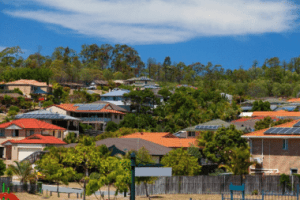
Rooftop solar PV has a few important new benchmarks in South Australia, contributing 84.4 per cent of total energy demand on Sunday afternoon, as well as setting a new low for minimum “operational demand”.

The 84.4 per cent rooftop solar share was set in a five minute interval at 1.15pm, on a mild sunny day. It suggests that the state may well deliver on the Australian Energy Market Operator’s predictions that rooftop solar could reach 100 per cent of local demand at some point this spring.

If it does reach that level, it will be the first gigawatt-scale grid in the world to do so. It is likely that the 84.4 per cent share reached on Sunday is also unprecedented in any other grid of this size.

AEMO also noted that South Australia – because of the impact of rooftop solar PV – set a new minimum operational demand record of 236MW in the 1.30pm to 2pm settlement interval. This is 21 per cent below the previous record set on October 11, 2020.

AEMO says that during this 30-minute interval, rooftop PV contributed a record 83 per cent of total energy demand, or a total of 1,1341MW. It earlier set a new record aggregate output of 1,177MW in the 12pm to 12.30pm interval.

The new records came just a few days after AEMO announced a new early warning system that will advise of the risk of having too much rooftop solar PV in the grid, just as it does if it fears a shortage of supply.

The new three-tiered warning system will advise of a potential surplus, instigate measures such as demand response to address the situation, and then send instructions to switch off certain amounts of rooftop solar, if need be.

AEMO envisages this will be used only on rare occasions – it has happened once in March this year – and only if the South Australia grid is at risk of being cut off from the rest of the grid, or if there is simply too much rooftop solar for the operator to cope.

It will only impact new or upgraded systems in South Australia, which for the past year have been required to appoint an “agent” with the technology to do the “switch-offs”, and inverters that have the communication smarts that allows them to be “orchestrated” from a central control system.

Giles Parkinson is founder and editor-in-chief of Renew Economy, and founder and editor of its EV-focused sister site The Driven. He is the co-host of the weekly Energy Insiders Podcast. Giles has been a journalist for more than 40 years and is a former deputy editor of the Australian Financial Review. You can find him on LinkedIn and on Twitter.

Latest posts

S-curve modelling says renewables can kick coal out of Australia by 2032. But is this soon enough?

S-curve modelling says renewables can kick coal out of Australia by 2032. But is this soon enough?

In the race to renewables, the big question is whether “faster than we thought” is the same as “fast enough.” S-curves say we can do the first. Nothing in the modelling tells us we’re on track for the second.
“It’s a commercial system. And it has a customer:” Sodium-ion battery sale hailed as a first for Australia

“It’s a commercial system. And it has a customer:” Sodium-ion battery sale hailed as a first for Australia

The sale of a 100 kilowatt and 200 kilowatt-hour sodium-ion battery system is being claimed as an Australian first – and may herald next generation of storage tech.
Energy Insiders Podcast: Will the green bank save the Tomago deal?

Energy Insiders Podcast: Will the green bank save the Tomago deal?

CEFC boss Ian Learmonth explains why big wind projects may finally get delivered this year. Plus: Tomago aims for 100 pct renewables, and the big utility profits.
Balcony solar or building integrated PV? The emerging options for apartment dwellers and owners

Balcony solar or building integrated PV? The emerging options for apartment dwellers and owners

A Victorian parliamentary inquiry on apartment energy issues has recently reported and identified several issues that require urgent attention to address the failures of energy policy. One interesting issue that relates to both high rise apartments, and plug-in ‘balcony solar’, is where solar fits into apartment occupant energy costs.  High rise apartment buildings have very […]