A new take on a widely used mining technique called froth flotation can recover “virtually all” of the metallic silver contained within an end-of-life solar panel, researchers from the University of Newcastle say.
The newly-refined method builds on work done at the Centre for Critical Minerals and Urban Mining (CRITIUM) last year, which got a 97 per cent recovery rate from a single batch.
This time, by continuously feeding a wet slurry of ground up solar panels into a tank over 90 minutes, they were able to lift this recovery rate by almost two percent.
Averaged across the whole 90 minutes, they recovered 98.74 per cent of the silver. But during just over a quarter of the time the system hit a 100 per cent recovery rate.
“Our earlier small-scale batch research proved flotation could recover silver from solar panels,” said co-author and CRITIUM deputy director Mahshid Firouzi in a statement.
“This latest work demonstrates that the process can operate continuously at a much larger scale with nearly 100 per cent silver recovery, bringing us closer to commercial implementation.”
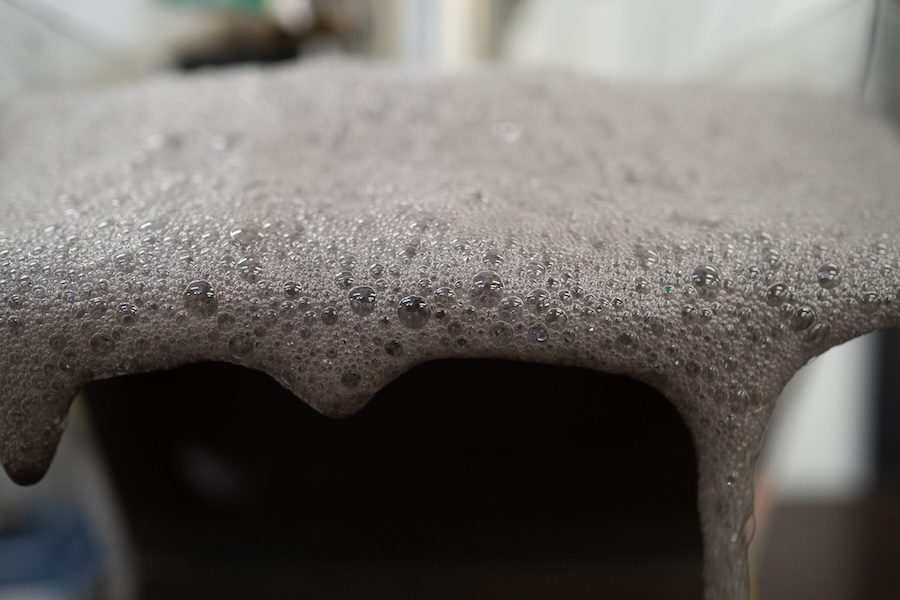
The three-strong Newcastle team crushed up the parts of the panel they needed and ground it into fine particles. They then used a method from the mining industry called flotation, which uses water, air bubbles and a small amount of standard floatation reagents to float valuable metals to the surface while waste materials sink.
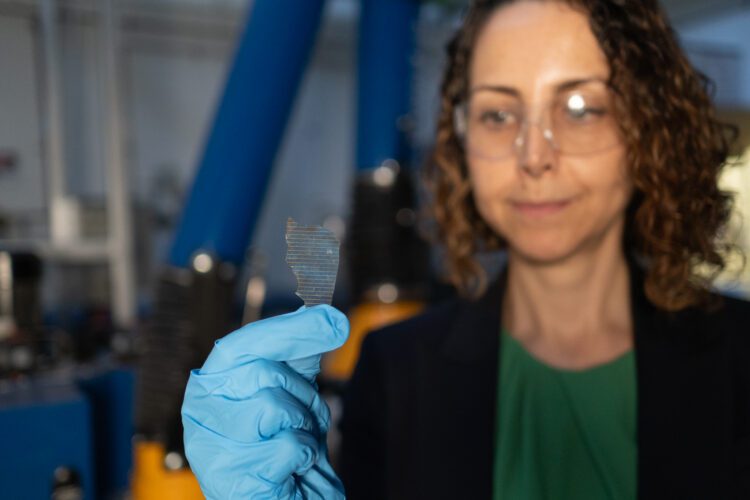
One benefit is that they don’t need to use acid.
The latest data is being presented in a preprint article, an overview of the findings before it’s gone through peer review or been published in a journal, so it could still be subject to changes or corrections.
But the headline data could be positive news for an industry which is facing shortages of silver supplies.
In January, one European team forecast that by 2030, supply may meet only 62-70 per cent of demand.
Silver is used as a paste on the front and back of the silicon cells as a conductor.
Although only tiny amounts are used, the volume of solar panels being made – and dumped – means it still amounts to a large amount of silver in total.
In 2023, the solar PV industry consumed a whopping 19 per cent of the annual global silver supply.
As a result, silver is one of the most difficult, but most sought after metals to extract from waste solar panels, both for recyclers who say they can do it already and researchers, such as Macquarie University’s acid “pressure washer” for solar panels.
But just as recyclers are struggling to lock down enough feedstock, so researchers face the same issue.
The Newcastle study needed almost half a tonne of solar panels, or about 23 modules, to get just 22kg of front metallisation and aluminium back contact layer.
Collecting that 22kg took “several months” to collect, according to the study.
The 90 minute test only ran at a low concentration of solids because even with 22kg of final material, that wasn’t enough feedstock to run the longer continuous flow.
The machine can handle 15 times more solids than tested in the latest trial, but “such testing will only be possible once sufficient feedstock has been secured”, or more than 6 tonnes of solar panels, the study said.
Firouzi’s team still thinks they can make this process commercially viable, given the value of silver already inside solar panels.
“There are several logistical steps involved in addressing the recycling of end rooftop solar, not least securing the supply, and disassembling the modules to recover the solar cell,” the paper says.
“This solar cell carries valuable materials including silver at about 0.6 wt% [percentage of the total weight], which alone is worth approximately A$20 per kg of cell material at current silver prices.”
To join more than 29,000 others and get the latest clean energy news delivered straight to your inbox, for free, click here to subscribe to our free daily newsletter.