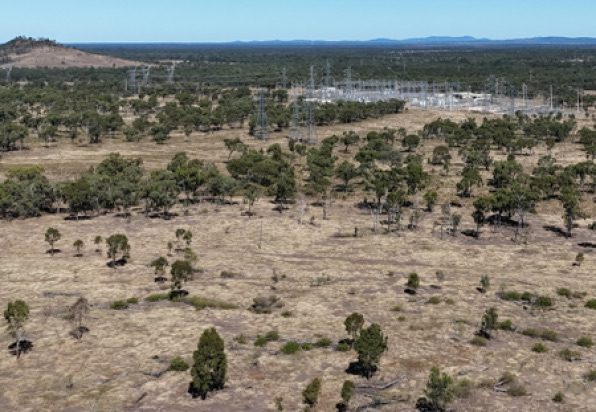
The tiny town of Nebo, south-west of Mackay in Queensland, has found itself at the centre of a number of proposed grid firming and renewables generation projects, including a 1000 megawatt (MW) big battery that could be followed by a wind farm.
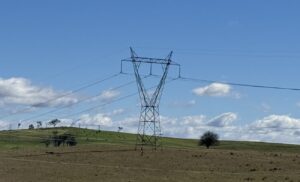
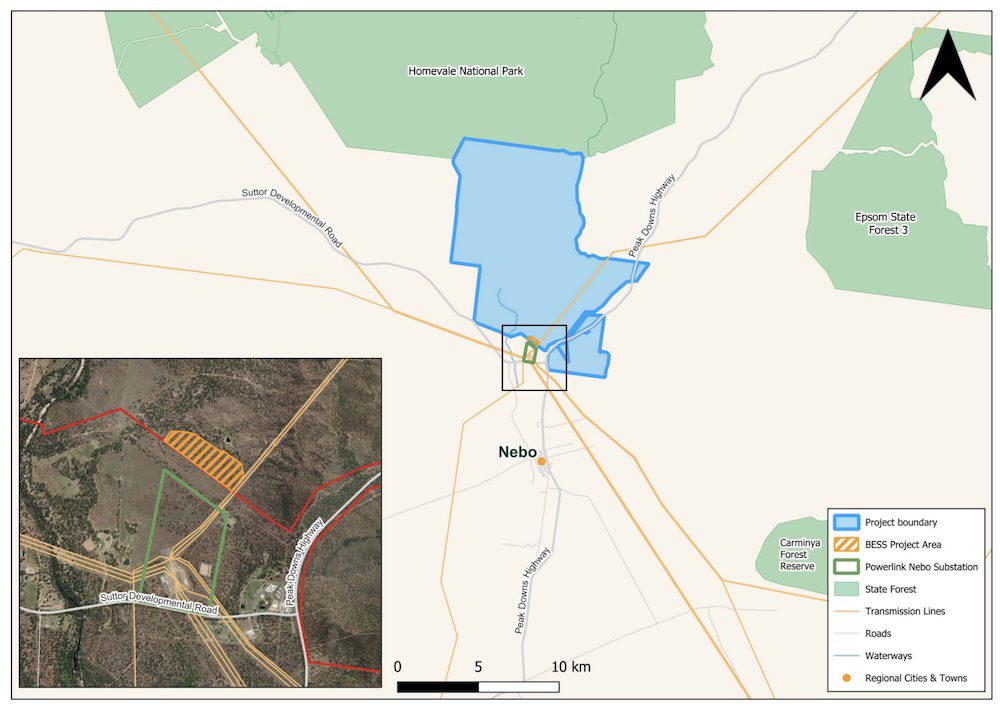
Iberdrola Australia is seeking federal environmental approval for the 1 gigawatt, up to 4000 megawatt-hour (MWh) Burrenbring battery energy storage system (BESS), around 8 km north of Nebo, at the junction of where the grid operator’s main 275 kilovolt (kV) grid splits off to supply power to Mackay.
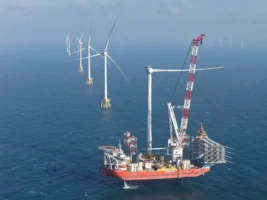
According to the referral documents, Iberdrola is also looking to add a wind project at the same site, but this would be developed and operated independently, and subject to separate approval processes and EPBC referral.
“The investigations for the Wind Farm is at an earlier stage, and a separate consultation process will be implemented,” a project fact sheet says.
The proposed site for the BESS is private land that adjoins a key Powerlink substation in the state’s Isaac region, with no additional land required for transmission infrastructure.
The EPBC referral says the 34 hectare site will hook the lithium-phosphate batteries into the substation with an up to 275 kV underground grid connection, and most of the land will remain under its current use – free range cattle grazing.
Iberdrola Australia says it is in the early stages of identification of key stakeholders for the project, and establishing proactive community and stakeholder engagement, including with the traditional owners of the land, the Widi People of Nebo Estate, and the Isaac regional council.
Under new Queensland laws, battery projects must enter into “binding agreements” with local governments, setting out the social impacts and community benefits of proposed projects, before they can apply for development applications with the state.
Iberdrola expects to be able to lodge a planning application later this year, according to the developer’s website.
The EOBC referral documents provide a small insight into what has happened in Nebo in the past, alluding to historical imagery from as long ago as 1957 and 1975 that shows clearing and “limited” habitat fragmentation.
Since 1995 tree and vegetation clearing has happened apace, ahead of the deregulation in the 2010s that has seen millions of hectares of Queensland farmland scraped clear of trees and animal habitats.
“The project area and the surrounding landscape appears to have been subjected to further woody vegetation thinning and broadscale clearing between 1995 and 2004. Between 1995 and 2004, there was more clearing within the disturbance footprint and the surrounding landscape,” the referral says.
Iberdrola has been doing ground surveys of the area since 2024.
These found black ironbox trees lining a creek that is one of two possible entry points to the site, and spotters saw in the area greater gliders, koalas, northern quolls and southern squatter pigeons.
Both entry road options will need to remove some habitat trees and vegetation used by those EPBC-listed birds and animals.
Iberdrola cemented its position in Australia with its acquisition of Infigen Energy in 2020, completing the rebrand the following year and now has about 2.7 gigawatts of generation and storage projects here.
Flush with firming
Another big battery being proposed for around 7 km north of Nebo is Ace Power’s 900 MW Nebo BESS, which also aims to offer up to four hours of storage duration.
Directly west of the Nebo substation, Queensland transmission company Powerlink wants to put one of four synchronous condensers (syncons) it’s planning to install by 2029, giant spinning machines that are used to provide similar grid stability services as coal or gas turbines.
If you would like to join more than 29,000 others and get the latest clean energy news delivered straight to your inbox, for free, please click here to subscribe to our free daily newsletter.