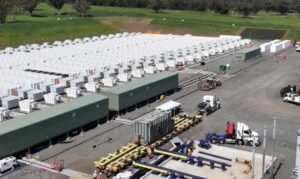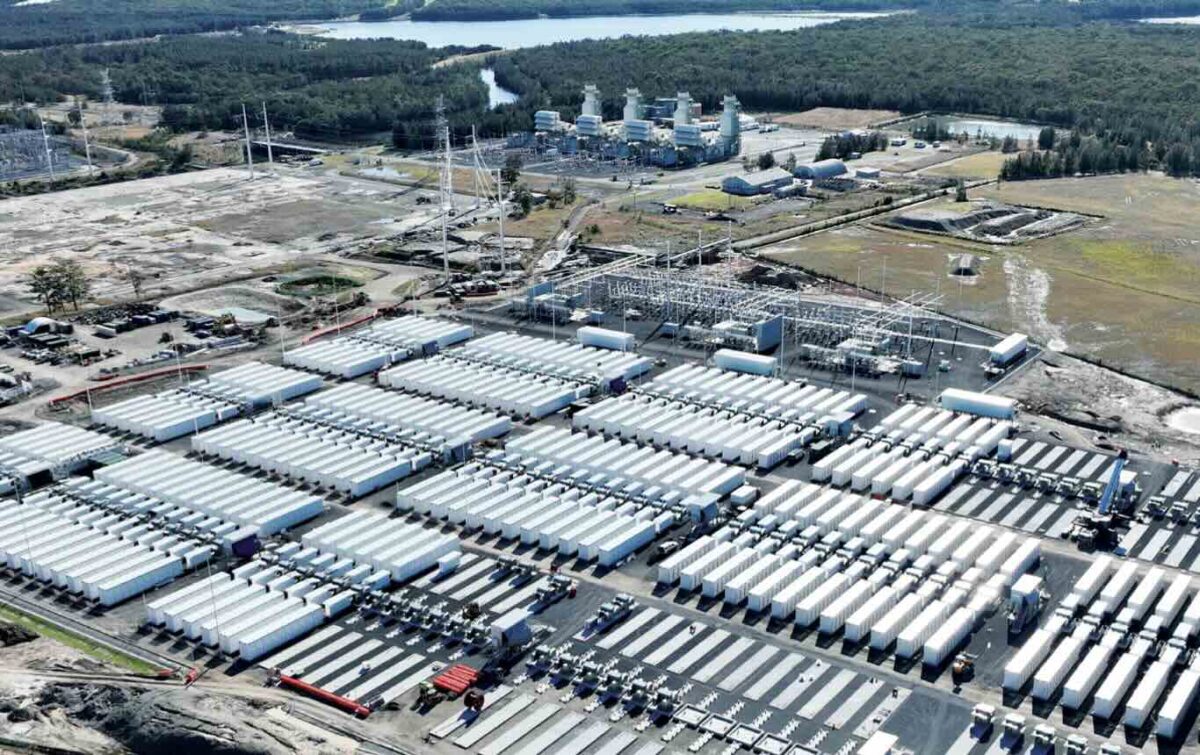
The Waratah Super Battery – the country’s most powerful – has injected a massive and unprecedented amount of power into the grid over a two hour period in what appears to be the first full testing of its capacity to act as a “shock absorber” to the grid.
The Waratah battery, rated at 850 megawatts (more than any other battery in the country) and 1,680 megawatt hours – has a 5.5 year contract to deliver up to 700 MW of this capacity under the state government’s System Integrity Protection Scheme.
Essentially this serves as a backstop, or shock absorber, that allows transmission lines to run at greater or even full capacity, which is critical to the transport of renewables and other power sources in an increasingly decentralised grid.
Similar but smaller SIPS contracts are in place in Victoria and South Australia, but none that comes anywhere near the scale of Waratah.
The contract was supposed to be delivered earlier last year but construction delays and then a “catastrophic” failure in one of its three transformers late last year, and damage to another, meant that only half the required capacity could be delivered until now.
That may soon change, however, following the repair of one of the transformers that was completed in June and the arrival and energisation of a new transformer last week, as reported by Renew Economy.
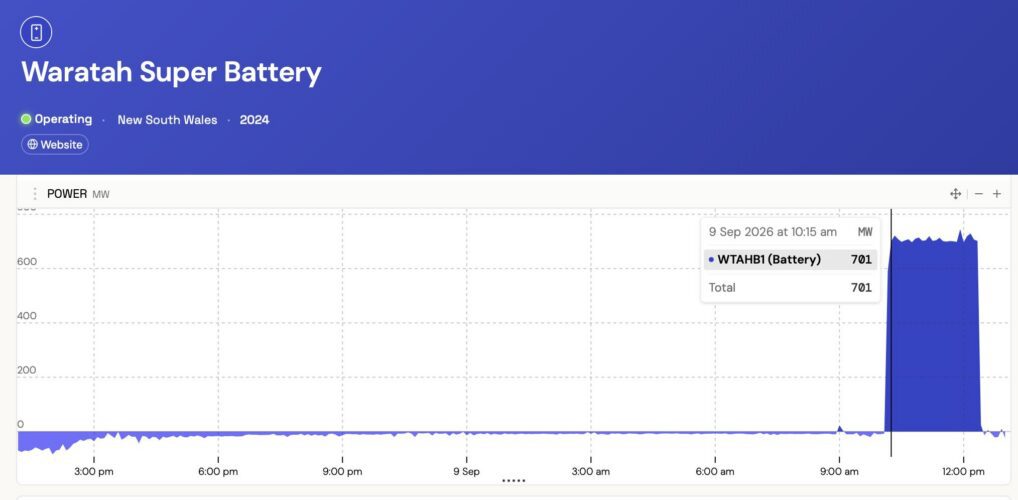
On Monday, as we reported, the Waratah battery sent its maximum 850 MW into the grid for a brief five minute period, as part of ongoing tests, but on Wednesday morning it injected at least 700 MW over a two hour period (see graph above from Open Electricity).
That is more than has been injected over a sustained period by any other battery until now, and Renew Economy understands this was a key test of its ability to deliver on the SIPS contract.
That contract – which also involves the Metz solar farm, Sapphire wind farm and Tumut pumped hydro projects acting as “paired generators” – requires Waratah to provide 700 MW of capacity if needed at certain times, and smaller amounts at other times.
The “sculpted” nature of the contract allows Akaysha Energy, the owner of the Waratah battery, to use its formidable capacity to play in the wholesale market at times, although it appears certain that the bulk of its short term revenues will come from the SIPS contract.
To join more than 29,000 others and get the latest clean energy news delivered straight to your inbox, for free, click here to subscribe to our free daily newsletter.