Australia has reported a significant cut in emissions over the last year, driven by an increase in renewables and more EVs, ending a good week for the government’s net zero agenda that also featured lower prices and a massive boost in green energy investment.
The latest quarterly update of Australia’s National Greenhouse Gas Inventory shows emissions for the year to December 2025 were 2.1 per cent lower than the previous year – still not fast enough for the country to meet its own targets, but it says the trend is good.
Federal energy and climate minister Chris Bowen pointed to the lower coal and gas generation, tied in with record levels of wind, solar and battery storage, that helped cut electricity emissions by 3.8 per cent.
Transport emissions, helped by the growing uptake of EVs, even before the recent surge driven by the fossil fuel supply crisis, fell by 0.6 per cent, and fugitive emissions fell 3.7 per cent, credited to a reduction in coal mining and the capture of some emissions from fossil fuel activities.
Grid emissions are down by nearly one third since 2005, and the reduction in emissions from electricity represents the country’s most successful sectorial efforts to date.
Australia has a target of cutting emissions by 43 per cent by 2030 – from 2005 levels – and are estimated to be down 24.5 per cent as at the end of December.
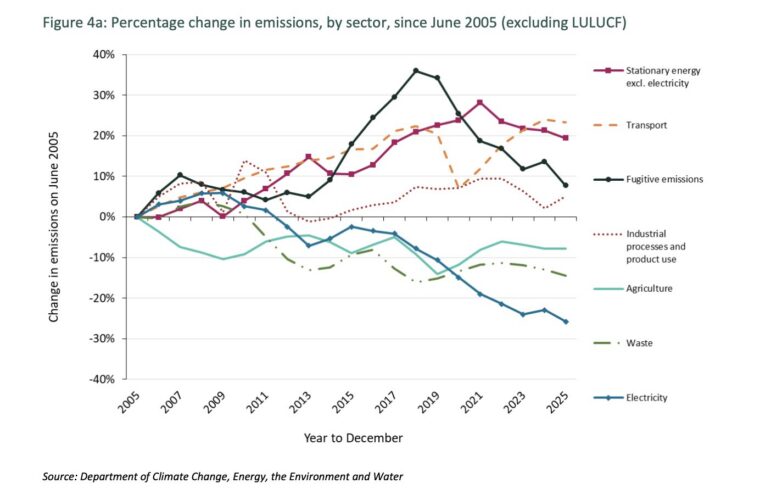
The figure would have been down 27.5 per cent, but the data has been revised because of changes to land use estimates – and the lack of vegetation regrowth after rainfall returned to normal averages after a couple of wet years.
The fall in emissions came after the energy regulators announced earlier this week that energy bill price settings would fall more than expected, thanks to the influx of renewables, and battery storage – both at grid level and in the home.
The federal government’s home battery rebate has been phenomenally successful, with more than 420,000 installations already. This and the offer of “three hours of free power” option now mandated by regulators is helping to change the conversation around energy prices and the renewable transition.
“This is good news,” Bowen said on Friday. “(I) always said renewables are the cheapest form of energy. What’s good for the planet is good for your pocket.”
That’s welcome news also for the federal government’s green energy agenda, which is under fire from the Murdoch media, some of the main commercial TV networks, AI slop on social media and the loose but growing coalition of One Nation, Liberals and Nationals who are all arguing for net zero to be scrapped.
Bowen says there is still work to do, but insists the trend is good. “We are not yet reducing emissions by enough, but we’re reducing emissions by a lot more than we used to be. And again, these transport emissions that we’re seeing come down don’t even reflect the big uptake in EV purchases this year.
“These are last year’s figures, so I’m quite confident that in future the transport emissions will be even more positive … to build on the big reductions in energy emissions that we’re getting.”
Last weekend, the results of the latest generation tender under its flagship Capacity Investment Scheme revealed 19 project winners worth some $17 billion of new investment. Pleasingly, some of the biggest project winners signalled they were ready to get on with construction.
This was followed by the announcement of a new tender on Monday – seeking a further 5 GW of new capacity – and the results of a “firming tender” in South Australia that will fast-track six big battery projects worth a combined $2.2 billion.
There has been speculation – following Bowen’s recent appearance on the weekly Energy Insiders podcast – that the government would tweak the CIS design to make it more compatible with wind projects, which have struggled to reach financial close.
But Bowen said on Friday nothing was planned.
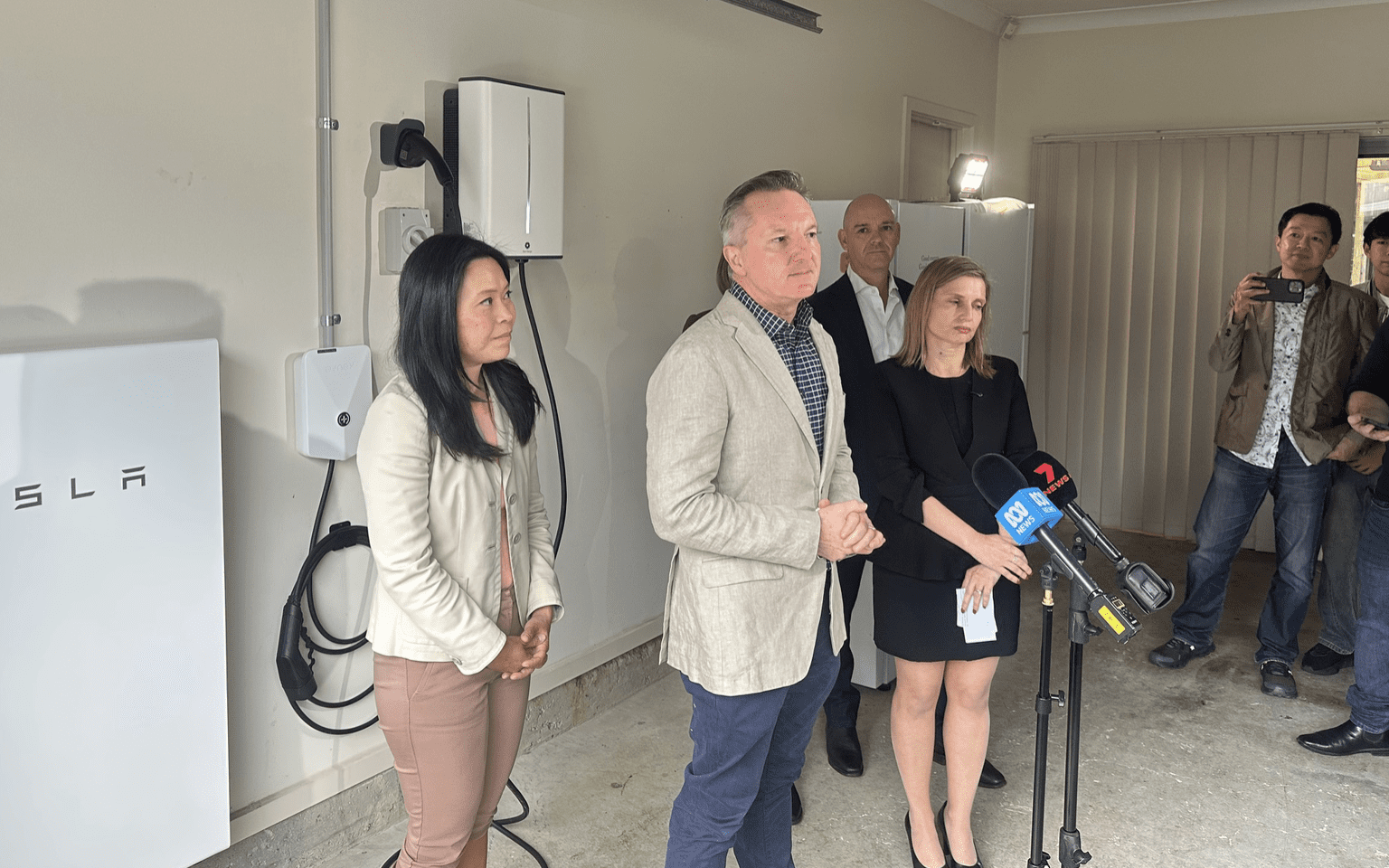
“I’ve been very clear, including in a podcast with you, that wind is facing challenges right around the world, not just in Australia,” Bowen said, in response to a question from Renew Economy at a media conference called to announce a big boost in funding for Australia’s largest V2G pilot project.
“But the good thing about wind projects, Yanco Delta being the most spectacular example, winning support under the CIS auction, is that they’ve put in the economics of today, not the economics of a few years ago.
“The projects that put in bids with the economics of a few years ago are struggling, and … that’s no secret, but the projects that are bidding into the auction today and are winning include wind, so that indicates that we’re getting the balance right.”
If you would like to join more than 29,000 others and get the latest clean energy news delivered straight to your inbox, for free, please click here to subscribe to our free daily newsletter.
If you wish to support independent media, and accurate information, please consider making a one off donation or becoming a regular supporter of Renew Economy. Please click here. Your support is invaluable.