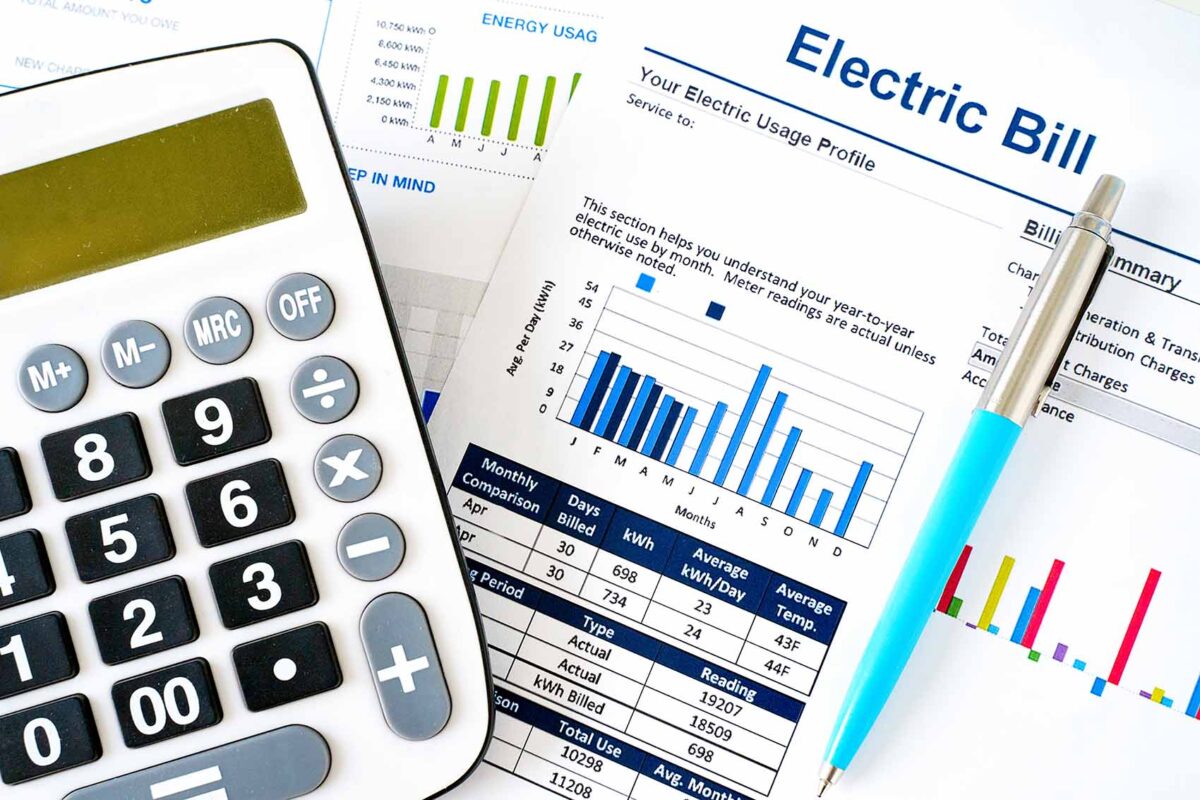

Since the start of the new financial year, retail electricity prices have risen sharply across New South Wales, South Australia, and South East Queensland.
The Default Market Offer — which is meant to act as a price cap on what retailers can charge residential and small business customers – has jumped, in some cases by up to 10%. But some retailers have imposed price rises of 25 per cent or more.
The DMO is designed as a protective ceiling, several electricity retailers have used it as a pretext to raise prices on their so-called market offers, which are supposed to be more competitive.
The Australian Competition and Consumer Commission estimates that around 80% of Australian households are already paying more than necessary for electricity — simply because they’re not on the most suitable plan. Despite regular calls from government and regulators to “shop around,” most consumers don’t. And for good reason.
The market is overly complex, comparisons are opaque, and the entire system seems designed to confuse. That confusion benefits retailers — not consumers.
Professor David Byrne, the Ritchie Chair of Economic Research at the University of Melbourne, believes it’s time to flip the script.
In an interview on the SwitchedOn Australia podcast, Byrne lays out a bold vision for market reform. Instead of forcing consumers to endlessly compare plans, he argues we should make electricity companies compete for us.
“The fundamental problem of the market, the reason why those prices get higher, the reason why there’s all these different prices moving around is people don’t engage,” he says.
With a “bajillion prices” floating around and no standardised way to compare them, Byrne says it’s no wonder consumers disengage — and that lack of engagement leads to less competition and higher prices.
“That’s economics 101,” he says.
Byrne draws on the work of Nobel Prize-winning behavioural economist Richard Thaler, who argues that systems should be designed to make it easy for people to make good decisions. And right now, says Byrne, Australia’s electricity market does the opposite.
“If you don’t make this as easy as Uber, you’re not going to get the uptake to move the market.”
His solution? Redesign the market so retailers compete in the background, and make getting a better deal effortless.
Byrne proposes a system where consumers could opt out of the current electricity retail market by simply tapping a button on their phones. Behind the scenes, an algorithm would activate and put their electricity service up for auction. Retailers would bid to offer the lowest price, and the winner would get the contract.
“The lowest bidder is going to get your service, and you’re just going to happily live your life,” says Byrne. “You’re just going to keep the lights on and do whatever you need to do, and you’re just going to get a bill from one of them, and that bill will correspond to the lowest price that they can competitively offer you.”
“For those of us that don’t want to pay attention but want to get competitive prices, [we have to] design the market to deliver competitive prices in an algorithmic way that happens in the background, so we don’t have to exert all this effort to try to find them.”
Byrne insists that the technology to make this happen already exists. What’s lacking, he says, is the political will.
“What governments are willing to do, I’m not so sure.”
So far, government intervention has largely focused on building comparison tools — like Energy Made Easy and Victorian Energy Compare — to support consumer choice. But Byrne argues these tools alone aren’t enough to overcome what he calls a “commitment problem” — the behavioural barriers that prevent people from taking action, even when it’s in their best interest.
“We just have to accept, from the evidence from 15 years of studying this stuff, that for large swaths of people, the platforms and the data that we provide for comparison, don’t drive a lot of pull, and so maybe we need to have a bit of push.”
He points out that Silicon Valley has used data and algorithms for nearly two decades to optimise outcomes for companies. There’s no reason, he argues, why governments can’t do the same for consumers.
Importantly, Byrne’s model wouldn’t eliminate the ability to shop around — you simply wouldn’t have to. For those who prefer to stay active in the market, the choice remains. But for the rest of us, it would offer a pathway to access the benefits of competition without the burden of navigating a needlessly complex system.
You can hear the full interview with David Byrne on the SwitchedOn Australia podcast.