Plans to install an undersea cable linking the electricity grids of Tasmania and mainland Australia have reached financial close off the back of a record multi-billion dollar commitment from the federal government’s green bank.
The Clean Energy Finance Corporation (CEFC) on Wednesday confirmed a “substantially increased” commitment of up to $3.8 billion in concessional finance to support the delivery of Marinus Link – its biggest investment, yet.
For Marinus Link, the CEFC finance brings the $5 billion, 750 megawatt (MW) first stage of the project to financial close and allows the company to issue notices to proceed on its cable and converter contracts.
Marinus Link, however, has faced controversy over its plans, a blowout in costs that led to its second sub-sea cable to be set aside, and for the manner of approval by the state Liberal government.
Some analysts and environmentalists remain bitterly opposed, on both economic and environmental considerations, although it forms a key part of the federal government’s renewable plan, and the Australian Energy Market Operator’s planning blueprint, the Integrated System Plan.
“Marinus Link Stage 1 is now fully funded, we have key Commonwealth and Victorian environmental approvals, a draft regulatory decision and almost all major contracts in place,” Marinus Link Pty Ltd (MLPL) CEO Stephanie McGregor said in a statement on Wednesday.
“Our expert team is mobilising for construction in 2026, and we are thrilled to deliver this critical national energy infrastructure, which will bolster energy security, promote renewable energy investment and deliver tangible benefits to consumers in Tasmania, Victoria and the broader National Electricity Market.”
Financial close is the latest in a series of milestones for Marinus Link, including the early August Final Investment Decisions (FID) from the Tasmania, Victoria and federal Labor governments, which hold 17.7 per cent, 33.3 per cent and 49 per cent shares in Marinus Link, respectively.
FID was closely followed by federal environmental approval – a three-times delayed decision accompanied by “strict conditions” for the cable, related to listed threatened species and communities, listed migratory species and an approved Commonwealth marine area.
At around the same time, the Tasmanian Liberal government – which at the time was in caretaker mode – made public a similarly delayed Whole-of-State Business Case, revealing that Marinus Link would likely lead to some unpleasant cost hikes for major industry in the state.
The cost of Marinus Link, and its role as an enabler of major new renewable energy generation projects in Tasmania – like the recently EPBC-approved and highly contentious Robbins Island wind farm – have been major points of contention on the island state.
Opponents to the project, such as independent Tasmanian MP Craig Garland, have argued that it will lead to wind farms being developed “all over Tasmania, including in locations that will have massive impacts on the environment, the community, and our Aboriginal heritage.”
“We don’t need Marinus for Tasmania and the costs outweigh any benefits in my view,” Garland said in August.
McGregor claimed on Wednesday, however, that access to the boosted concessional loan from the CEFC would allow MLPL to deliver Marinus Link “at the lowest possible cost” to consumers.
“The CEFC’s long term concessional finance, along with low-returning equity from the government shareholders … will reduce the impact of transmission-related consumer costs by 45 per cent,” she said, referring to analysis based on data from the AER application for revenue determination.
CEFC chief Ian Learmonth says Marinus Link is the seventh project to be financed through the CEFC Rewiring the Nation (RTN) Fund, with the total value of CEFC RTN Fund commitments exceeding $7 billion.
“As a specialist green energy investor, the CEFC is committed to using our capital to accelerate the delivery of nation building projects of this scale,” Learmonth said on Wednesday.
“As with all our transmission-related investments, we have taken care to structure our finance in a way that maximises the benefits to consumers, by lowering project borrowing costs, which in turn will lower overall project costs.
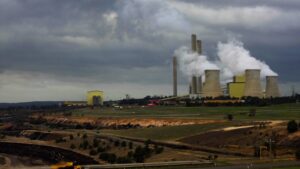
CEFC RTN chief investment officer Paul McCartney said the green bank’s backing of Marinus Link would also help usher out Victoria’s ageing coal-fired generators.
“This visionary project will enable Tasmania to share its substantial hydro power energy and wind resources with the much larger National Energy Market, helping firm the grid,” McCartney said on Wednesday.
“It will also provide Tasmanian consumers with access to abundant low cost solar and wind energy from the mainland, as well as enhanced energy security. This is a win-win for both ends of Marinus Link.”
Hundreds of kilometres of cables… and a couple more hurdles
Marinus Link – the second electricity interconnector between Tasmania and Victoria, next to Basslink – includes high voltage direct current cables, fibre optic cables, a communications station, and converter stations at each end of the interconnector.
The new cables – the plan is to install two power cables, but major cost blowouts have led to a staged development process – span 345 km, including 255 km of undersea cables across Bass Strait and 90 kilometres of underground cables in Gippsland, Victoria.
MLPL says it has issued notices to proceed for its high-voltage direct current (HVDC) cable and converter technology suppliers, Prysmian Powerlink and Hitachi Energy, who will now finalise engineering designs and commence pre-construction activities.
The next regulatory steps include a final revenue determination from the Australian Energy Regulator, which is expected to land in Decemeber following a supplementary determination in October.
The project is also still awaiting state environmental approval, which is likewise expected in December.
“Marinus Link is moving from plans on paper to work on the ground – creating thousands of jobs, boosting reliability and delivering clean power where and when it’s needed,” said federal energy minister Chris Bowen on Wednesday.
“The Albanese government is delivering what the Opposition couldn’t – working together with states on energy policy focused on people not politics.”
Tasmania energy minister Nick Duigan, whose government held on to power by its fingernails after a snap election triggered by a June vote of no confidence, said he looked forward to seeing the project move to construction.
“This is another important milestone for the project, which promises to deliver lower power prices, create more than 2,000 jobs in Tasmania, generate huge economic stimulus, and deliver intergenerational energy infrastructure,” Duigan said.