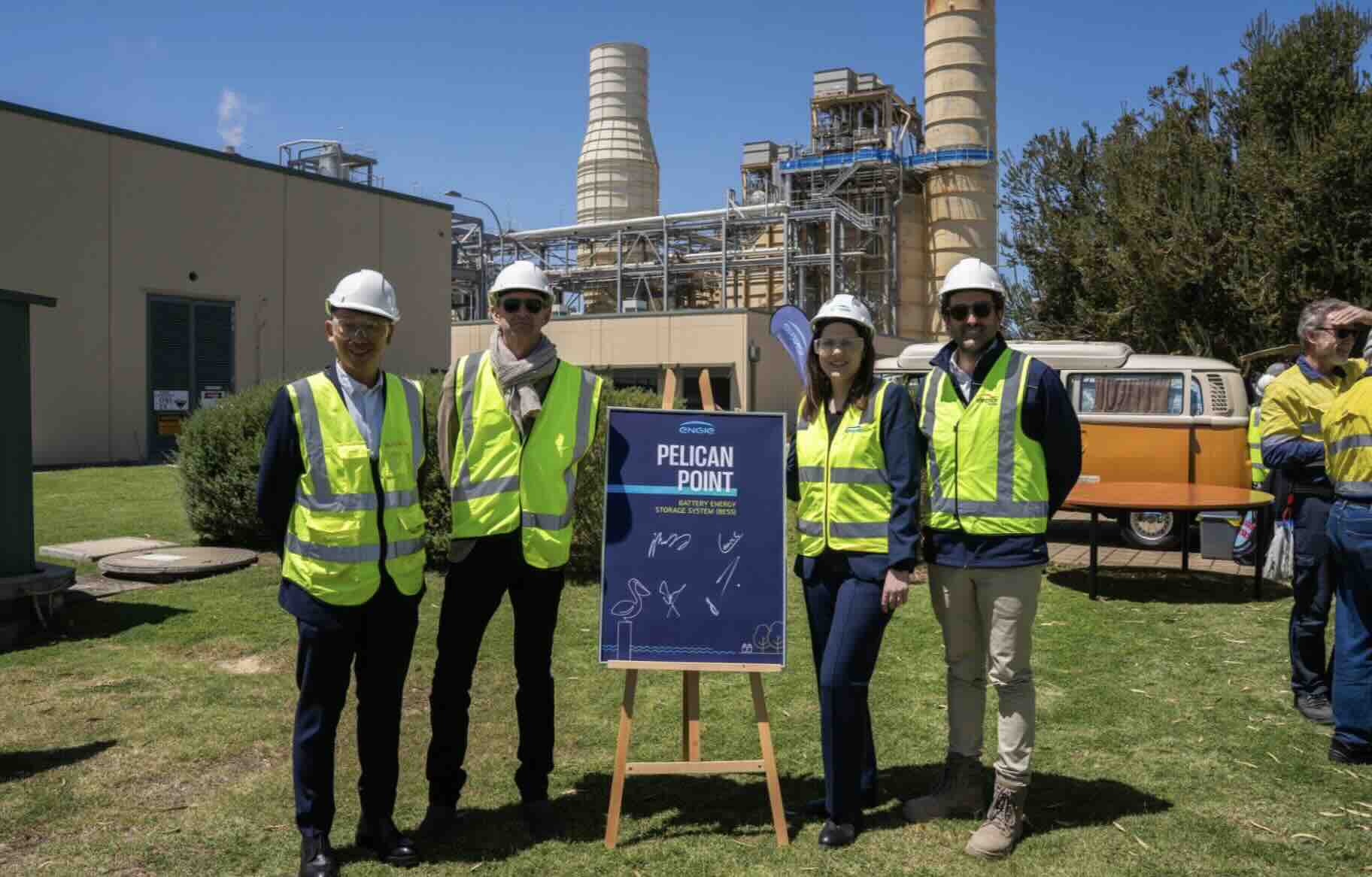
French energy company Engie has announced the start of construction of a new big battery sited next to its biggest gas generator in South Australia, in a further sign of the rapidly changing dynamics of the grid and the shift from conventional “baseload” power.
The 200 megawatt (MW), 400 megawatt hour (MWh) Pelican Point battery will be built next to the 489 MW Pelican Point gas fired generator, which has already been partly converted to an open cycle turbine for faster starts and more flexibility in the world’s most advanced renewable grid.
South Australia leads the world in the integration of wind and solar with an average of 75 per cent over the last 12 months, and aims to reach 100 per cent net renewables by the end of 2027.
It already has eight big batteries in operation, and another dozen in construction and commissioning, and gas power at times has been relegated to a minor role – providing just a single turbine at times of high wind and solar share to ensure essential grid services.
Engie had originally set aside the land where the battery will be built for another big gas unit, but the plunging price of battery storage, and the need for more flexibility, meant it chose to build a big battery instead, as Alinta has also done at the Reeves Plains project in South Australia.
Engie Australia’s managing director of renewables and batteries, Laura Caspari, says co-locating large batteries with existing or former thermal power sites is one of the keys to accelerating Australia’s energy transition.
“Developing BESS projects at our sites leverages existing infrastructure, minimises environmental impacts, and ensures we can deliver reliable, flexible energy solutions at speed,” she said in a statement.
“This supports the rapid integration of renewables and creates future-ready energy hubs.”
Engie has already hosted the 150 MW, 150 MWh Hazelwood battery at the site of the shuttered brown coal generator in Victoria’s Latrobe valley and has expansion plans for that facility.
But the development of Pelican Point also highlights the rapidly falling cost of battery storage in a world where technology costs of most other energy infrastructure and fossil fuel source is rising.
Engie says the Pelican Point battery will use Sungrow technology, with Elecnor and ElectraNet looking after construction and connections. The battery is expected to be commissioned in the second half of 2027.
The project will create around 250 jobs during the construction phase and will boost Engie’s retail activities in the state. Engie says it has committed to providing up to $30,000 per year to a dedicated Community Benefit Fund for the life of the operating asset. T
See also Renew Economy’s Big Battery Storage Map of Australia for more information.
If you would like to join more than 28,000 others and get the latest clean energy news delivered straight to your inbox, for free, please click here to subscribe to our free daily newsletter.