Last week again demonstrated the growing unreliability of end of life coal fired power plants which costs Australians and domestic heavy industry dearly.
Paul McArdle of WattClarity highlights the massive spike in power prices on 8 July 2026 that saw pricing average >A$300/MWh for most of the evening peak across not just Victoria but the entire National Electricity Market (NEM) last Wednesday.
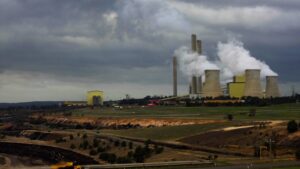
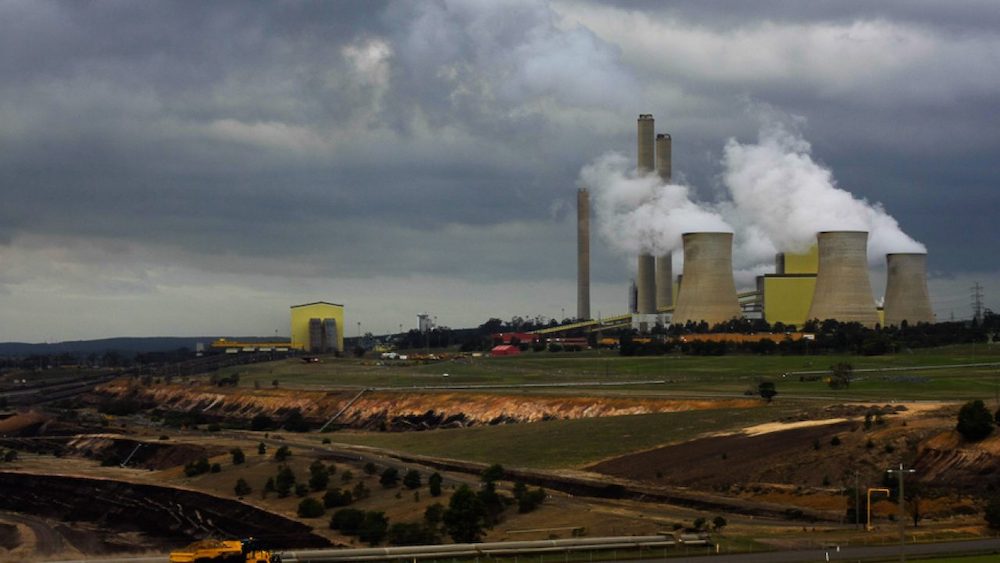
From 10.05am, the 6 x Loy Yang lignite coal-fired power plant units across Loy Yang A (AGL) and Loy Yang B (now Sembcorp owned Alinta) rebid upwards due to a ‘coal shortfall’.
WattClarity cites three other factors that compounded the problem of coal shortages in the La Trobe Valley, namely: restrictions on electricity imports from NSW; the season lull in variable renewable energy, particularly noting wind capacities dropped to a very low 3% availability, and it was evening, so no solar; and batteries under-delivered, again possibly due to weak solar recharging in winter.
This price spike is another reminder that ageing coal guarantees neither reliability nor price stability: a single coal supply chain failure constrained supply when demand was high and renewable output was at a winter lull, highlighting the vulnerability of this old tech and the need for an orderly transition to firmed renewables.
It is established that renewable energy firmed by storage drives prices down, mitigates fossil fuel hyperinflation during international wars and helps deliver our climate and energy security agendas, including the federal government’s 82% renewables goal by 2030.
CSIRO’s GenCost 2025/26 report today again highlights this point, with batteries real-time reshaping the cost curves of the Australian electricity market.
Energy Minister Chris Bowen has made the case that repeated breakdowns make ageing coal generation – not renewables – the true source of “intermittent” power, and that ‘sweating the asset’ is a far greater reliability threat.
As Bowen noted, “these examples represent a broader trend that will only worsen if governments continue to hope that unpredictably intermittent coal can keep the lights on.” Public education is needed to counter fossil fuel-funded misinformation on coal’s role in our energy mix.
End-of-life coal plants are deteriorating before the replacement system has been built – a transition-planning gap. The solution is not more coal or the Crisafulli government’s wrongheaded QLD budget ‘coal keeper’ program to extend coal clunkers’ lives. What is needed is an orderly closure schedule giving clean energy entrants the demand, pricing and regulatory certainty to invest in new capacity.
This is the clear message from the Clean Energy Investor Group, representing investors controlling a $41bn portfolio of energy assets and approximately 18GW of renewable capacity across 139 National Electricity Market (NEM) power stations. Its new Clean Energy Outlook 2026 Report notes that “Coal closure certainty is a key long-term investment priority.”
Certainty around coal closure was ranked by members as the second-most effective policy measure, after transmission buildout, for unlocking greater renewable energy investment over the next three years.
This would signal the timing and shape of thermal generation exits and the replacement renewable generation and firming capacity required. CEIG notes that uncertainty around the timeframe and scale of closures, plus likely subsidies for old thermal generation, is weighing on project viability and making it harder for investors to commit capital.
Coal closure certainty alone is not sufficient. We also need investment in the enabling infrastructure that underpins a high-renewables grid, including interstate transmission such as Marinus Link, long-duration storage including Snowy 2.0 pumped hydro, industrial demand response at scale, virtual power plants and vehicle-to-grid systems. Together, these investments improve resilience and flexibility and reduce reliance on ageing coal.
At the consumer level, Australians are making record clean energy investments as consumer energy resources boom. Over 450,000 home batteries totalling 12.5GWh have been installed in the last 12 months, supporting rooftop solar thanks to the federal Cheaper Home Batteries rebate. Rooftop solar is tracking for a record 4GW in 2026, a third above the last 7 years’ average run-rate – a consequence of outstandingly successful and farsighted policy.
There is positive government investment momentum too. Australia’s world-leading longer duration battery deployments are proceeding at ‘China Speed’, thanks in large part to NSW Energy Minister Penny Sharpe and NSW’s Long-Term Energy Service Agreement (LTESA) investments. Western Australia is well underway thanks to Premier Roger Cook and Energy Minister Amber-Jade Sanderson’s government, putting it on track to deliver 70-80% renewables by 2030.
Now, to accelerate private capital flows into utility firmed renewables, we need a formal, federally coordinated Coal Closure Plan for the east coast.
A formal plan must facilitate a just transition for impacted coal workers and communities, including government support for zero-emissions replacement industries such as battery and solar module assembly factories in the historic coal epicentre of the Hunter Valley, NSW, collaborating with Chinese technology leaders.
It would also provide a clear signal to guide power entrants to invest in coal replacement capacity ahead of time and at the speed and scale required, as coal clunkers increasingly suffer catastrophic failures, like the outage-plagued Callide C, which exploded in 2021 cutting power to half a million Queenslanders, and the multihundred million dollar debacle around the decision to renew the end-of-life Muja AB power station in Collie, WA.
The alternative is to lurch from one coal failure and price shock to the next, forcing households and industries to pay to prop up the past while delaying the clean, affordable and reliable energy system the Australian economy needs to prosper in the emerging net zero world.
Tim Buckley is director of Climate Energy Finance (CEF). AM Jonson is editorial director, CEF